



Clan Muir: Explore the Crest, Tartan, and Ancestral Heritage
by Aimee Li on Aug 07, 2025
Table of Content
Clan Muir traces its legacy through the misty landscapes of Scottish history, known for its steadfast character, enduring pride, and deep familial roots. Though smaller in number than some Highland giants, the clan Muir has left their mark through loyalty, resilience, and a quiet strength that speaks volumes. Their name echoes through centuries of tradition, land stewardship, and an unwavering connection to their ancestral homeland.
In this article, you’ll explore the story behind Clan Muir’s crest, uncover the rich symbolism woven into their tartan, and dive into the customs and heritage that continue to shape their identity.
I. Who Are Clan Muir?
The Muir clan is a lowland clan of Scotland. It is an armigerous clan, which means that the clan, family, or name is registered with the Court of the Lord Lyon, but does not currently have a chief recognised by the Lyon Court. The surname appears in numerous forms—Muir, Mure, More, Moore, Moir, and others—and is most common in Ayrshire and the southwest Lowlands, though by the 15th century it had spread into eastern Scotland.
The earliest records of the clan date back to the 13th century. David de More witnessed a charter of King Alexander II (1214–49) and Sir Gilchrist Mure (ca. 1200–1280) fought at the Battle of Largs in 1263—events that helped secure the Mure's position at Rowallan Castle in Ayrshire.
Branches of Clan Muir
Over the centuries, numerous septs and branches of the clan Muir have emerged, often tied to landholdings, feudal baronies, and regional influence throughout Scotland:
Mure of Rowallan: The principal and most distinguished branch of the Scottish Clan Muir. Based at Rowallan Castle in Ayrshire, this line gained royal recognition when Elizabeth Mure married the future King Robert II of Scotland. The Rowallan line remained influential until the early 18th century.
Mure of Polkelly: A cadet branch of the Mure family, the Mures of Polkelly held lands near Kilmarnock in what is now East Ayrshire. Historical records mention David de More of Polkelly as a witness to royal charters during the reign of King Alexander II (1214–1249), establishing their early prominence in the region.
Mure of Caldwell: A cadet branch of the Mure family established at Caldwell in East Renfrewshire. They acquired the estate through marriage in the 14th century, remained influential throughout the post‑medieval period, and Caldwell Tower—dating from the 16th century—still stands today as a lasting landmark of their heritage.
Mure of Skaithmuir: A lesser-known cadet branch tied to lands near Lanarkshire. Reginald Mure was granted a charter over the lands of Skaithmuir in 1329, and the surviving Skaithmuir Tower stands as a testament to their presence.
Mure of Auchindraine: Known from 16th-century records and historical ballads, this branch became infamous due to its involvement in legal disputes and clan feuds.
Muir/Mure of Thornton, Cloncaird, Middleston, and Brownhill: These represent additional landed families with documented ties to the greater Muir bloodline.
Moir of Leckie, Invernettie, and Stoneywood: These branches, using a Highland variation of the surname “Muir,” are often associated with Clan Gordon and linked to northeastern Scotland.
The clan name has also been connected to a wide network of surnames and septs, including Muir, Mure, Moir, More, Moore, and others, highlighting its linguistic evolution and regional adaptations across Scotland.
II. Where Did the Muir Surname Come From?
The Muir surname in Scotland —also spelled Moor, Moore, or More—likely originated as a topographical term used in Scotland and northern England. It referred to people who lived near a moor or fen, derived from the Old English word mor, meaning “moorland.” For anyone researching the Muir surname meaning, it's interesting to note that it also carries locational significance, often linked to places named with this term, such as "Moore" in Cheshire. The surname Muir was first documented in the 13th century in Scotland.

- 1291: Thomas de la More was named as executor of Dervorguilla de Balliol’s will during the Scottish Interregnum (1290–1292).
1296:Dovenal le Fitz Michel More de Levenaghes paid homage, bearing a seal that depicted a creature with a man’s head and rooster’s feet and spurs. At the same time, Adam de la More and Renaud del More, both from Are County, also appeared in homage records.
1328: Adam More (or Moire) witnessed royal charters issued by Robert the Bruce.
1347: Elizabeth Mure, daughter of Sir Adam Mure of Rowallan, became Queen Consort to King Robert II of Scotland.
1792: Thomas Muir (1765–1798), a notable political reformer, founded a parliamentary reform society in Scotland.
1845: John Muir (1810–1882), an orientalist and judge, was appointed in Fatehpur, India, and became widely recognized as a scholar of Indian religion and culture.
Surnames became increasingly vital after the introduction of personal taxation, particularly the Poll Tax in England, which required consistent identification. Over time, names like Mure evolved across regions and generations, often resulting in surprising variations in spelling. These shifts reflect not only linguistic changes but also the historical journey of families through land, law, and legacy.
III. The History of Clan Muir in Scotland
The history of the Muir family played a significant role in Scottish history, with their legacy rooted in Rowallan Castle. Sir Gilchrist Mure began this lineage by marrying the daughter and sole heiress of Sir Walter Comyn, a union endorsed by King Alexander III due to Gilchrist’s participation in the Battle of Largs. This strategic alliance secured their rightful claim to Rowallan and marked an important chapter in Clan Muir's history.
However, some sources offer a conflicting version, stating that Sir Walter Cuming ousted Gilchrist and took refuge in Polkelly Castle until Alexander III defeated Cuming and his allies. This alternative narrative is less credible, as historical records indicate Sir Walter Comyn had likely died at least five years before the battle. The united arms of the first Mure of Rowallan remained visible on the oldest part of Rowallan Castle until the 18th century.

- 1347 (November 22): Elizabeth Mure, daughter of Sir Adam Mure of Rowallan and Janet Mure, received papal dispensation to marry Robert Stewart, who later became King Robert II of Scotland.
Before 1355: Elizabeth Mure passed away.
Mid-1300s: Jean Stewart, daughter of Elizabeth and Robert, married John Lyon. This union gave rise to the title Thane of Glamis, and their descendants include King Charles III.
1448 (October): Sir Robert Mure, known as the Rud of Rowallane, possibly died at the Battle of Sark.
Late 1400s: During his lifetime, the Rud transferred his lands to his grandson John, who married Margaret Boyd, a former mistress of King James IV.
1547 (September): Sir Mungo Mure, who had made improvements to Rowallan, was killed at the Battle of Pinkie.
1644: Sir William Mure (1594–1657), Laird of Rowallan, was wounded at the Battle of Marston Moor.
1876: Remains of chapels built by Gilchrist Mure—one for Saint Laurence at the Well and another for Saint Michael at Banked—were still visible, showcasing the family’s religious contributions.
Sir William Mure of Rowallan was not only a soldier but also a writer and politician. His descendants included Dr. John Moore and his sons: Lieutenant General Sir John Moore, Admiral Sir Graham Moore, and Dr. James Carrick Moore.
IV. Clan Muir Crest and Coat of Arms
Clan Muir Crest
The Muir clan crest is a bold and symbolic emblem representing the clan Muir's historical resilience and tenacity. At the heart of the design is a savage’s head couped, shown in profile and crowned with a laurel wreath—an ancient symbol of triumph, honor, and achievement. This striking image embodies strength, raw courage, and the untamed spirit that defined the clan Muir throughout Scottish history.
Clan Muir / More
Crest: A savage’s head couped, Proper
Motto: Durum patientia frango (I overcome difficulty by patience)
Origin of Name: Gaelic “Mor”, large
Region: Lowlands
Historic Seat: Rowallan Castle
Clan Chief: None, armigerous clan

Encircling the clan Muir crest is the Clan Muir Latin motto translation: “Durum Patientia Frango,” which means “By patience, I break what is hard.” Together, the crest and motto convey a message of enduring strength through perseverance, reflecting the clan Muir legacy as steadfast Highlanders committed to their cause. Today, the crest remains a powerful mark of identity and ancestral pride for those connected to Clan Muir.
Clan Muir Coat of Arms
The Muir family coat of arms features a silver shield with a blue fess bearing three white stars, symbolizing loyalty and noble lineage. The gold sheaves of wheat in the blue quarters represent prosperity and the historic union with the powerful Comyn family. Together, these elements reflect the clan’s heritage of strength, endurance, and alliance—proudly rooted in the lands of Ayrshire and Rowallan.

V. Clan Muir Tartan
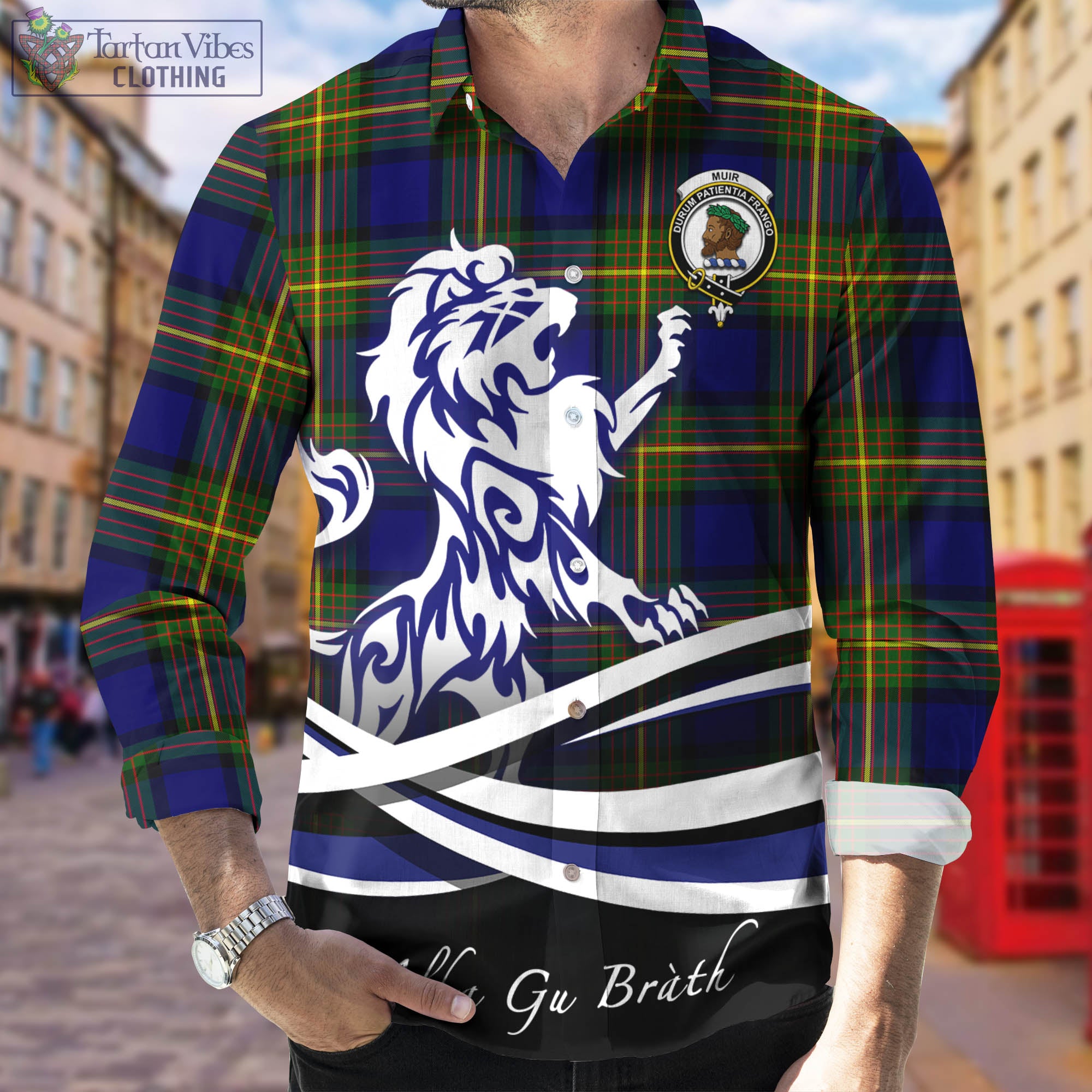
The Clan Muir tartan is a striking and historically rich design deeply rooted in the heritage of the clan Muir (or Mure) of Rowallan Castle in Ayrshire, Scotland. Featuring a bold blend of deep navy blue, forest green, and black, this Clan Muir tartan is distinguished by narrow red stripes repeated in pairs across green fields, sometimes highlighted with fine yellow lines depending on the variant. These vivid colors are said to represent the natural landscapes of Ayrshire—its lochs, woodlands, and rolling moorlands—that shaped the clan’s identity.

Though formally registered later, the clan Muir tartan was first documented long before the creation of the Scottish Register of Tartans, appearing in John Ross’s Land of the Scottish Gael (1930) and noted as being in use before 1880. Today, it exists in both “Clan Muir Ancient” and “Clan Muir Modern” versions and remains a proud symbol for those connected to the clan’s enduring legacy.
VI. Where Can I Buy Clan Muir Tartan Products?
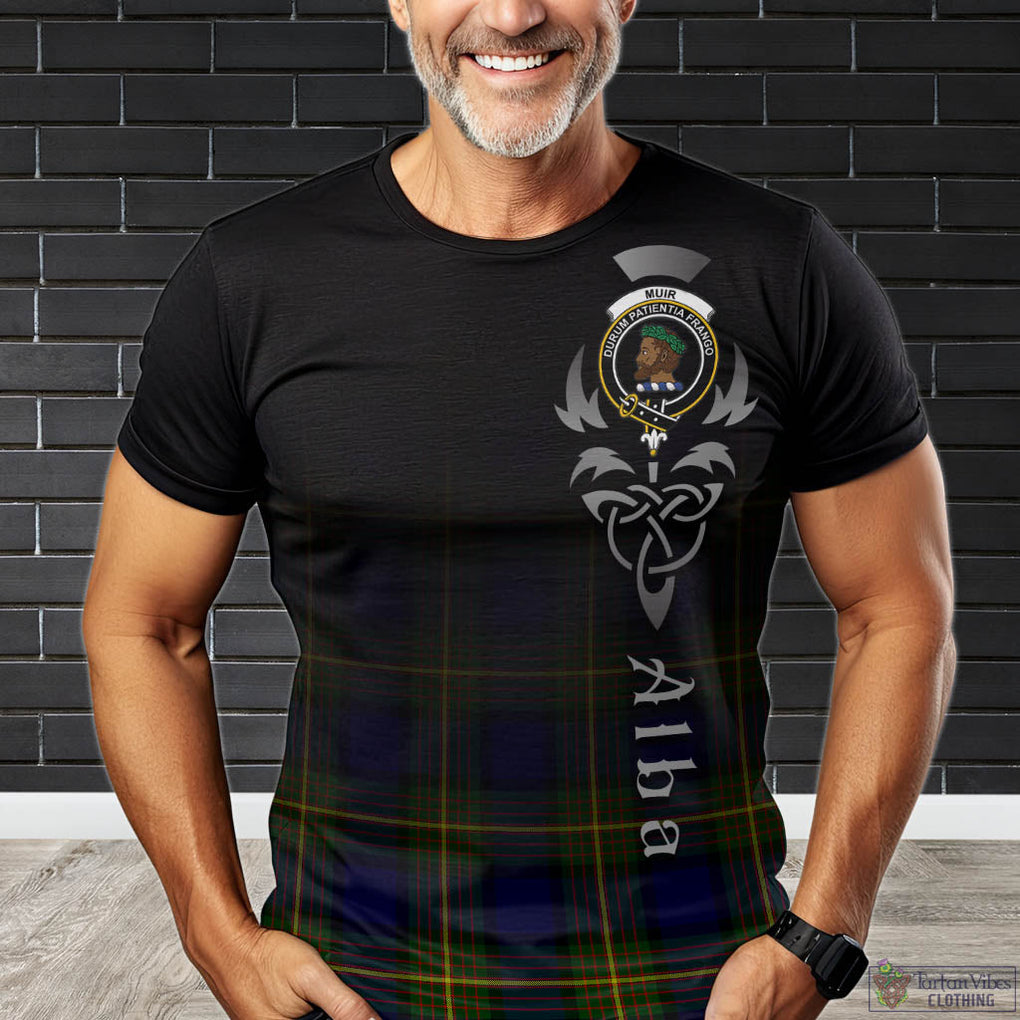
If you're searching for high-quality Clan Muir tartan products, Tartan Vibes Clothing proudly offers a curated selection that honors the proud legacy of the Clan Muir. Our collection includes tartan polo shirts, hoodies, dresses, and home accessories,...—all showcasing the distinct colors and patterns of the clan Muir tartan. Every item is meticulously crafted, blending tradition with modern comfort. These pieces are perfect for anyone who wants to celebrate their Scottish roots, give a meaningful heritage-inspired gift, or wear something that tells a story.
Explore the full range of Clan Muir tartan products at Tartan Vibes Clothing and wear your heritage with pride!


Frequently Asked Questions
Where did the Muir surname originate?
The name likely derives from the Old English word “mor,” meaning “moor,” which was used to describe those who lived near moorlands or marshes. It became common in Scotland and northern England by the 13th century.
What are the key branches of Clan Muir?
Major lines include Mure of Rowallan, Mure of Polkelly, Mure of Caldwell, and lesser-known branches such as Skaithmuir, Auchindraine, as well as Thornton, Cloncaird, and Brownhill.
What does the Clan Muir motto mean?
The Clan Muir Latin motto, “Durum Patientia Frango,” means “By patience, I break what is hard.” It expresses the clan’s belief in steady perseverance over brute force
What is the difference between Muir, Mure, More, Moore, and Moir?
These are spelling variants of the same surname, evolving by region and dialect—Muir/Mure prevalent in Ayrshire, and Moir often linked to Clan Gordon in Aberdeenshire.
What does the Clan Muir tartan look like?
The Clan Muir tartan features deep navy blue intertwined with black and green, accented with narrow red stripes, and sometimes fine yellow lines—colors that evoke Ayrshire’s landscape and clan heritage.

Aimee Li
An author dedicated to exploring the rich history, vibrant culture,... of the Scottish clans. As an avid historian and fashion enthusiast, I have always been fascinated by Scotland's heritage and the timeless elegance of its traditional attire. Join me on this journey through the highlands and lowlands, as we delve into the heart of Scottish legacy together.


