



Uncover the Untold Story of the MacDougall of Gallanach Lineage
by Teresa Finn on Nov 21, 2025
Table of Content
MacDougall of Gallanach is a cadet branch of Clan MacDougall - one of the most historically influential Highland clans. So, it’s not a separate clan — it’s a proud family line within the broader MacDougall heritage.
Set just south of Oban on Scotland’s west coast, the Gallanach area has long been tied to the MacDougall heritage. Are you ready to explore how this branch emerged, why it matters, and what makes Gallanach such an interesting piece of the overall MacDougall story?
Origin And Historical Context
As Clan MacDougall expanded its influence throughout the Argyll and Oban region, the clan’s territories, population, and governance structure grew increasingly complex. This growth laid the groundwork for several cadet branches to appear naturally over time, including the MacDougall of Gallanach.
Regional Context and the Early Presence of Clan MacDougall
Clan MacDougall became an established Highland power during the late 12th and early 13th centuries, gradually shaping the social and political identity of the Lorn region. Their ancestral seat at Dunollie, overlooking modern Oban, served as the heart of their authority and reflected their deep Scottish Highlands ancestry.
During this formative period (circa 1200–1350), Clan MacDougall’s presence in the region was marked by:
Expansion across key Scottish clan territories along the west coast
Influence over maritime routes, local settlements, and agricultural lands
Interaction and competition with other families connected through Scottish clan connections.
A growing network of households contributing to the clan’s strength
These developments created a stable territorial core in Lorn from which various MacDougall family lines began to branch out. To manage these expanding lands and extended kinship networks, significant MacDougall families began to establish themselves in distinct areas around Oban, Kerrera, Connel, and farther down the Argyll coast.

Formation of Cadet Branches Within Clan MacDougall
As the clan’s territories expanded, numerous Scottish Highland clan septs developed within the MacDougall family structure. These cadet branches helped distribute land stewardship, family responsibilities, and local representation across Argyll without altering the central authority of the Dunollie chiefs.
Historically recorded cadet branches of Clan MacDougall include:
MacDougall of Raray
MacDougall of Gallanach
MacDougall of Connel
MacDougall of Kilmore
MacDougall of Soroba
MacDougall of Dunollie (chiefly line)
These branches formed through inheritance, marriage alliances, or the need to administrate newly settled territories — each becoming part of the extended network of Scottish genealogy and family branches tied to the Dunollie chiefs.
MacDougall of Gallanach emerged from this broader historical process, shaped by the clan’s territorial development and strengthened by its location within one of the most stable stretches of MacDougall-held land. As a result, Gallanach became one of the notable cadet families helping define the geographic and genealogical landscape of the MacDougall identity.
The Heritage Story of the MacDougall of Gallanach Family
1. Location and Territory of Gallanach
Gallanach lies immediately south of Oban, along the west coast of Scotland, facing the island of Kerrera. Unlike many Highland territories defined solely by oral tradition, this area has been relatively well recorded as part of the MacDougall landholdings. It is identifiable in both medieval land records and modern mapping.
Historical map placement:
Part of the medieval Lorn region, under MacDougall authority centered at Dunollie.Present-day geography:
The area starts from the southern edge of Oban and continues along Gallanach Road, reaching sites such as Gallanachmore, Gallanachbeg, and the ferry access point to Kerrera.Strategic features:
Deep-water access, proximity to Kerrera Sound, and fertile coastal land suitable for settlements.

Gallanach benefited from fertile land and a safe, navigable shoreline. Its location at the gateway to the Firth of Lorn made it a practical and desirable place for long-term settlement. Its placement also helped link the coastal communities that formed the backbone of the clan’s presence around Oban.
These landscape features explain why the area was deemed suitable for establishing a distinct family branch within the wider Clan MacDougall lineage — a place where land, sea routes, and community networks naturally converged.
2. Significance of the Gallanach Branch
2.1. Within the Oban and Lorn Region
Gallanach played a meaningful part in the historical landscape of the west coast. Its shoreline connected settlements from Dunollie to Soroba and southward into the wider Argyll coastline.
Contributing factors include:
A location that supported fishing, agriculture, and coastal travel
An estate area linked to regional families in Oban
Integration into a corridor of MacDougall-held lands that shaped Argyll and Oban clan history.
Together, these factors anchored Gallanach firmly within the social and economic fabric of the region.

2.2. Within the Clan MacDougall Lineage
Through the internal structure of the clan, Gallanach became one of several notable Scottish Highland clan septs tied to Dunollie. The branch contributed to the clan's genealogical map by occupying a fixed territory and continuing a named family line.
Forming part of the clan’s genealogical map of Scottish genealogy and family branches
Maintaining a MacDougall presence south of Oban
Supporting continuity of family settlement patterns, estate inheritance, and territorial identity
Although not a chief-bearing line, the Gallanach family’s existence reinforced the clan’s long-term roots in Argyll and contributed to the stability of the broader Clan MacDougall lineage. Its continuity demonstrates how each cadet family helped sustain the clan’s territorial identity over generations.
3. Heraldry, Symbols, and Traditions of the Gallanach Line
As a cadet branch, MacDougall of Gallanach did not possess a separate coat of arms. Instead, it used the heraldic symbols of the main clan, reflecting loyalty to the Dunollie chiefs and unity within the clan structure.
Heraldry and symbols are commonly associated with the branch
Clan Crest: A right hand holding a cross crosslet, a symbol of steadfastness and Highland identity.
Clan Motto: “Buaidh no Bas” meaning “Victory or Death”, shared across all MacDougall families.
Clan Tartan: Variations classified under MacDougall tartans and patterns, including modern, ancient, dress, and minor cadet variations such as those linked to Gallanach.
In terms of tradition, the Gallanach line followed the same Clan MacDougall traditions practiced across Argyll: clan gatherings, Highland customs, loyalty to the chief, and participation in regional life around Oban. Even as a distinct branch, the family remained part of the cultural, symbolic, and genealogical framework that defined the wider MacDougall clan septs. This shared identity ensured that Gallanach remained visually and culturally unified with the greater clan.

Tartan Story of MacDougall of Gallanach
Tartan plays a central role in defining the visual and cultural identity of any Highland family line. For the MacDougall of Gallanach branch, its tartan story begins with the broader set of MacDougall tartans and evolves into a variation that reflects both regional character and longstanding clan heritage.
MacDougall Tartan Overview
The main Clan MacDougall tartans are well documented, widely woven, and recognized by major registries such as the Scottish Register of Tartans (SRT) and the Scottish Tartans Authority (STA). Historical evidence shows that the clan’s tartan tradition has always centered around a strong red base paired with deep green, navy, and black—a palette that reflects both regional identity and the bold style typical of western Highland clans.
Most authoritative registries and commercial mills list five to seven official or semi-official MacDougall tartans, including the core set:
MacDougall Modern – bold, dark, and high-contrast with bright scarlet lines
MacDougall Ancient – softer and more historical in tone, using lighter reds and greens
MacDougall Dress – incorporating white to create a brighter, ceremonial appearance
MacDougall Weathered/Muted – designed to mimic aged vegetable dyes
MacDougall Hunting – less common and built around green/blue tones rather than red
These patterns constitute the recognized tartan family of Clan MacDougall — woven commercially, used in Highland dress, and referenced in genealogical research worldwide. They form the stylistic foundation from which any historical branch-level variation would have developed.


The Tartan of MacDougall of Gallanach: Does It Truly Exist?
Historical references suggest that a Gallanach-related tartan once existed through local weaving traditions connected to the Gallanach estate. Like many early Highland cadet families, small pattern variations could appear naturally in regional production.
However, in modern tartan registries and commercial weaving, the situation is very clear:
No official tartan named “MacDougall of Gallanach” is registered in SRT or STA.
No commercial mill currently weaves or sells a Gallanach-specific pattern.
The branch uses the main MacDougall tartans (Modern, Ancient, Dress), just like other cadet families such as Lunga and Raray.
So, why does the MacDougall of Gallanach have a separate tartan that exists today? Because of the branch’s close proximity to Dunollie and its long-standing loyalty to the main line, there was never a compelling historical need to develop a distinct tartan.
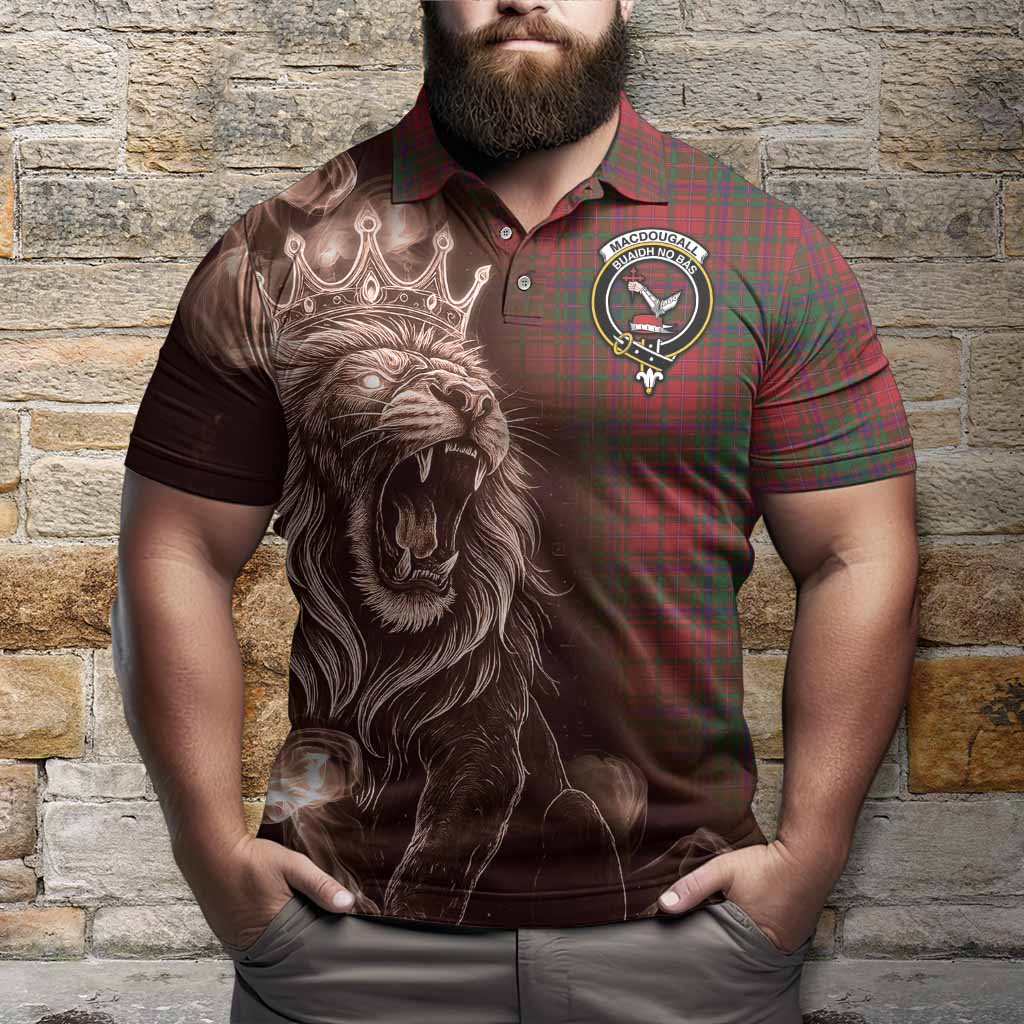

In the end, the tartan story of MacDougall of Gallanach highlights how the branch’s identity is woven through the colours and patterns of the wider MacDougall tradition. Its heritage lives on through the enduring tartans of the clan, which continue to honour the family’s deep roots in Argyll.
Final: The Enduring Legacy of the MacDougall of Gallanach Line
The heritage of MacDougall of Gallanach captures the spirit of a family deeply tied to the coastline, the land, and the long memory of the Highlands. Through generations, its presence has remained woven into the history of Oban and the identity of the wider clan.
Today, MacDougall of Gallanach remains one of the most symbolic cadet branches of Clan MacDougall, honouring a legacy defined by loyalty, lineage, and the enduring heart of Scottish tradition.
Frequently Asked Questions
How is MacDougall of Gallanach connected to Clan MacDougall?
MacDougall of Gallanach is a cadet branch of Clan MacDougall, meaning it descends from the main family line but established its own territory near Oban. The branch remained closely tied to the chiefs at Dunollie and has always been considered part of the wider Clan MacDougall lineage.
What tartan does the MacDougall of Gallanach family wear?
The branch traditionally wears the main MacDougall tartans — Modern, Ancient, or Dress — since no separate Gallanach tartan is formally recognized today.
What is the history of the MacDougall clan in Argyll and Lorn?
Clan MacDougall has deep roots in Argyll and the Lorn region, where they rose to prominence in the 12th and 13th centuries. From their stronghold at Dunollie, they controlled coastal lands, maritime routes, and several settlements around Oban, shaping the political and cultural landscape of the western Highlands for centuries.
Does Clan MacDougall have multiple branches or septs?
Yes. The clan historically included several branches such as Gallanach, Lunga, Raray, Soroba, Connel, and Kilmore, all connected to the main Dunollie line.

Teresa Finn
As someone with a deep passion for clan heritage, especially the intriguing world of tartans and their rich traditions, I'm here to be your companion on this exciting journey. Together, we'll delve into the depths of clan history, uncovering the stories behind these vibrant tartans and making every connection to your heritage more meaningful.


