



Table of Content
Why is the Campbell Clan Hated?
Power, grand castles, and political influence once placed Clan Campbell among the most dominant families in Scottish history. Yet alongside that legacy stands a far darker reputation. Why is the Campbell Clan hated? The answer lies not in simple jealousy, but in a series of brutal historical events that reshaped Highland loyalties forever.
From the Massacre of Glencoe to violent clan conflicts in Dunoon, and the Campbells’ controversial decision to support the British government during critical uprisings, their actions left deep scars across Scotland. Were they ruthless opportunists, or skilled survivors navigating a brutal political landscape? The truth is far more complex and far more unsettling.
What Are The Main Reasons For The Hatred Towards The Campbell Clan?
The hatred toward the Campbells comes from three main reasons: betrayal, legal manipulation, and siding with the British Crown.
Originating in the late 13th century, the Campbell Clan emerged as one of the West Highlands of Scotland's most influential families, claiming the title of the Duke of Argyll. Strategic marriages, alliances, and military prowess characterized their rise to prominence. Their power, however, was built not only on military strength but on political skill and strategic maneuvering. This reputation for cunning earned them a lasting and bitter nickname among Highlanders: “The Campbells of the False Heart.”

So why did this powerful family become the pariahs of Scotland? The hatred is built on three pillars:
Betrayal of Trust: The violation of sacred Highland hospitality laws, known as Guest Right, is an act considered morally unforgivable.
Weaponization of the Law: Exploiting legal loopholes and royal charters to seize ancestral lands from rival clans.
Alliance with the Enemy: Repeatedly siding with the British Crown against fellow Scots during major uprisings.
Together, these actions transformed dominance into distrust and ensured the Campbells would be remembered not just for their power but for the controversy that followed it.
How Did The Campbells Use The Law To Crush Their Rivals? (14th - 16th Century)
They expanded their power by turning royal law, debt, and legal charters into tools for land seizure instead of fighting open clan wars.
Time period: Late 14th century to early 16th century, when royal law began expanding into the Highlands
- Historical context: A transitional era when royal law and written charters began to override traditional Highland custom.
In an era when most clans relied on kinship, oral agreements, and the sword, their calculated use of written contracts and royal authority appeared shockingly cold. This early embrace of legal manipulation, driven by ruthless cunning, laid the foundations for long-lasting resentment across the Highlands.
Exploiting Debt and Legal Courts
The Campbells systematically purchased the debts of rival clan chiefs, debts often caused by war, famine, or political instability. Instead of resolving disputes through clan negotiation, they pursued repayment through the royal courts in Edinburgh. When chiefs could not pay, ancestral lands were confiscated legally, allowing the Campbells to expand their territory without open warfare.

Royal Sanction and “Legalized Theft”
Their legal dominance was reinforced by direct royal backing. Through instruments such as the Letters of Fire and Sword, the Campbells received formal permission from the Crown to punish defiant clans, seize property, and eliminate resistance. What others saw as a massacre or land theft was, on paper, entirely lawful. This practice became known among rival clans as legalized theft.
This period represents the first stage of hatred toward the Campbells. By choosing contracts over kinship and law over honor, they triggered a cultural collision that turned legal success into moral outrage and laid the groundwork for centuries of resentment.
Why was the Dunoon Massacre the precursor to hatred? (Mid-17th Century)
Period: Mid-17th century during the Scottish Civil Wars
Context: Covenanters versus Royalists, clan rivalries turning ideological
Why they were hated: Breaking surrender promises and committing mass executions.
After decades of expanding their power through courts, contracts, and royal favor, the Campbells entered the Scottish Civil Wars carrying deep resentment from neighboring Highland clans. Families that had dispossessed through legal means now faced them on the battlefield. What had once been anger over land and law turned into fear and hatred fueled by violence.
The Slaughter of Clan Lamont (1646)
The Dunoon Massacre stands as one of the darkest moments in Highland history. After defeating Clan Lamont, the Campbells reportedly promised mercy if the Lamonts surrendered. That promise was broken. Around 200 Lamont men were hanged, while others were buried alive, an act that sent shockwaves across the Highlands. More than a massacre, Dunoon proved that Campbell's assurances could not be trusted, establishing a lethal precedent later echoed at Glencoe.
The Montrose–Campbell Rivalry in the Scottish Civil Wars
During the Scottish Civil Wars, Scotland was divided between two opposing camps. Archibald Campbell, the 5th Earl of Argyll, led the Covenanters, who controlled the Scottish government and supported Parliament and the Crown’s authority over the Highlands. Opposing him was James Graham, Marquis of Montrose, a Royalist commander who fought in the name of the King and drew support from many Highland clans hostile to Campbell dominance.
This rivalry turned civil war into a personal vendetta. As head of the Covenanter regime, Campbell used state power to suppress Royalist clans, while Montrose’s campaigns devastated Campbell's territories in return. For Highland families already resentful of Campbell land seizures, this conflict confirmed a grim reality: the Campbells were not just rivals, but the political enforcers of a system that crushed dissent.
From Dunoon onward, the Campbells were no longer hated merely for their power or legal manipulation. They were feared for systematic brutality and broken promises, marking this period as the second major reason their name became synonymous with betrayal in Scottish memory.
Why is the Massacre of Glencoe considered the "Ultimate Betrayal"? (1692 - Late 17th Century)
Period: 1692, after the Jacobite uprisings
Context: Government punishment of clans deemed disloyal
Why were they hated: Violating the most sacred Highland law: Guest Right
If Dunoon marked the beginning of blood-soaked hatred, Glencoe became the number one reason the name Campbell turned toxic across the Highlands. This was not a battlefield killing, but a deliberate violation of the holiest rule in Highland society: the absolute protection owed to a guest.
Two Weeks as Guests in MacDonald Homes
In February 1692, Scotland was enveloped in political turmoil following the Glorious Revolution, which had placed William of Orange on the throne. Tensions ran high between supporters of the new regime and those loyal to the deposed James II. The MacDonald Clan of Glencoe had received a royal pardon due to their late submission to the authorities. However, a crucial delay in delivering the official document allowed the Campbell Clan to act.
When the Campbell soldiers, commanded by Robert Campbell of Glenlyon, arrived in Glencoe under the guise of hospitality, the unsuspecting MacDonalds met them with open arms as guests, offering food, fire, and lodging for nearly two weeks. Under Highland custom, this hospitality created an unbreakable bond of protection, regardless of politics or clan rivalry.
Dawn Killings and the Breaking of Guest Rights
Before dawn, at approximately 5 a.m., February 13, 1692, the Campbells acted on secret government orders. They rose from their hosts’ homes and turned their weapons on the very people who had sheltered them. Men were killed in their beds, while women and children fled into the frozen valley. The massacre later became associated with the Nine of Diamonds, remembered as “The Curse of Scotland,” a symbol of treachery carried out under royal authority.
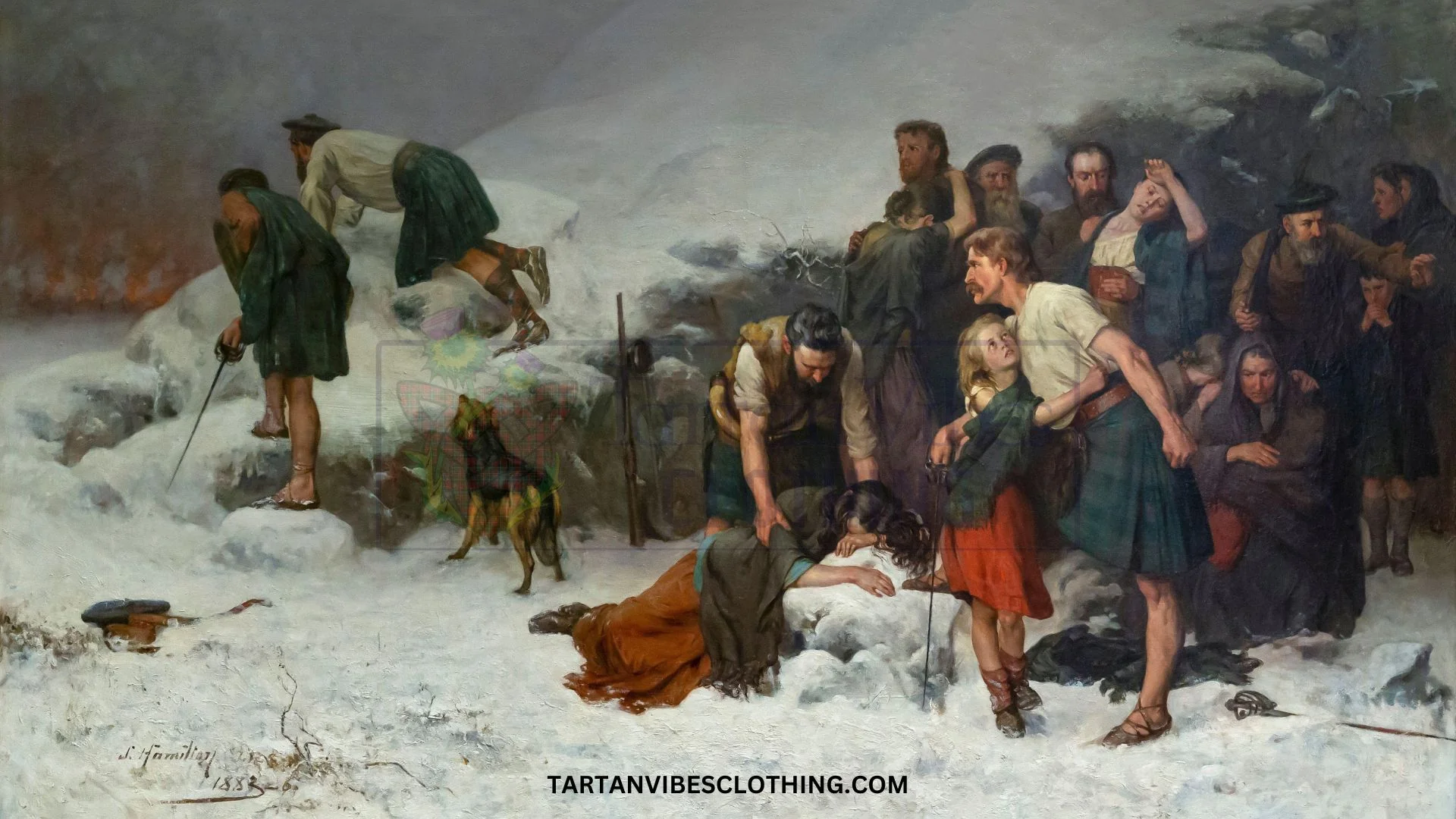
Highlanders could accept killing in open battle, but they could never forgive the murder of a host by his guest. Glencoe crossed a moral boundary that could not be undone, fixing this event as the greatest and most unforgivable reason the Campbells became synonymous with betrayal in Scottish history.
Did the Campbells betray Scotland during the Jacobite Risings? (18th Century)
Period: 18th century, during the Jacobite Risings
Context: Jacobites defending Highland culture versus British state consolidation
Why were they hated: Acting as agents of the British Crown against fellow Scots
Yes — many Scots believed Campbells betrayed Scotland. During the Jacobite Risings, the Campbells openly aligned themselves with the British Crown, placing political stability and royal favor above clan solidarity and Scottish nationalist aspirations. To Jacobite supporters, this choice was seen not as pragmatism but as betrayal.
If earlier centuries cast the Campbells as cunning and brutal, the Jacobite era fixed their image as enforcers of British authority in the Highlands. Their loyalty to London transformed long-standing clan resentment into a broader national grievance.
The Black Watch and Culloden
During the Jacobite Risings, many Highland clans rallied behind the Jacobite cause, risking their lives to defend clan autonomy, Gaelic culture, and the old Highland way of life. The Campbells chose a different path. They supported the British government, raising regiments aligned with state authority and wearing the Crown's uniforms rather than tartan in rebellion.
At Culloden in 1746, Jacobite hopes were crushed. While Highland clans fell in defense of their cause, the Campbells stood on the opposing side of history, associated with the forces that dismantled the clan system itself. To Jacobite sympathizers, this moment confirmed a painful belief: the Campbells had chosen order and power over Scottish identity.

The Hunt for the MacGregors
This loyalty to the Crown was reflected not only on battlefields but in policy. The Campbells played a central role in the long persecution of Clan MacGregor, whose very name had been outlawed by royal decree. Acting with legal and military authority, Campbell forces hunted MacGregors, seized their lands, and helped erase their clan identity from public life.
For many Scots, this was more than rivalry. It was a collaboration. By enforcing bans, suppressing rebellion, and policing the Highlands on behalf of the state, the Campbells came to symbolize the destruction of traditional Highland society.
From this point onward, hatred toward the Campbells was no longer just clan-based. It became political and national, rooted in the belief that they had stood with Britain while Scotland’s cultural heart was being broken.
Were The Campbells Villains Or Simply The Ultimate Survivors?
They were both, but history ultimately remembers them as survivors. The Campbells were ruthless and deeply resented, yet their choices were driven by an exceptional ability to adapt, calculate, and endure in a collapsing Highland world.
After centuries of bloodshed, betrayal, and political calculation, a deeper question emerges: why did the Campbells act this way at all? This could be seen as a survival strategy for this clan. In an age when tradition often meant extinction, the Campbells learned how power truly worked — and mastered it.

Masters of the Game
While clans such as the MacDonalds or Camerons clung fiercely to older Highland traditions and paid for it with destruction or exile, the Campbells adapted. They understood early that the pen was becoming mightier than the sword. Power was shifting away from glens and battlefields toward Edinburgh and London, where laws, titles, and alliances decided the fate of clans.
Rather than fighting endlessly in the mountains, the Campbells played politics on a national stage. For nearly four centuries, they consistently aligned themselves with the winning side in Scotland’s major conflicts. This was not luck, but calculation — an intelligence that allowed them to outlast nearly all their rivals.
"Ne Obliviscaris" and the Military Machine
The Campbells were not merely legal strategists. They also built one of the most disciplined military cultures in Highland history.
Key elements of this identity included:
Clan motto: Ne Obliviscaris (Do Not Forget) — a warning to enemies and a reminder of resilience to their own people.
War cry: “Cruachan!”—named after their ancestral mountain, symbolizing permanence and unbreakable resolve.
The Black Watch: Once hated in the Highlands, later transformed into one of the most elite regiments of the British Empire, earning numerous Victoria Crosses.
This marked the moment when the Campbells’ image shifted from that of alleged traitors to that of hardened, professional soldiers.
The Builders of Modern Scotland
The Campbells also left a lasting mark beyond war. Their influence extended into culture, governance, and modernization.
Their legacy as builders is reflected in:
Inveraray Castle is a symbol of Enlightenment values, wealth, and refined authority rather than medieval brutality.
Patronage of education, infrastructure, and economic development, positioning the clan at the forefront of Highland modernization.
Rather than preserving the old Highland world, the Campbells helped reshape it.

In the end, the Campbells were neither simple villains nor misunderstood heroes. Feared for their ruthlessness and respected for their intelligence, they understood a truth many clans resisted: history rewards adaptation as much as honor. Their name carries the scars of betrayal and bloodshed, but also resilience, strategic brilliance, and an unbreakable will to survive. Love them or loathe them, the Campbells shaped Scotland’s past — and their tartan remains a symbol of power, memory, and endurance.
👉 Proud of your heritage? Explore the Campbell Tartan Collection to wear the colors of the Highlands' most formidable dynasty."
Is The Feud Still Alive Today?
Yes — but only in memory, not in blood. No one draws swords in the Highlands anymore, yet the feud has not disappeared; it has evolved. What was once violence has softened into folklore, dark humor, and the occasional awkward pause when surnames are mentioned. The hatred that once spilled blood now survives mainly as storytelling, symbols, and cultural banter.
The Infamous “No Campbells” Sign
One of the most famous reminders can be found at the Clachaig Inn in Glencoe, a popular stop for hikers and history lovers. Hanging at the entrance is a sign that reads:
“No Hawkers or Campbells.”
At face value, it looks shocking. In reality, the sign functions today as Scottish banter and tourism marketing, not genuine exclusion. Locals and visitors understand it as a tongue-in-cheek reference to history. Still, its viral popularity proves a point: the memory of Glencoe remains alive, and the Campbell name still carries emotional weight in that valley.

Modern Reconciliation
Crucially, the story does not end in resentment. In 2002, marking the 310th anniversary of the Massacre of Glencoe, descendants of Clan MacDonald and Clan Campbell met in a symbolic act of reconciliation. Their public handshake acknowledged the past without reopening it.
Today, the feud exists less as hatred and more as cultural memory. It survives in stories, signs, and shared understanding — proof that even Scotland’s deepest clan rivalries can move from vengeance to remembrance.
Final Thoughts: A Legacy of Power, Pain, and Memory
From territorial ambition to the tragedy of Glencoe, the history of the Campbells is stained with blood, betrayal, and hard choices made in the pursuit of power. This legacy explains why the Campbell Clan is hated, yet despite that resentment, no one can deny the scale of their influence on Scotland’s past. In the end, the Campbell legacy leaves us with mixed feelings — resentment, respect, and reluctant admiration — a reminder that survival and power rarely come without a cost.
Frequently Asked Questions
What is the controversy with the Campbell clan?
The hated Campbells are best known for the massacre at Glencoe at the ancestral lands of Clan MacDonald. In the early hours of February 13, 1692, 36 MacDonalds were slaughtered -- including women and young children -- after they had welcomed the Campbells into their homes.
Why does Scotland hate Campbells?
The clan was involved in many key events in Scottish history, including the Wars of Scottish Independence and the Jacobite Risings. During the Jacobite Risings, the Campbells were loyal to the British crown and fought against the rebels. This earned them the nickname "The Bloody Clan" from their opponents.Why does Scotland hate Campbells?
What is the most feared clan in Scotland?
Number one is Clan Campbell of Breadalbane. The feud between the MacGregors and the Campbells is well documented but Sir Malcolm said this strand of the Campbells was particularly feared given its dominance over a large swathe of Scotland - and its will to defend it at all cost.
What is Clan Campbell known for?
The Campbells gave support to the Crown throughout the 15th century. By the end of the 15th century, the power of the Lords of the Isles (chiefs of Clan Donald), the Crown's most powerful rivals, had been broken, and the Campbells were the main power in the area.
Why is the Campbell Clan hated?
The Campbell Clan's history is marked by conflicts, betrayals, and political machinations, leading to deep-seated resentment and hatred from other clans.

Teresa Finn
As someone with a deep passion for clan heritage, especially the intriguing world of tartans and their rich traditions, I'm here to be your companion on this exciting journey. Together, we'll delve into the depths of clan history, uncovering the stories behind these vibrant tartans and making every connection to your heritage more meaningful.


My wife is a descendant of the Campbell Clan. This explains a lot!
I had a friend of mine with the last name of McDonald, even centuries after their reign of terror and killing of the Mc Donald family, he still despises the Campbells!
These weren’t their only acts of encroachment on other people’s lands or machiavellian betrayal. Their behaviour towards Clan Lamont at Castle Toward in the Dunoon Massacre where they leveraged and broke custom to murder folks in their beds (and then poisoned the wells with their bodies) probably didn’t do their reputation much good either…
Very interesting read. I am a 5th generation Australian Campbell.
It’s very difficult to trace my family tree but I would love to find my roots.
I am a grandchild of Charles Campbell, and had no idea they were so notorious.