


Traditional Highland Dress: What It Includes, When It's Worn, and How to Choose the Right Tartan
by Aimee Li on Jun 24, 2026
Table of Content
Traditional Highland dress is the traditional attire of Scottish Highlanders, consisting of a kilt, sporran, jacket, kilt hose, and tartan accessories. It is commonly worn at weddings, Highland games, formal events, and cultural celebrations throughout Scotland and beyond.
Although the kilt is the best-known element, Highland dress includes a complete system of garments, accessories, and tartan traditions. This guide explains what Highland dress includes, how men's and women's outfits differ, when it is worn, and how to choose the right tartan.
What Is Traditional Highland Dress?
Traditional Highland dress is the traditional attire of the Scottish Highlands and Isles, recognized worldwide for its distinctive tartan patterns and the iconic kilt. Originally developed as practical clothing suited to Scotland's rugged landscape, it has evolved into a symbol of Scottish heritage worn at weddings, Highland games, formal events, and cultural celebrations.
Today, Highland dress refers to a complete outfit rather than a single garment. Depending on the occasion, it may include a kilt, sporran, jacket, kilt hose, ghillie brogues, and tartan accessories. Different combinations create casual, semi-formal, or formal versions of Highland attire.
One of the most common misconceptions is that Highland dress and a kilt are the same thing. In reality, the kilt is only one component of a complete Highland outfit.
Highland Dress |
Kilt |
A complete traditional outfit |
A single garment |
Includes accessories, footwear, and formalwear |
Refers only to the pleated tartan garment |
Can be casual, semi-formal, or formal |
Forms the foundation of the outfit |
Worn with jackets, sporrans, hose, and brogues |
Typically worn as part of Highland dress |
Think of the kilt as the centerpiece of Highland dress. While every traditional Highland outfit includes a kilt, Highland dress encompasses the entire combination of garments and accessories that create a complete Scottish look.
What Is Included in Traditional Highland Dress?
Complete Highland Dress Checklist
Item |
Purpose |
Essential? |
Kilt |
The foundation of the outfit |
Yes |
Sporran |
Pocket substitute worn at the front |
Yes |
Jacket & Waistcoat |
Adds formality and structure |
Usually |
Kilt Hose & Flashes |
Traditional socks and garters |
Yes |
Ghillie Brogues |
Traditional Highland footwear |
Recommended |
Sgian-Dubh |
Ceremonial knife worn in the hose |
Optional |
Kilt Pin |
Decorative and practical accessory |
Optional |
Fly Plaid |
Formal tartan cloth worn over the shoulder |
Formal occasions |
The Kilt

The Sporran
Because traditional kilts do not include pockets, a sporran is worn at the front of the outfit to carry personal items. Depending on the occasion, it may be a simple leather day sporran or a more decorative dress sporran featuring fur and metal ornamentation.
Day sporrans are typically worn with casual or semi-formal Highland dress, while dress sporrans are reserved for weddings, black-tie events, and other formal occasions.

Jacket and Waistcoat
The jacket largely determines the formality of a Highland outfit. Tweed and Argyll jackets are common for daytime and semi-formal occasions, while the Prince Charlie jacket is traditionally reserved for formal evening events and weddings.
Among the most popular styles, the Argyll jacket is valued for its versatility and suitability for daytime wear, while the Prince Charlie jacket is considered the formal equivalent of a tuxedo in Highland dress.


Kilt Hose and Flashes

Ghillie Brogues

Sgian-Dubh and Kilt Pin
The sgian-dubh is a small ceremonial knife traditionally worn inside the kilt hose, while the kilt pin is attached to the outer apron of the kilt to add weight and decoration. Both accessories are closely associated with traditional Highland dress and remain popular for formal occasions.

How to Assemble a Traditional Highland Outfit
For those new to Highland dress, assembling a complete outfit is often simpler than it appears. Most traditional outfits follow the same basic structure, with the kilt serving as the foundation and the remaining garments added based on the occasion.
Start with a tartan kilt.
Add a sporran at the front of the kilt.
Wear kilt hose and flashes below the knee.
Choose an appropriate jacket, such as an Argyll or Prince Charlie style.
Complete the outfit with ghillie brogues and optional accessories like a sgian-dubh or kilt pin.
While accessories and levels of formality may vary, this combination forms the basis of most traditional Highland outfits worn today.
Traditional Highland Dress for Men and Women

Men's Highland Dress
The kilt remains the foundation of traditional Highland dress for men. Depending on the occasion, it is paired with a sporran, jacket, kilt hose, ghillie brogues, and various accessories. Modern men's Highland outfits generally fall into three categories:
Casual Highland dress for festivals and informal gatherings
Semi-formal Highland dress for dinners, celebrations, and daytime weddings
Formal Highland dress for black-tie events, evening weddings, and ceremonial occasions
The level of formality is determined by the choice of jacket, sporran, footwear, and accessories rather than the kilt itself.
Women's Highland Dress
Unlike men, Highland women did not traditionally wear tailored kilts. Instead, women's Highland attire focused on draped tartan garments, long skirts, shawls, and decorative accessories.
Some of the most recognizable elements of traditional women's Highland dress include:
Earasaid (Arisaid)
Tartan skirts
Tartan sashes
Tonnags (small tartan shawls)
Clan brooches

Today, women often wear tartan skirts, dresses, or contemporary Highland-inspired outfits that blend traditional Scottish elements with modern fashion.
Historically, women wore the earasaid, a large draped tartan garment secured with a belt or brooch. Modern tartan skirts serve a similar cultural role but offer a more practical and contemporary interpretation of traditional Highland attire.
Key Differences Between Men's and Women's Highland Dress
While both styles celebrate Scottish heritage, their construction and traditions developed differently.
Feature |
Men's Highland Dress |
Women's Highland Dress |
Main Garment |
Kilt |
Tartan skirt, dress, or earasaid |
Traditional Accessory |
Sporran |
Sash or brooch |
Footwear |
Ghillie brogues |
Traditional or modern footwear |
Styling |
Structured and rule-based |
More flexible and varied |
Modern Use |
Formal and ceremonial occasions |
Traditional and fashion-focused occasions |
Today, both men's and women's Highland dress are commonly worn at weddings, Highland games, Burns Suppers, clan gatherings, and cultural celebrations. While the garments may differ, both continue to represent Scotland's rich heritage and enduring tartan traditions.
Highland Dress by Occasion
Traditional Highland dress is highly adaptable and can be styled for a wide range of occasions. While the kilt remains the foundation of most outfits, the choice of jacket, accessories, and footwear determines whether the overall look is casual, semi-formal, or fully formal.
Understanding the dress code helps ensure your Highland outfit is both appropriate for the occasion and respectful of Scottish traditions.

Casual Highland Dress
Casual Highland dress offers a relaxed interpretation of traditional Scottish attire. It is commonly worn at Highland games, festivals, clan gatherings, and informal social events.
A typical casual outfit may include:
Kilt
Jacobite or ghillie shirt
Leather day sporran
Kilt hose
Boots or standard brogues
Compared to formal Highland wear, casual outfits prioritize comfort while still showcasing tartan heritage and Scottish identity.
Semi-Formal Highland Dress
Semi-formal Highland dress is one of the most versatile options and is suitable for many social and cultural occasions. It balances tradition with practicality, making it a popular choice for celebrations and daytime events.
A semi-formal outfit typically includes:
Kilt
Argyll jacket
Dress shirt and tie
Semi-dress sporran
Kilt hose and flashes
Ghillie brogues
This level of dress is often seen at Burns Suppers, dinners, cultural events, and daytime weddings.
Formal Highland Dress
Formal Highland dress is traditionally reserved for black-tie events, evening weddings, ceremonial functions, and prestigious Scottish gatherings.
A formal outfit generally includes:
Kilt
Prince Charlie jacket
Waistcoat
White dress shirt
Black bow tie
Dress sporran
Ghillie brogues
Sgian-dubh
Additional accessories such as a fly plaid or clan crest badge may also be worn for ceremonial occasions.
Highland Dress for Weddings
Highland dress remains one of the most popular forms of wedding attire in Scotland. Grooms, groomsmen, and wedding guests often wear coordinated tartans to celebrate family heritage or clan connections.
For formal weddings, the Prince Charlie jacket is typically preferred, while daytime ceremonies often call for an Argyll jacket and semi-formal styling.

Highland Dress for Highland Games and Cultural Events
Highland games, clan gatherings, and cultural festivals usually allow for a more relaxed approach to Highland attire. Many attendees choose casual or semi-formal outfits that combine traditional elements with greater comfort and flexibility.
These events provide an opportunity to wear clan tartans, showcase Scottish heritage, and participate in long-standing cultural traditions without the strict formality required at weddings or black-tie functions.
Highland Dress Formality Guide
Occasion |
Recommended Dress Code |
Highland Games |
Casual |
Clan Gatherings |
Casual to Semi-Formal |
Burns Supper |
Semi-Formal |
Daytime Wedding |
Semi-Formal |
Evening Wedding |
Formal |
Black-Tie Event |
Formal |
Cultural Celebration |
Semi-Formal |
While specific expectations may vary by event, semi-formal Highland dress is generally the safest and most versatile choice for most occasions.
Common Highland Dress Mistakes to Avoid
If you're new to Highland dress, avoiding a few common mistakes can help create a more authentic and appropriate outfit.
Wearing the wrong jacket for the occasion: Prince Charlie jackets are best suited to formal evening events, while Argyll jackets are generally more appropriate for daytime and semi-formal occasions.
Mixing casual and formal accessories: Pairing a Jacobite shirt with a formal dress sporran can create an inconsistent look. Try to match all components to the same level of formality.
Choosing the wrong kilt length: A traditional kilt should typically fall around the middle of the knee when standing.
Combining too many tartans: Most Highland outfits use one primary tartan rather than mixing several unrelated tartan patterns.
Ignoring the dress code: Weddings, Highland games, Burns Suppers, and black-tie events often require different levels of Highland dress.
Choosing the Right Tartan
Clan Tartans
If you have Scottish ancestry, wearing your clan tartan is a traditional way to represent your family heritage. Many clans have several tartan variations, including modern, ancient, hunting, and dress versions.
Today, clan tartans are officially recorded and maintained through the Scottish Register of Tartans, which serves as Scotland's national repository for tartan designs.
Universal Tartans
Not everyone belongs to a Scottish clan. Universal tartans, such as Black Watch and Scottish National, can be worn by anyone and are commonly chosen for weddings, cultural events, and Highland dress.
What If You Don't Have a Clan?
History of Traditional Highland Dress
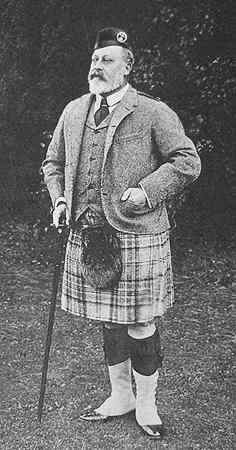
Traditional Highland dress originated in the Scottish Highlands during the 16th century, where practical clothing was essential for life in a rugged and often harsh environment. Early Highlanders wore the féileadh mòr, or great kilt, a large piece of woolen tartan cloth that could be worn as both clothing and a blanket.
By the 18th century, Highland dress had become closely associated with Scottish clan identity. Following the Jacobite Rising of 1745, the British government introduced the Dress Act of 1746, which banned the wearing of Highland dress in an attempt to suppress Highland culture and weaken the clan system.
The ban remained in place until 1782, when it was repealed. During the 19th century, a renewed interest in Scottish heritage helped revive Highland dress. Influential figures such as Sir Walter Scott and King George IV popularized tartan and Highland attire, transforming them into symbols of Scottish national identity.
Today, traditional Highland dress is worn around the world at weddings, Highland games, cultural celebrations, and formal events. While modern outfits have evolved from their historical origins, they continue to reflect the traditions, craftsmanship, and heritage of the Scottish Highlands.
Highland Dress Today
Although traditional Highland dress originated centuries ago, it remains an important part of Scottish culture today. Rather than being everyday clothing, Highland dress is now primarily worn for weddings, Highland games, Burns Suppers, clan gatherings, and other cultural celebrations.
Modern Highland attire balances tradition with practicality. While classic elements such as the kilt, sporran, and tartan remain central to the outfit, contemporary designs often incorporate modern tailoring, lightweight fabrics, and updated styling.
Highland dress is also worn far beyond Scotland. People around the world embrace tartan and Highland attire to celebrate Scottish ancestry, participate in cultural events, or simply appreciate Scotland's rich heritage.
Whether worn in its most traditional form or adapted for modern occasions, Highland dress continues to serve as a lasting symbol of Scottish identity, craftsmanship, and cultural pride.
Conclusion
Traditional Highland dress remains a lasting symbol of Scottish heritage, bringing together tartan traditions, clan identity, and centuries of craftsmanship. Whether you're attending a wedding, Highland games, or a cultural celebration, understanding the different elements of Highland dress helps you choose an outfit that is both authentic and appropriate for the occasion.
If you're ready to explore tartans, discover your clan connections, or find inspiration for your next Highland outfit, continue exploring our guides to Scottish clothing, tartans, and Highland traditions.
Frequently Asked Questions
Can non-Scots wear traditional Highland dress?
Yes. Traditional Highland dress is worn by many people who do not have Scottish ancestry. Today, it is widely accepted as a way to celebrate Scottish culture, attend cultural events, or honor family connections through marriage or friendship. Respecting the traditions and significance of Highland dress is generally considered more important than ancestry alone.
Do you need a clan tartan to wear Highland dress?
No. While many people choose to wear their family or clan tartan, it is not a requirement. Those without a known clan connection often wear universal tartans, regional tartans, or patterns they simply appreciate. Modern Highland dress is more inclusive than it was historically.
What is the difference between a Prince Charlie jacket and an Argyll jacket?
The Prince Charlie jacket is a formal evening jacket typically worn for black-tie events, weddings, and ceremonial occasions. The Argyll jacket is more versatile and suitable for daytime wear, semi-formal events, and business functions. In general, the Prince Charlie is considered the more formal of the two.
Can women wear a kilt as part of Highland dress?
Yes. Although women traditionally wore garments such as the earasaid, tartan sash, or tartan skirt, modern Highland dress often includes kilted skirts and women's kilts. Today, women have greater flexibility in how they incorporate tartan and Highland-inspired clothing into both formal and casual outfits.
What tartan can you wear if you don't belong to a Scottish clan?
If you do not belong to a Scottish clan, you can wear a universal tartan such as Black Watch or Scottish National. Many people also choose tartans based on personal preference, regional connections, or special occasions. There is no requirement to belong to a clan in order to wear tartan respectfully.

Aimee Li
An author dedicated to exploring the rich history, vibrant culture,... of the Scottish clans. As an avid historian and fashion enthusiast, I have always been fascinated by Scotland's heritage and the timeless elegance of its traditional attire. Join me on this journey through the highlands and lowlands, as we delve into the heart of Scottish legacy together.


