



Traditional Scottish Food Explained: 25 Dishes from Everyday Meals to Classics
by Teresa Finn on Feb 24, 2025
Table of Content
Ever wondered what Scots really eat beyond the familiar haggis clichés? Rugged landscapes, long winters, and generations of practical, clever cooking shape traditional Scottish food.
This guide looks at the real meals enjoyed across Scotland, separating long-standing traditions from the more modern dishes you’ll find in local homes and Highland cafés today.
Hearty Traditional Scottish Main Dishes
1. Haggis
Haggis is Scotland’s national dish and one of the most iconic examples of traditional Scottish food. It is made from minced sheep’s pluck (heart, liver, and lungs), combined with onions, oatmeal, suet, and spices, traditionally encased in a sheep’s stomach.
Haggis is most commonly served with neeps and tatties (mashed turnips and potatoes) and a dram of Scotch whisky, especially on Burns Night.
Important note for accuracy: Traditional haggis was historically banned for import into the United States for many years because US regulations prohibit the use of sheep lungs in food. As a result, “American haggis” versions use alternative ingredients, while authentic haggis remains legal and widely eaten in Scotland.

2. Stovies
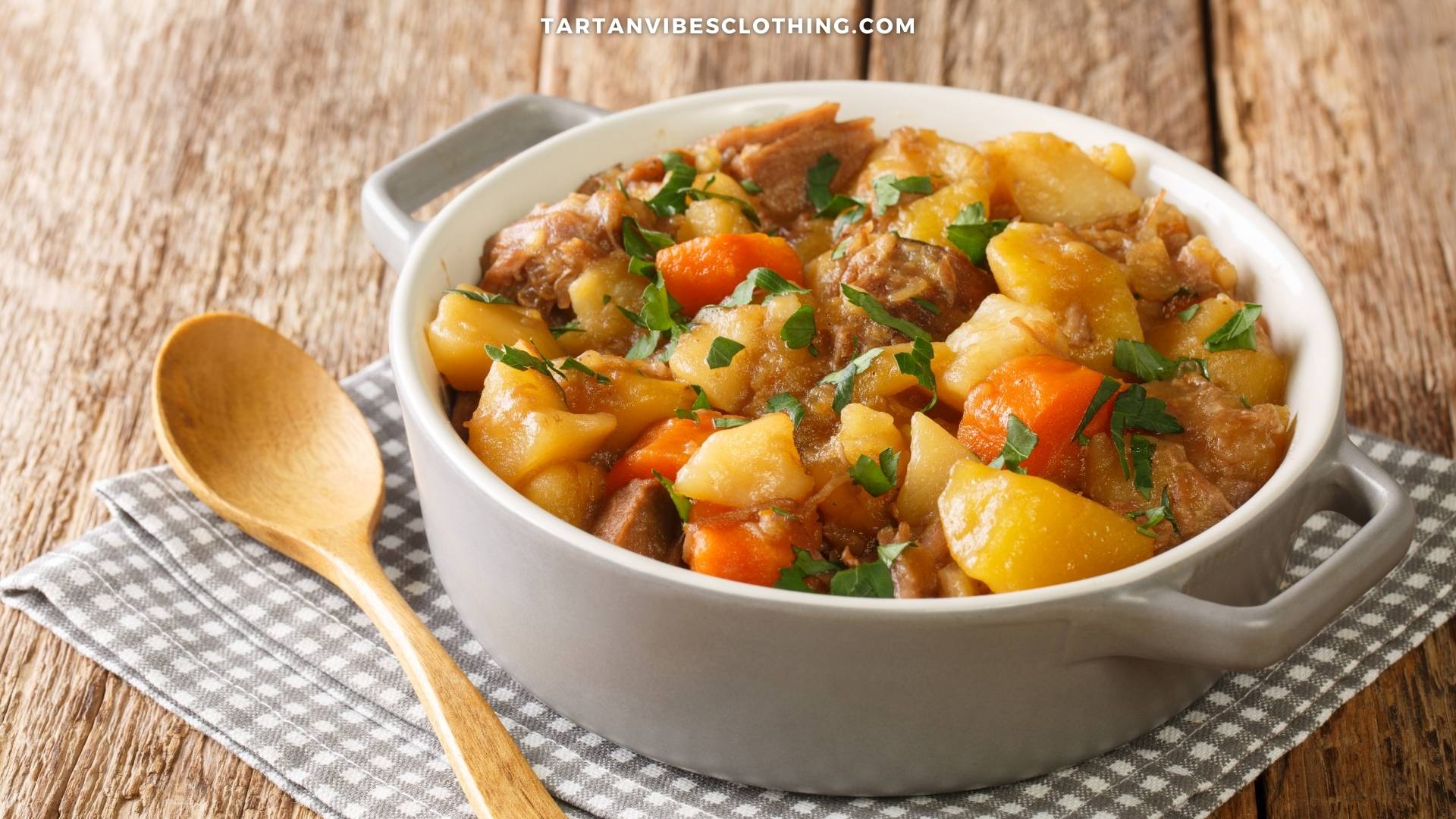
Stovies is a hearty main dish, designed to be filling and economical. Traditionally made from potatoes, onions, meat (often beef or sausages), and cooking fat or dripping, stovies were a practical way to make use of what was already on hand in working-class households.
This is classic Scottish home cooking—simple, heavy, and satisfying, especially on cold days when something warm and familiar matters more than presentation.
3. Balmoral Chicken
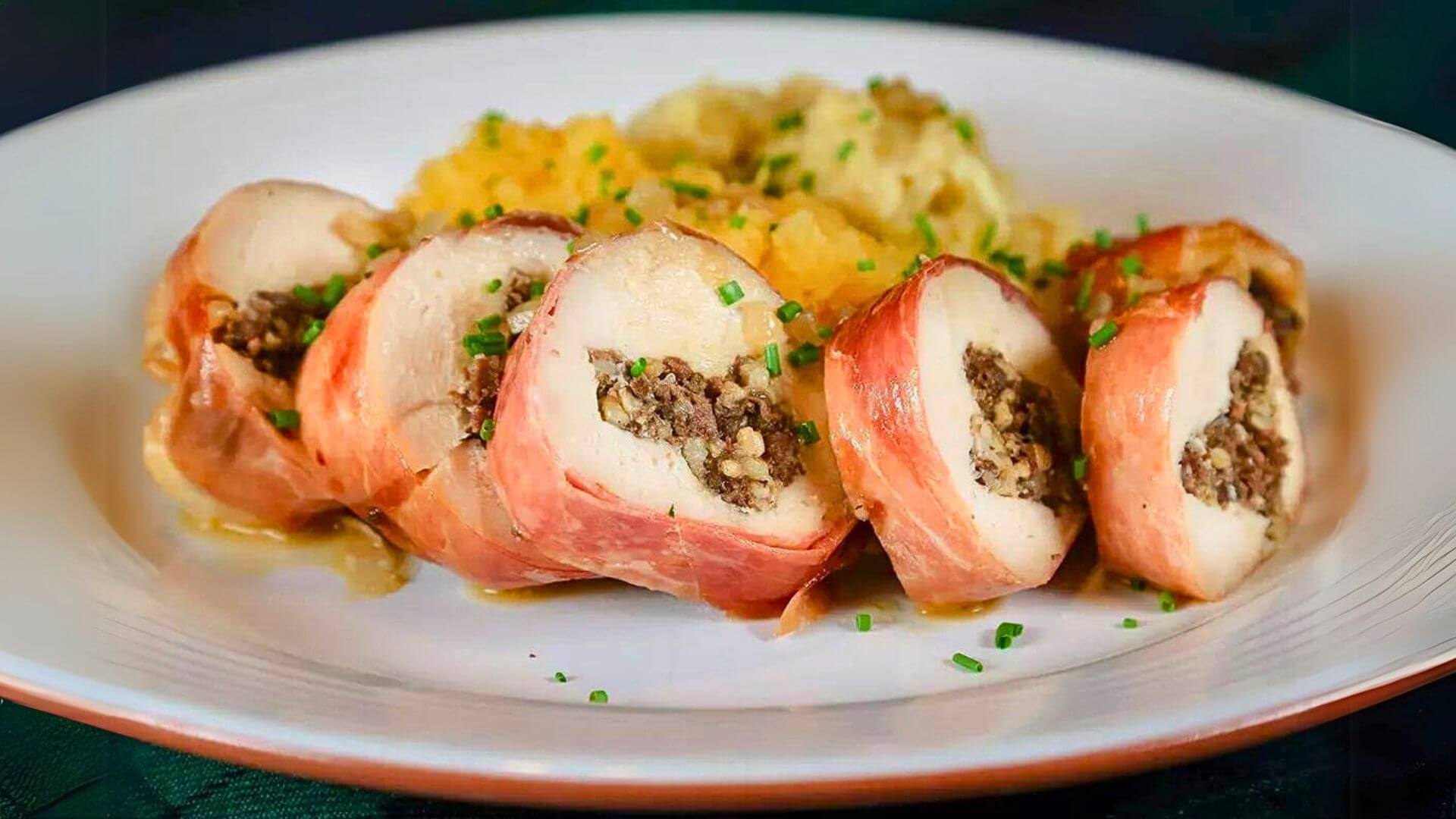
Balmoral chicken is a modern Scottish main dish commonly found on restaurant menus rather than in home kitchens. It consists of a chicken breast stuffed with haggis, wrapped in bacon, and baked until the outside is crisp and the inside is rich.
This dish is most often served during Burns Night and Hogmanay, usually accompanied by neeps and tatties and a whisky-based cream sauce. While not an everyday meal, Balmoral chicken has become a familiar celebratory option for diners looking for a refined take on traditional Scottish flavours.
4. Neeps and Tatties
Neeps and tatties are one of the most fundamental side dishes in Scottish cooking. Neeps, usually swede rather than turnip, and tatties (potatoes) are boiled and mashed separately to preserve their distinct flavours.
When mashed together, the dish is known as clapshot, a version primarily associated with Orkney and often served with haggis, particularly at Burns Night.
Most famously served with haggis at a Burns Supper, neeps and tatties also appear alongside roast meats, sausages, and stews. Root vegetables stored well through winter, which explains their lasting role in Scottish meals.

Scottish Soups & Stews
5. Cullen Skink
Origin: Cullen, Moray (northeast Scotland)
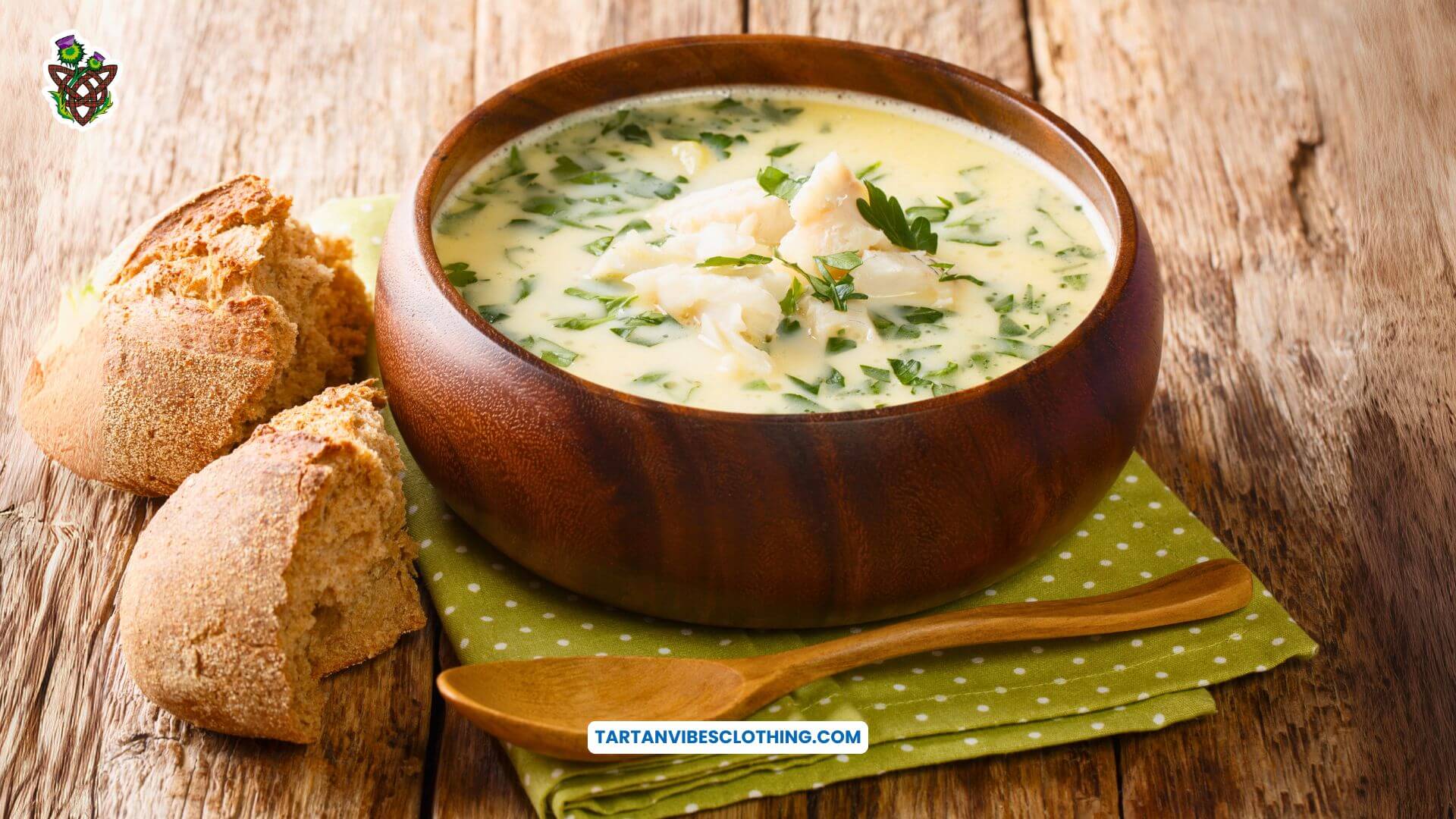
Cullen skink is one of the most recognisable traditional Scottish dishes from the northeast coast. Made with smoked haddock, potatoes, onions, and milk or cream, it reflects Scotland’s strong coastal food culture rather than rural survival cooking.
What defines Cullen Skink is its use of locally smoked fish, which gives the soup depth and smokiness that set it apart from other Scottish soups. Its identity is so closely tied to place that the town of Cullen hosts an annual World Cullen Skink Championship.
More than just a soup, Cullen skink represents how Scottish cuisine developed differently along the coast, where seafood and preservation techniques shaped everyday meals.
6. Scotch Broth
Scotch broth is a clear example of traditional Scottish home cooking rooted in rural life. Made with lamb or beef, barley, root vegetables, and herbs, it reflects the kind of one-pot meals that sustained households through long, cold seasons.
Barley gives the broth its body and substance, turning simple ingredients into a meal designed to nourish rather than impress. Unlike lighter soups, Scotch broth was intended to stand on its own, especially during colder months.
This dish remains closely associated with Scottish food culture shaped by farming, seasonality, and practicality, rather than regional identity.

7. Cock-a-Leekie Soup
Often referred to as Scotland’s national soup (informally), cock-a-leekie dates back to at least the 16th century. Made from chicken stock and leeks, it sometimes includes prunes—a traditional but optional ingredient.
The dish reflects historic French influence on Scottish cuisine and was traditionally served as a starter at formal meals. Today, it is most commonly enjoyed as a light but warming soup, especially during colder months.

Scottish Breakfast Foods
8. Full Scottish Breakfast
A full Scottish breakfast is similar to the English version but has its own identity.
Traditional components include:
Bacon
Sausages (including Lorne/square sausage)
Eggs
Black pudding
Tattie scones
Tomatoes and mushrooms
Sometimes haggis
Accuracy note: hash browns are a modern addition and not traditionally Scottish, having been adopted later from American-style breakfasts.

9. Black Pudding
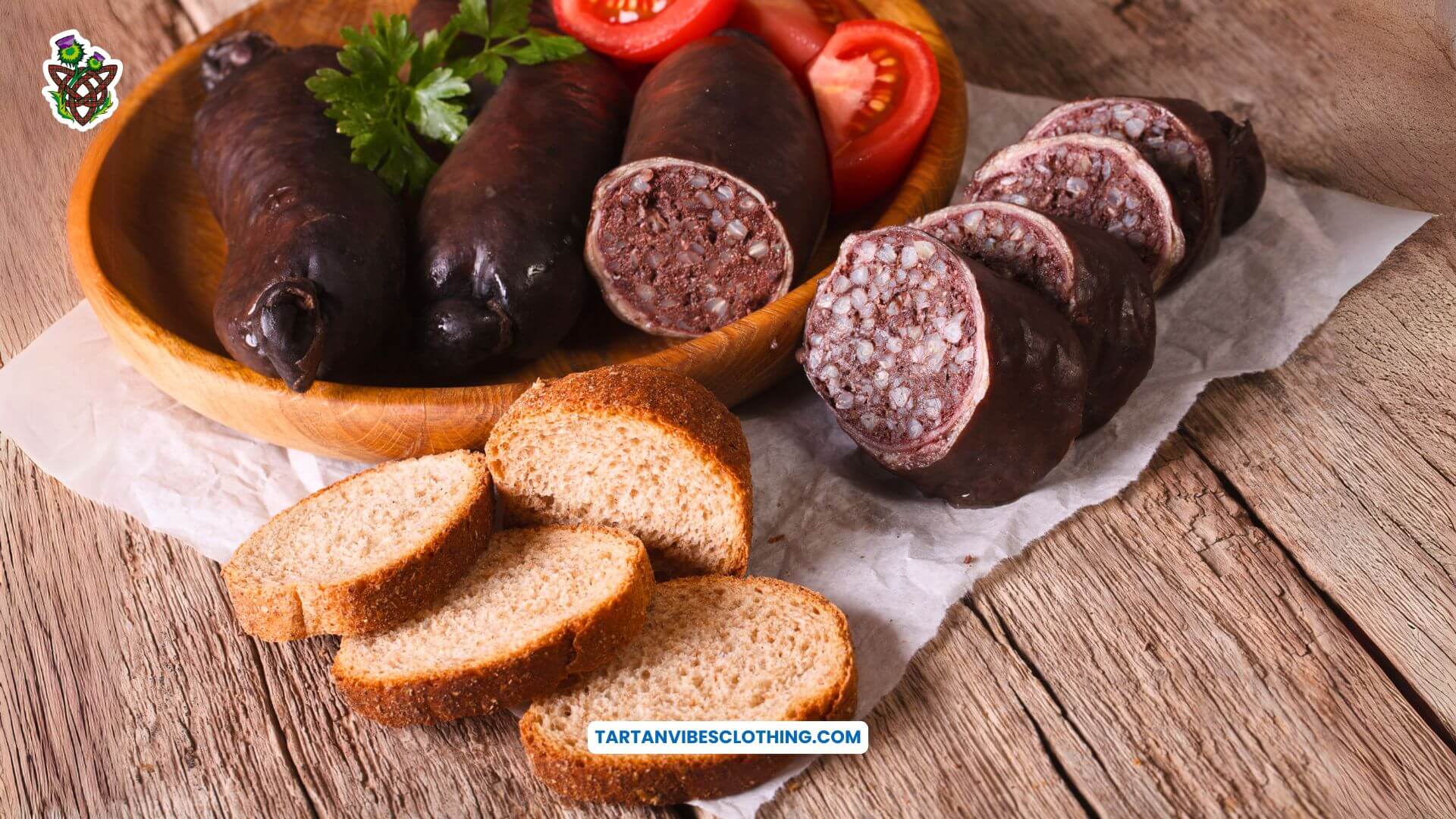
Black pudding is a core element of traditional Scottish savoury food and an essential part of a full Scottish breakfast. Made from pork or beef blood mixed with oats or barley and seasoning, it has a rich, savoury flavour and dense texture.
Historically, black pudding developed as a practical way to use every part of the animal, reflecting a no-waste approach to food that was common across Scotland. While closely associated with breakfast today, it is also used in more modern dishes, paired with scallops, potatoes, or even incorporated into gourmet menus.
Despite its intense flavour and reputation, black pudding remains firmly embedded in Scottish food culture. It is widely eaten, locally produced, and continues to bridge the gap between traditional cooking and contemporary Scottish cuisine.
10. Tattie Scones (Potato Scones)
If you’ve ever had a proper Scottish breakfast, chances are you’ve already met tattie scones. Also known as potato scones, this flat, soft bread is made from mashed potatoes mixed with flour and a little fat, then cooked on a hot griddle rather than baked.
Tattie scones developed as a practical way to use leftover potatoes, fitting perfectly with Scotland’s long tradition of economical, no-waste cooking. Their mild flavour and tender texture make them an ideal accompaniment to richer breakfast items such as sausages, eggs, and black pudding.
In Scotland, tattie scones are rarely eaten on their own. They’re typically fried or warmed and served as part of a full Scottish breakfast, where they act as a comforting base rather than the star of the plate.

11. Scottish Porridge
Scottish porridge has been a staple of the national diet for centuries. Traditionally made from oats cooked slowly in water and seasoned with salt, not sugar, it reflects a preference for simple, sustaining food.
Oats thrived where other grains struggled and provided long-lasting energy, which is why porridge became a regular part of Scottish breakfasts. In the traditional Scottish approach, milk is served separately, and the porridge is dipped into it rather than mixed together.
While sweet toppings are now common, the salted, water-cooked version remains widely recognised as the authentic way Scots have eaten porridge.

Baked Goods & Savoury Pastries
12. Forfar Bridie
Origin: Forfar, Angus
If you ever visit Angus, chances are you’ll come across a Forfar bridie sooner or later. This iconic local pastry is half-moon shaped and filled with minced beef, onions, and suet or butter, all wrapped in a sturdy, flaky crust.
One crucial detail sets it apart from similar British pastries: there are no potatoes inside. Traditionally, some bridies even had small vent holes in the pastry to indicate whether onions were included, a practical detail rooted in local baking customs rather than decoration.
Dating back to the 19th century, Forfar bridies remain a strong symbol of regional Scottish food culture. They are still commonly bought from local bakeries and eaten warm, proving that not all traditional dishes belong on formal dining tables.

13. Scotch Pies
Scotch pies are small, round, double-crusted meat pies traditionally filled with minced mutton or beef, seasoned simply with pepper and spices. Their sturdy pastry shell was designed to be eaten by hand, making them practical street food.
They are deeply embedded in everyday Scottish life and are especially associated with football culture, where they are a typical match-day snack. Found in bakeries, butchers, and takeaways across Scotland, Scotch pies represent affordable, working-class food traditions rather than celebratory cuisine.

14. Scottish Oatcakes
If there’s one food that quietly represents everyday Scottish eating, it’s oatcakes. Simple, sturdy, and deeply traditional, Scottish oatcakes are made primarily from oats, water, and a little fat, then baked or cooked on a griddle.
Oats thrived where wheat struggled, making them central to the Scottish diet for centuries. Oatcakes were portable, long-lasting, and filling, which is why they became a staple in both rural homes and urban households.
Traditionally, oatcakes are eaten as an accompaniment rather than on their own. They are commonly served with cheese, soups, smoked fish, or even alongside breakfast dishes.

15. Isle of Mull Cheddar (Mull Cheddar Cheese)
Isle of Mull cheddar is one of Scotland’s most distinctive cheeses, and its character is inseparable from its place of origin. Produced on the Isle of Mull using unpasteurised cow’s milk, it is crafted using traditional methods that prioritise flavour over uniformity.
One unusual detail often mentioned—and genuinely accurate—is the cows’ diet. They are fed fermented grain from the nearby Tobermory whisky distillery, which contributes to the cheese’s bold, slightly fruity, and tangy profile. The result is a pale ivory cheddar with a robust, complex finish.
Isle of Mull cheddar is typically eaten simply, served with oatcakes or bread, allowing its flavour to stand on its own.

16. Selkirk Bannock
Origin: Selkirk, Scottish Borders
Selkirk bannock is often misunderstood as simple bread, but it is far richer than that. This traditional Scottish bake is a buttery fruit loaf, generously packed with sultanas and designed to be eaten sliced and spread with butter.
Its reputation extends beyond local kitchens. During a visit to the Scottish Borders, Queen Victoria famously enjoyed Selkirk bannock. This endorsement helped elevate it from regional specialty to nationally recognised bake.
Even today, Selkirk bannock is associated with hospitality and sharing. It is commonly served with tea.

Desserts & Sweet Treats
17. Dundee Cake
Origin: Dundee, Tayside
Dundee cake is a refined Scottish fruit cake known for its lighter texture and distinctive decoration. Made with sultanas, currants, and candied peel, it is traditionally topped with concentric circles of blanched almonds rather than icing or glaze.
Whisky is not a required traditional ingredient, glacé cherries are a later addition, and classic recipes do not include a sweet glaze. These elements appear mainly in modern interpretations rather than historical versions.
The cake is closely associated with Dundee’s Keiller family, famous for marmalade production. Their use of citrus peel helped shape the cake’s flavour profile, firmly linking Dundee cake to the city’s food heritage.

18. Shortbread
Shortbread is one of the most familiar traditional Scottish desserts, recognised for its rich butter content and crumbly texture. It evolved from medieval “biscuit bread” as yeast was gradually replaced with butter, turning a practical bake into something more indulgent.
The biscuit is often associated with Mary, Queen of Scots, who is widely credited with popularising shortbread in the 16th century. Under her influence, it became more refined and firmly linked to occasions of hospitality rather than everyday bread.
Rather than belonging to a single region, shortbread is tied to festive traditions such as Christmas and Hogmanay. It is still commonly baked at home and given as a gift, representing continuity in Scottish food culture.

19. Cranachan
Cranachan is one of Scotland’s most celebrated desserts, combining whipped cream, Scotch whisky, honey, toasted oats, and fresh raspberries. Simple ingredients, yes—but brought together with balance and care.
The dessert has strong ties to harvest traditions, when fresh raspberries and oats were at their best. In earlier versions, the ingredients were sometimes kept separate and mixed at the table, emphasising seasonality and shared participation rather than presentation.
Most versions served now are layered or fully mixed, but the point stays the same: fresh raspberries, toasted oats, and a gentle whisky warmth in every bite.

20. Scottish Tablet
Scottish tablet is a traditional confection known for its firm, crumbly texture and intense sweetness. Made by boiling sugar, condensed milk, and butter, it sets differently from fudge, breaking cleanly rather than melting.
One of tablet’s defining qualities is its long shelf life, which made it ideal for storing, sharing, and transporting. This practical feature helped it become a familiar presence in homes across Scotland.
Within a Scottish food guide, tablet stands out not for ceremony, but for texture and technique—an example of how simple ingredients are pushed to a particular result.
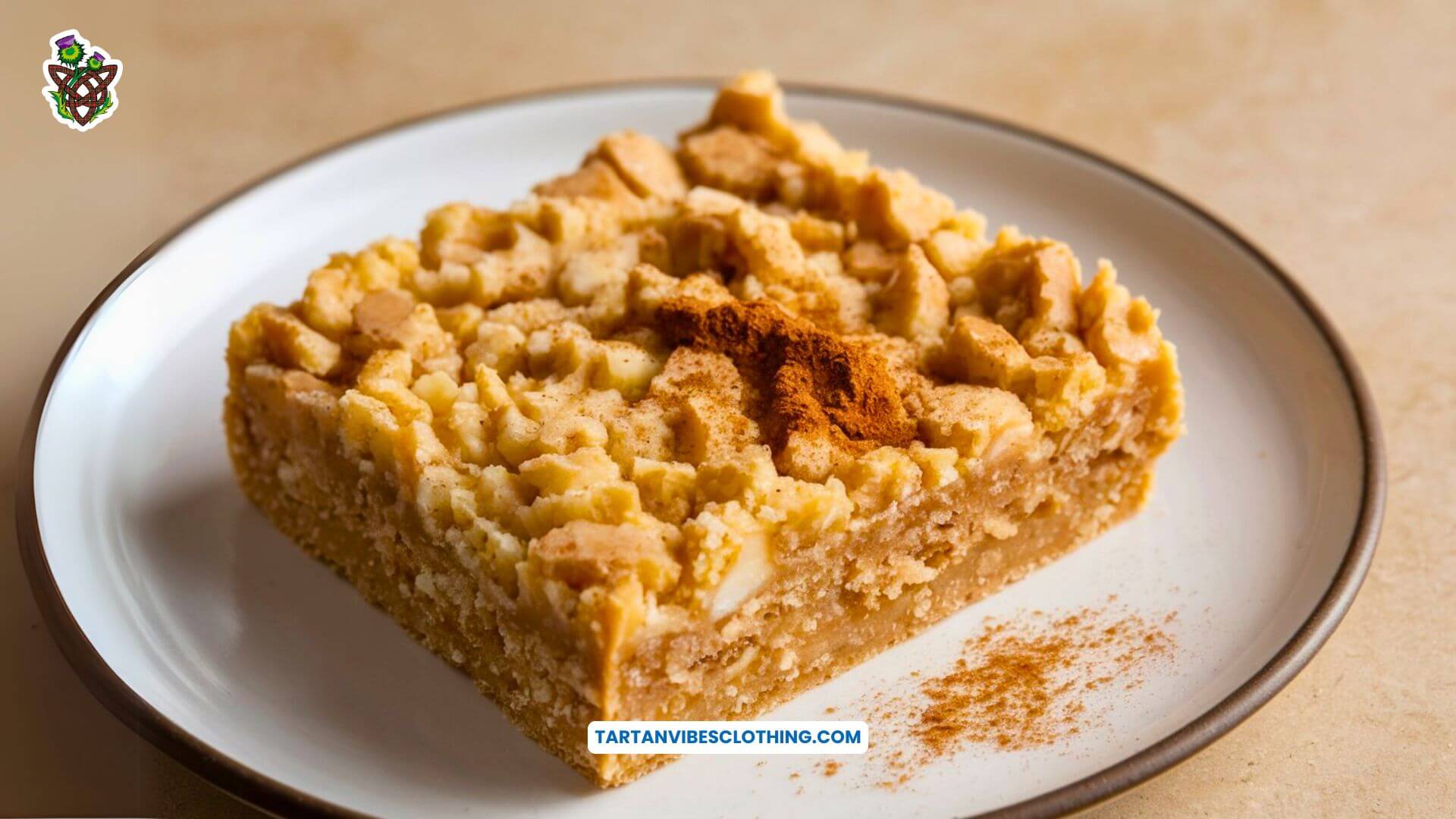
21 Clootie Dumpling
Clootie dumpling is defined less by its ingredients than by its method. The mixture of dried fruit, suet, flour, and spices is wrapped tightly in a cloth, or cloot, before being boiled or steamed, giving the pudding its dense texture and dark outer skin.
That cooking process shaped how the dessert was eaten. Clootie dumpling was designed to be sliced and shared, making it well-suited to large family meals rather than individual portions.
In traditional Scottish food, it represents communal eating and older kitchen practices that valued durability and sharing over presentation.

Seafood & Coastal Specialties
22. Arbroath Smokies
Origin: Arbroath, Angus (east coast)
Arbroath smokies are one of Scotland’s most tightly protected and regionally defined foods. Made from haddock and produced only within a small area around the coastal town of Arbroath, they hold Protected Geographical Indication (PGI) status, meaning both the method and location matter.
The process is carefully controlled. The haddock is first salted, then dried, before being hot-smoked at moderate, regulated temperatures. This ensures the fish cooks gently without drying out, preserving its flaky texture while developing a deep, natural smokiness. It is a precise technique, passed down through generations rather than improvised or exaggerated.
Traditionally, Arbroath smokies are eaten warm with bread or oatcakes, sometimes finished with a bit of butter.

23. Smoked Salmon
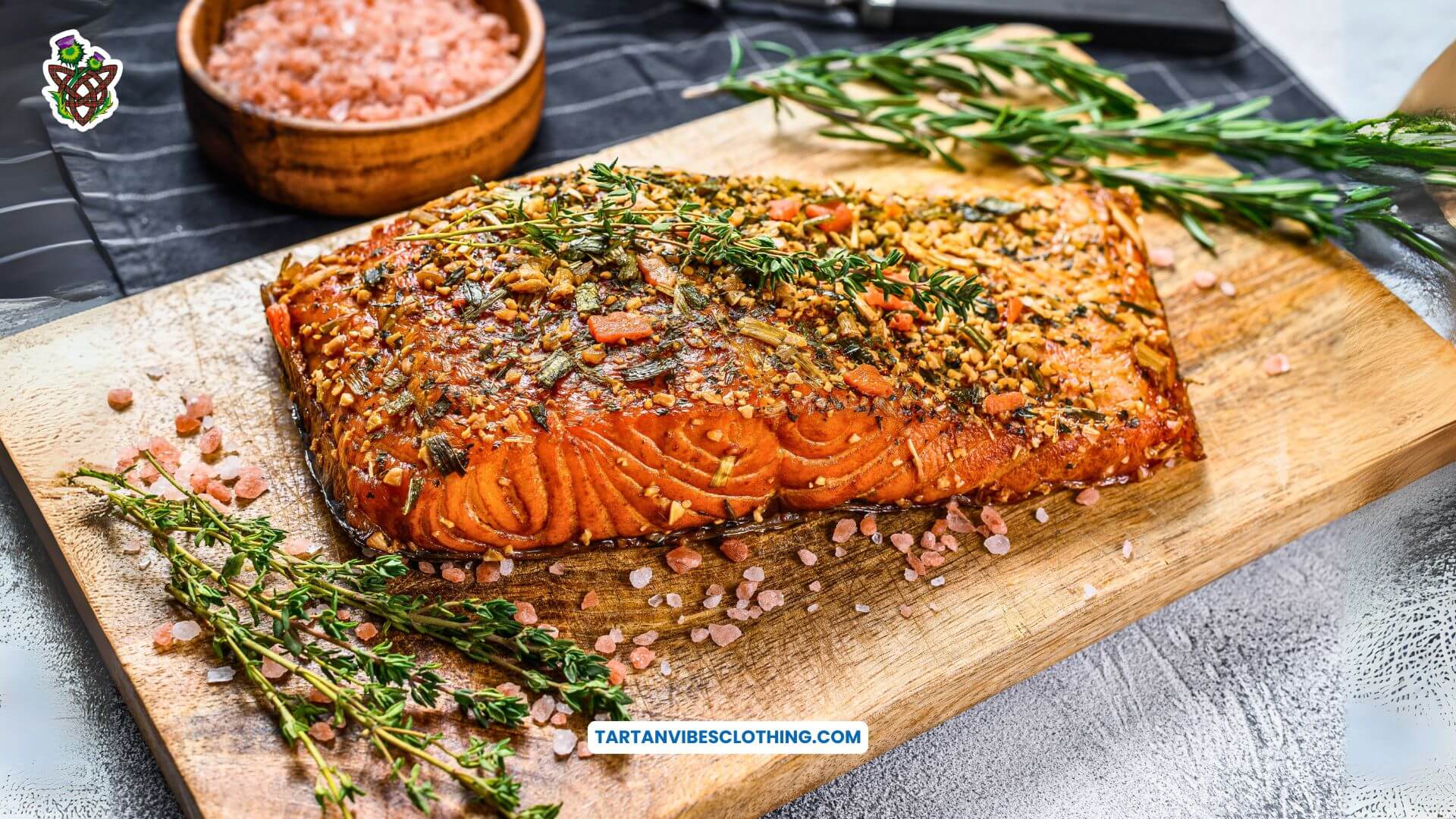
Scottish smoked salmon is internationally recognised for its quality, thanks to Scotland’s cold, clean waters and long-standing smoking traditions. Atlantic salmon is cured and cold-smoked to preserve its delicate texture while developing a subtle, savoury flavour.
Historically, smoked salmon was a practical method of preservation in coastal and river communities. Over time, it became a premium product associated with Scottish craftsmanship rather than everyday food.
Today, Scottish smoked salmon is commonly served with oatcakes, scrambled eggs, or on blinis, and is a staple at festive meals, hotel breakfasts, and formal gatherings.
Popular & Modern Scottish Foods
24. Fish and Chips
Although fish and chips did not originate in Scotland, it became firmly embedded in Scottish food culture during the 19th and 20th centuries, particularly in industrial cities and coastal towns.
Scottish chip shops developed distinct local customs, most famously chippy sauce in Edinburgh—a blend of brown sauce and vinegar that differs from the salt-and-vinegar pairing more common elsewhere. In many parts of Scotland, fish suppers remain a Friday-night tradition and a symbol of casual, communal eating rather than formal dining.

25. Deep-Fried Mars Bar
The deep-fried Mars bar originated in Stonehaven in the early 1990s and quickly became a global curiosity. While often labelled as “traditional”, it is better understood as a novelty item reflecting modern chip-shop culture rather than historical Scottish cuisine.
Its fame lies less in everyday consumption and more in how it challenged stereotypes about Scottish food. In reality, it is rarely eaten regularly by locals and is most often tried once for the experience.

Conclusion
Traditional Scottish food is more than a list of famous dishes—it reflects how people cooked, ate, and shared meals in a demanding landscape. From hearty stews and oat-based breakfasts to decadent desserts and coastal specialities, each dish carries a piece of everyday Scottish life.
Whether you’re planning a trip, cooking at home, or simply curious about Scottish culture, this list gives you a real place to start. So which dish would you try first if Scotland were on your table tonight?
Frequently Asked Questions
What is a traditional Scottish food?
Traditional Scottish food refers to dishes that developed from Scotland’s climate, agriculture, and everyday life. Haggis is the national dish, with recorded recipes dating back to the 15th century, alongside staples like oatcakes, porridge, and hearty stews.
What is the most eaten food in Scotland?
Haggis is the most iconic and widely recognised food in Scotland, traditionally served with neeps and tatties for Burns Suppers. In everyday life, however, foods like Lorne sausage, oatcakes, Cullen skink, Scotch pies, and fish and chips are also extremely popular.
What is the typical breakfast in Scotland?
A typical Scottish breakfast, known as a Full Scottish, includes eggs, bacon, sausages, baked beans, and toast, with distinctive additions such as Lorne (square) sausage, tattie scones, black pudding, and often haggis, served with tea or coffee.
What is Scottish comfort food?
Stovies are considered classic Scottish comfort food. This filling one-pot dish is made mainly from potatoes and onions, seasoned simply with salt and pepper, and often includes leftover meat, making it both practical and deeply comforting.
What food is Scotland famous for?
Scotland is famous for foods such as haggis, smoked salmon, Scotch pies, Cullen skink, shortbread, and traditional oat-based dishes. These foods reflect Scotland’s rural traditions, coastal resources, and long history of practical cooking.

Teresa Finn
As someone with a deep passion for clan heritage, especially the intriguing world of tartans and their rich traditions, I'm here to be your companion on this exciting journey. Together, we'll delve into the depths of clan history, uncovering the stories behind these vibrant tartans and making every connection to your heritage more meaningful.


