



Table of Content
I. The history of the Scottish Kilt
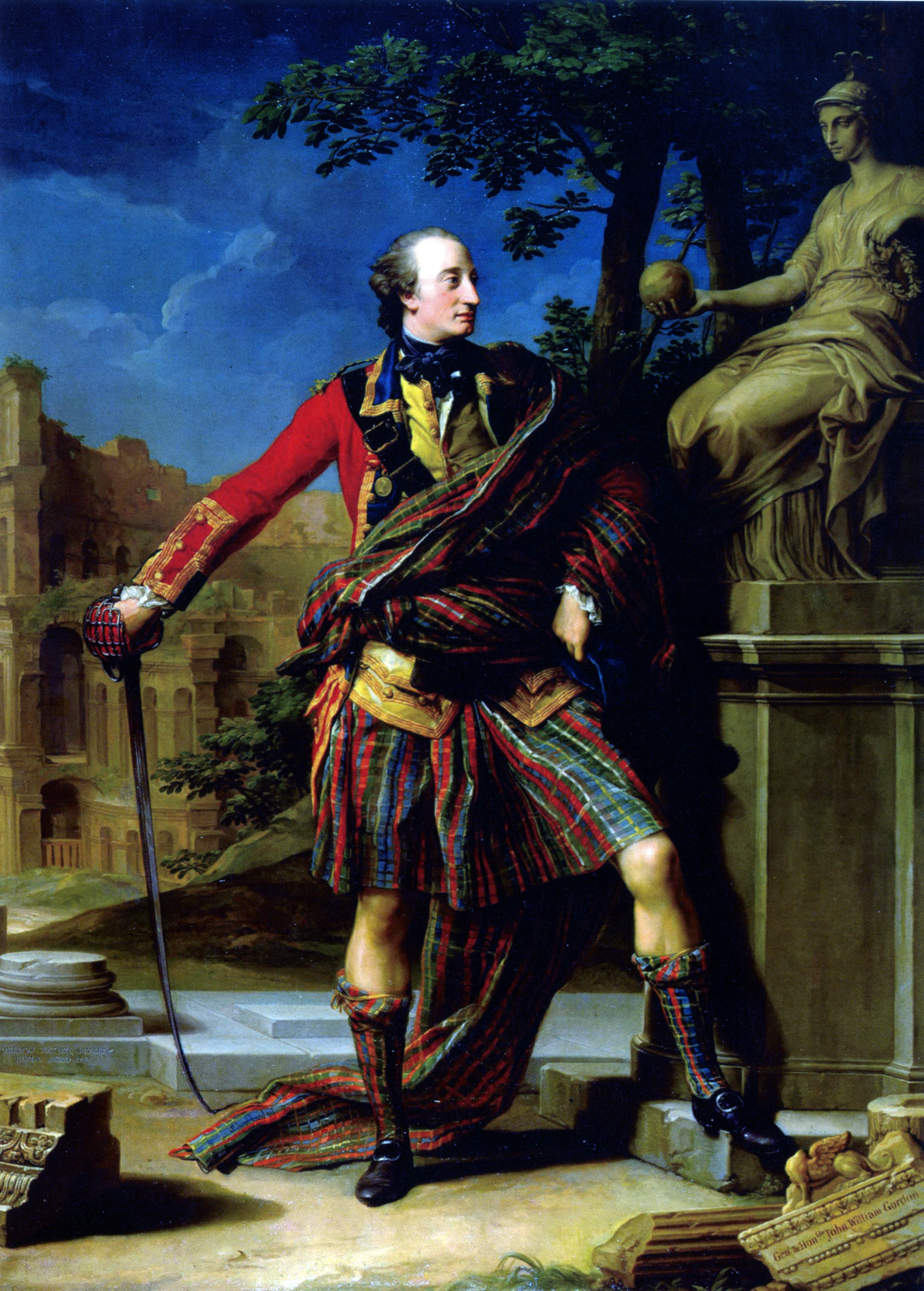
The féileadh mòr, or great kilt, is the earliest form of the Scottish kilt, dating back to the late 16th century. Made from 5 to 7 yards of wool, it was manually pleated and secured with a belt, with excess fabric draped over the shoulder or wrapped around the body for versatility. Designed for adaptability, the great kilt was a cloak or blanket in cold weather and could be tucked up for ease of movement in battle or labor. Early kilts featured checkered or striped patterns, unlike modern clan tartans, with clan-specific tartans only emerging in the 18th and 19th centuries during the Victorian Highland Revival. Today, the kilt remains a symbol of Scottish heritage, worn at formal events, Highland games, and cultural celebrations worldwide.

II. Why Do Scots Wear Kilts?
1. A Symbol of National Identity & Heritage

2. Traditional & Formal Wear
Kilts have become a key element of formal Scottish attire, symbolizing both national pride and tradition. They are commonly worn at significant events such as weddings, where grooms and their attendants don kilts in clan-specific tartans as a fashionable alternative to the suit, expressing both elegance and honoring their heritage. Additionally, during Hogmanay and Burns Suppers, kilts add a tradition and reflect Scotland’s cultural identity when combined with some traditional Scottish accessories such as a Prince Charlie jacket, sporran, Scottish dirks, kilt pins, and kilt hose.

Moreover, during the Highland Games, competitors and attendees alike embrace kilts as a connection to their ancestry, reinforcing their role in Scottish tradition. Beyond significant traditional events, kilts hold ceremonial importance in the Scottish military and the uniform for units like the Royal Regiment of Scotland.
3. Practicality & Comfort
Before the introduction of kilts, Scots traditionally wore tunics and long, loose-fitting shirts, similar to the attire of many northern and western Europeans. The transition to kilts was driven by the rugged and damp terrain of the Scottish Highlands, where tunics proved impractical for traversing the landscape. The great kilt, crafted from tightly woven wool, provided superior insulation against the cold and moisture.
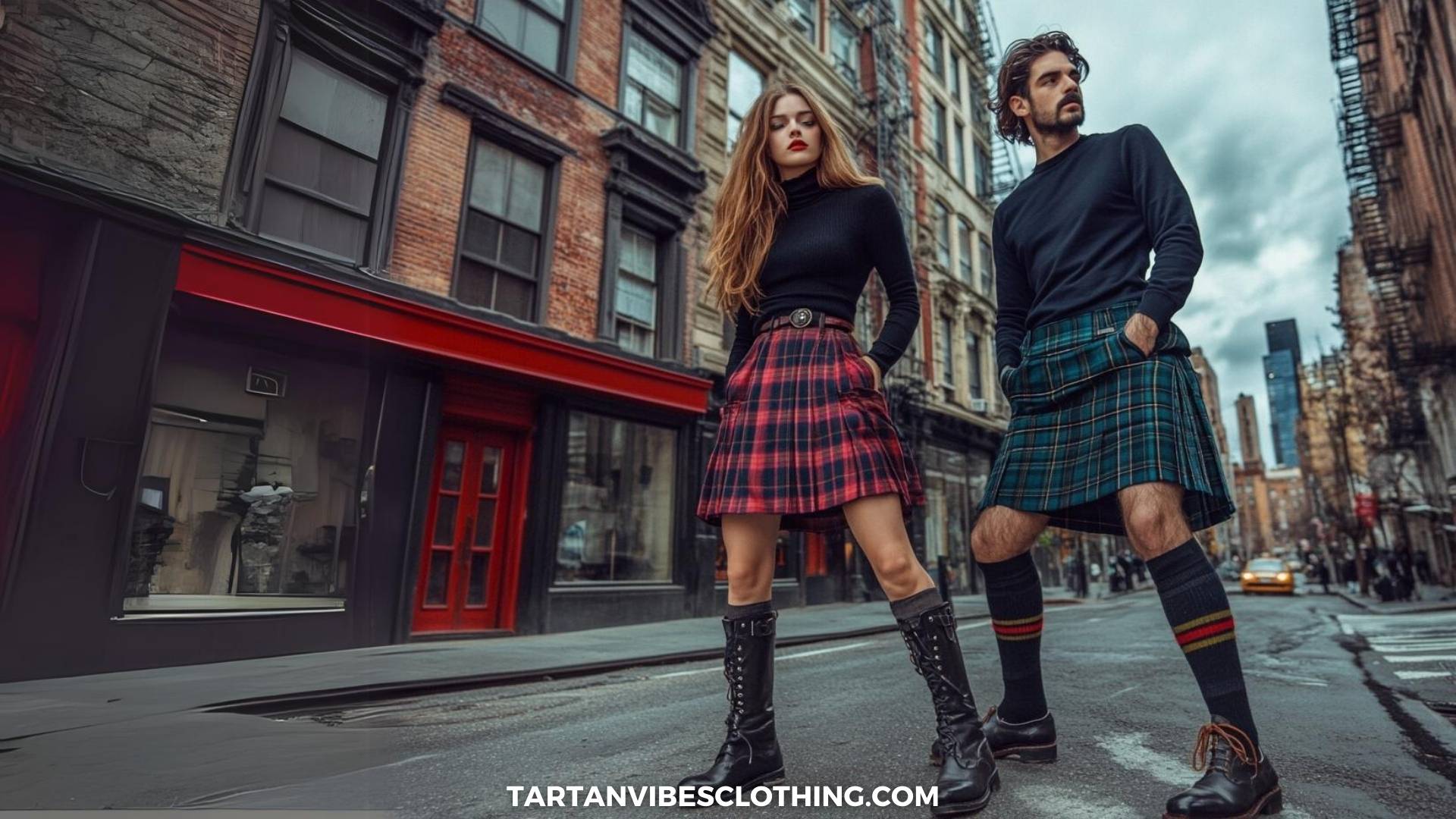
Its long, versatile design allowed for adjustments to enhance comfort while sleeping and could be easily removed for drying. This adaptability and functionality made the great kilt an essential garment for Highlanders, perfectly suited to their demanding environment. Today, modern kilts cater to sports, casual wear, and outdoor activities, offering both style and functionality.
4. Cultural Revival & Global Appeal
Kilts are not only embraced in Scotland but also celebrated by Scottish diaspora communities worldwide. Their popularity in movies, TV shows, and international events has kept the kilt relevant in modern culture. Celebrities, athletes, and even fashion designers continue incorporating kilts into global fashion and entertainment, ensuring their legacy endures, with their significance tied to Scottish heritage, tradition, and national pride—which is why people in Scotland wear kilts.

III. When did the Scots begin wearing kilts?
As sheep farming became widespread in Scotland, wool became a primary clothing material. Initially used for warm outerwear over the léine, wool cloaks became popular, consisting of simple, unpatterned fabric draped around the body. Over time, as wool cloth was produced in longer lengths, these cloaks evolved. Secured with a pin at the chest, they transformed from mere outerwear into full garments. This gradual adaptation eventually led to the belted plaid, also known as the great kilt. By the late 16th century, the appearance of the pleated skirt was widely accepted as a distinctive part of Scottish Highland dress.
IV. Conclusion
Frequently Asked Questions
Are kilts still worn in everyday life?
Most Scots wear kilts only for special events, but some Highlanders and traditionalists still wear them daily.
Why do kilts have tartan patterns?
Tartan patterns represent Scottish clans and families, acting as a symbol of heritage and identity.
Were kilts ever banned in Scotland?
Yes, after the Jacobite Rebellion of 1745, kilts were banned by the British government until 1782.
Are kilts only worn by men?
While kilts have primarily been associated with men, women also wear them, often in modified styles. Women's kilts can be designed differently, often with additional elements like skirts or blouses that complement the kilt.

Aimee Li
An author dedicated to exploring the rich history, vibrant culture,... of the Scottish clans. As an avid historian and fashion enthusiast, I have always been fascinated by Scotland's heritage and the timeless elegance of its traditional attire. Join me on this journey through the highlands and lowlands, as we delve into the heart of Scottish legacy together.


