



Clan MacLaren Places You Must Visit Once in a Lifetime
by Teresa Finn on Oct 22, 2025
Table of Content
Ever dreamed of walking through a Highland valley where history still whispers through the wind? That’s exactly what it feels like when you step into the world of Clan MacLaren places. Every hill, loch, and glen in this corner of Scotland holds echoes of courage, faith, and pride — stories carved into the land itself.
For centuries, the MacLaren clan homeland has been a symbol of strength and belonging among the Scottish Highlands clans. From ancient legends to modern gatherings, their spirit endures in every stone and song that fills these valleys. This isn’t just a journey through geography — it’s a walk through identity, resilience, and memory.
Ready to uncover the places where the MacLarens once stood tall and still proudly stand today? Let’s begin.
Traditional and Historical Sites
The story of Clan MacLaren begins in the heart of the Scottish Highlands, where every glen and loch still whispers their name. Let’s explore the historic lands where this proud clan’s legacy was born.
1. Balquhidder – The Historic Heartland of Clan MacLaren
It only feels right to begin in Balquhidder, the traditional heartland of Clan MacLaren, tucked in Perthshire, northwest of Callander. Surrounded by the Braes o’ Balquhidder and overlooking Loch Voil, this quiet glen has long been home to the clan. By tradition, the MacLarens settled in Balquhidder from as early as the ninth century, making it one of the oldest continuous clan territories in the Highlands.
For generations, the MacLaren clan homeland flourished here — until the 16th century, when the Campbells and Clan MacGregor stripped the MacLarens of their ancestral lands. Refusing to yield their pride, they became known as the “chiefless and landless clan.” Centuries later, that dignity was restored when Donald MacLaren reclaimed land in 1957, reviving both title and spirit.
Today, Balquhidder remains a symbol of resilience. Wander through the glen, breathe the Highland air, and you’ll understand why these hills still echo with the MacLaren clan heritage — quiet, steadfast, and proud.
2. Creag an Tuirc – The Boar’s Rock and the Clan’s War Cry
From the Balquhidder cemetery, a short climb leads you to Creag an Tuirc, “The Boar’s Rock” — a knuckle of stone that once gathered the clan in times of need. This was not just a convenient meeting point; it was the spark for the MacLarens’ war cry. Imagine standing on that rocky crown, the glen opening like a vast amphitheater, the wind a keen companion. Can you hear the chorus of voices rising — Creag an Tuirc! — rolling across the hillside like thunder?
Part of the land purchased in 1957, the Boar’s Rock symbolizes continuity. It anchors the idea that Clan MacLaren places are at once historical and present-tense. This is where you feel the Clan MacLaren seat of power in its most elemental form — not as walls and battlements, but as a landscape knit tightly to loyalty and resolve.
For travelers, this is one of the finest places to visit for Clan MacLaren, as it fuses raw scenery with pure story. It’s also a beautiful vantage point over the Loch Voil valley, where ripples become lines of light and the hills kneel to the horizon.

3. Achtow – The Birthplace of the MacLaren Line
Within Balquhidder’s orbit lies Achtow, where tradition identifies Labhran (Laurence) — the hereditary Abbot — as the progenitor whose name gave rise to the clan. Achtow’s sanctified associations remind us that Highland identity is never just about spears and stones; it’s also about prayer and learning, rites and remembrance. If Balquhidder is the clan’s hearth, Achtow supplies the flame’s origin. In the weave of MacLaren clan origin and geography, this parish is a luminous thread, connecting the spiritual and the territorial — faith undergirding the fortunes of a people.
Walking the lanes near Achtow is a quiet act of meditation. You won’t find grand ruins here shouting for attention; you’ll see fields and fences, a cadence of daily life, and the profound sense that ancient Scottish clans didn’t simply survive here — they flourished in the ordinary.
4. Old Kirk of Balquhidder – The Sacred Heart of the Clan
On the north side of the glen stands the Old Kirk of Balquhidder, a sacred space layered with time. The story begins with the Eaglais Beag (“little church”), built around 1250 by Abbot Labhran, the ancestral figure from whom the clan descends. He claimed burial rights for his heirs, and so the kirkyard became a resting place for generations of chiefs and kin. Later, the Old Church rose in 1631 on the same site, and in 1855, the Parish Church was built just to the north. Step inside and you’ll find plaques, inscriptions, and displays that honor MacLaren clan heritage — not as legend, but as living history.
A plaque inside dedicates the church “for generations of MacLarens, their place of worship and within whose walls their Chiefs are buried”. The line is simple, yet profoundly moving. Here, the clan’s spiritual heart still stands upright — weathered, wise, and enduring. If you’re exploring Scottish heritage sites connected to Clan MacLaren, this is truly sacred ground.

5. Loch Voil and Loch Doine – Serenity in the Braes of Balquhidder
The gleam of Loch Voil, chased by the smaller, secluded Loch Doine, forms a tranquil corridor through the Braes o’ Balquhidder. On a calm day, the water mirrors every drifting cloud; on a windy one, it ripples like quicksilver. It’s easy to imagine boats gliding from the shore, lines cast for trout, or a family pausing to watch the evening gather in the glen.
In MacLaren clan Scotland, lochs are more than scenery. They are keepers of memory, binding people to the land. Walk along the water’s edge at sunset, and you’ll feel how these lochs once shaped the rhythm of clan life — from work to worship and rest. The MacLaren ancestral lands in Scotland are remembered not only for battles and banners, but also for moments like this, when the light softens, the hills grow still, and the Highlands seem to breathe again.

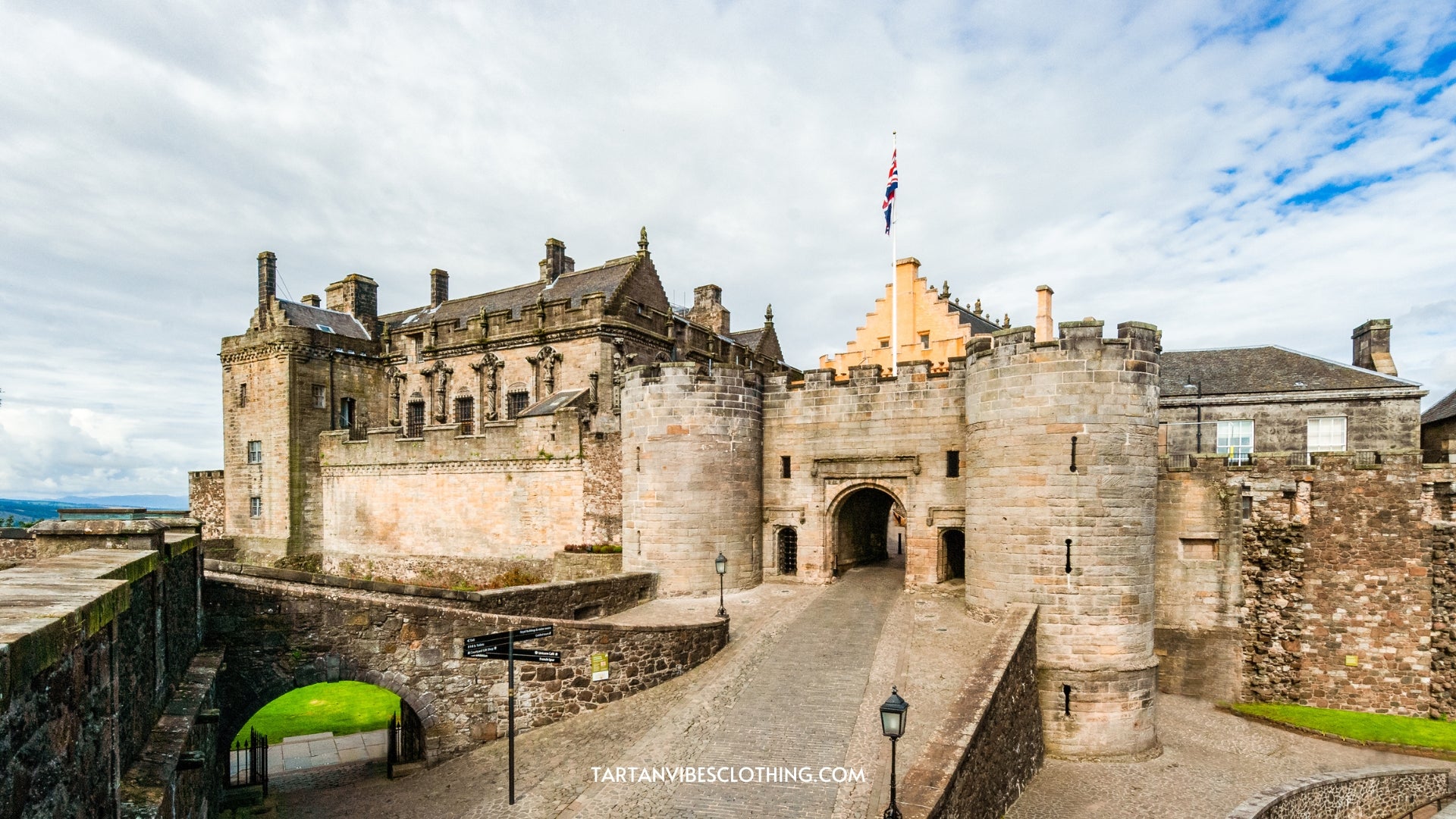
6. Stirling Castle – The Story of Captain Donald MacLaren
Not all MacLaren history stays within Balquhidder’s hills. Stirling Castle, rising high above the River Forth, played a dramatic part in the life of Captain Donald MacLaren of Invernentie. After the Jacobite defeat at Culloden in 1746, Donald was captured and imprisoned here, wounded but unbroken. The fortress stands on volcanic rock, surrounded by cliffs that once made escape nearly impossible.
Yet Donald’s story did not end in captivity. While being moved to Carlisle, he seized his chance. Wrapped in plaid, he leaped into the Devil’s Beef-tub near Moffat and disappeared into the mist. For years, he lived as an outlaw until an amnesty in 1757 restored his freedom.
Today, Stirling Castle is one of the most visited Scottish heritage sites connected to Clan MacLaren. Walking through its courtyards, you can feel the mix of strength and defiance that marked Donald’s story. It’s a place that captures both the hardship and the courage that run through the history of the Scottish Highlands clans.
7. Culloden Battlefield – Where the MacLarens Fought for the Jacobite Cause
Ask any Scot about the darkest chapter in Highland history, and they’ll likely mention Culloden Battlefield, also known as Drummossie Moor. On April 16, 1746, the Jacobite army faced the Duke of Cumberland’s well-rested government troops. Weary, hungry, and outnumbered, the Jacobites were crushed in less than an hour. The defeat ended their uprising, but its sorrow has lasted for centuries.
Among those who fought were members of Clan MacLaren, serving in the Appin Regiment and the Atholl Brigade. Two men are still remembered today — Captain Donald MacLaren of Invernentie, who was wounded and captured but escaped, and Dr. Lachlan MacLaren of Appin, the regimental surgeon. Many others fell and were never named.
Walk across the moor today and you’ll sense the weight of history. The uneven ground and the wind seem to carry distant echoes of that day. The Culloden Visitor Centre tells its story through artifacts and exhibits that explain the human cost of the battle. For anyone exploring the history of Clan MacLaren lands or the legacy of ancient Scottish clans, Culloden is a powerful and deeply moving place to visit.

Modern Locations and Clan Gatherings
8. Lochearnhead – The Home of Clan MacLaren Highland Games
If Balquhidder is the heart of the clan, then Lochearnhead is where it still beats today. Each year, the Lochearnhead Highland Games bring together locals, visitors, and members of Clan MacLaren from around the world. The sound of bagpipes, the rhythm of Highland dancing, and the laughter of families fill the air.
The Clan MacLaren Society hosts its annual gathering here, turning Lochearnhead into a true celebration of heritage and friendship. Tartans wave proudly, and stories are shared between generations. For visitors, this is one of the best places to visit related to Clan MacLaren—a living piece of Scottish clan tourism, full of warmth and tradition.

9. Strathyre – A Quiet Gem of MacLaren Country
10. Balquhidder Cemetery – Resting Place of the MacLaren Chiefs
Back in Balquhidder, the old cemetery holds many MacLaren chiefs and family members. It feels peaceful rather than sad. The headstones lean gently, as if listening to the stories of the past. Reading the names carved in stone reminds you how the clan’s history continues through each generation.
In recent years, Donald MacLaren, the modern chief, was laid to rest here among his ancestors, joining centuries of MacLaren heritage in one sacred place. For anyone exploring Scottish heritage sites connected to Clan MacLaren, this is a meaningful stop. It’s quiet, timeless, and reminds every visitor that the story of Clan MacLaren's place is still being written.

11. Kirkton Farm – The Current Seat of Clan MacLaren
In 1957, when land was repurchased in Balquhidder, the clan established its new home at Kirkton Farm. This working farm serves as the modern heart of Clan MacLaren lands, where tradition and daily life come together.
For the clan, Kirkton Farm represents a renewed presence in their ancestral homeland. For visitors, it shows that the MacLaren legacy is not just history but a living story. When people ask, Where was Clan MacLaren located? The answer begins in Balquhidder. And when they ask, Where is Clan MacLaren now? The answer is right here, at Kirkton Farm.
The Timeless Spirit of the MacLarens
The story of Clan MacLaren is one of endurance, pride, and belonging. Every glen, loch, and stone in their homeland carries a quiet reminder of where the clan began and how it continues today.
Visiting these Clan MacLaren places isn’t just a trip through history. It’s a chance to stand where generations once stood and feel the strength of their legacy. Whether you climb Creag an Tuirc, walk through Balquhidder Churchyard, or listen to the wind over Loch Voil, you’ll sense that the clan’s spirit is still alive in these hills.
So if you ever find yourself in Scotland, take a day to explore the MacLaren clan homeland. Let the Highlands show you what courage, loyalty, and heritage truly mean.
FAQs About Clan MacLaren Places
What is the homeland of Clan MacLaren?
In practical and poetic terms: Balquhidder Scotland. It’s the long-standing homeland that holds the clan’s sacred spaces — the Old Kirk, Balquhidder Cemetery, and Creag an Tuirc, the historic rallying point.
Where is the MacLaren clan from?
The MacLaren clan originates from Perthshire, Scotland, particularly the lands stretching from the Braes of Balquhidder to Loch Earn. These valleys formed the historic heart of the clan’s territory and are still considered the MacLaren homeland today.
Is McLaren Scottish or Irish?
McLaren is primarily a Scottish surname, derived from the Gaelic Mac Labhrainn, meaning “son of Labhrann” or “son of Laurence.” While the name appears in parts of Northern Ireland, its strongest roots and clan heritage are Scottish.
What is the MacLaren clan motto?
The Clan MacLaren motto is “Creag an Tuirc”, which translates to “The Boar’s Rock.” It refers to the clan’s historic rallying point near Balquhidder and symbolizes the clan's courage and unity.
What modern events keep Clan MacLaren traditions alive?
The Lochearnhead Highland Games and the Clan MacLaren Society gathering sustain the living culture of the clan — music, dance, camaraderie, and that vibrant sense of belonging that defines Scottish clan tourism today.

Teresa Finn
As someone with a deep passion for clan heritage, especially the intriguing world of tartans and their rich traditions, I'm here to be your companion on this exciting journey. Together, we'll delve into the depths of clan history, uncovering the stories behind these vibrant tartans and making every connection to your heritage more meaningful.


