


Clan MacGregor: History, Crest & Coat of Arms, and Tartan
by Teejay Smith on Apr 26, 2024
Table of Content
Among the most legendary of the Scottish Highland clans, Clan MacGregor carries a history marked by royal claims, persecution, defiance, and cultural pride. Known as the “Children of the Mist,” the clan survived outlawry, exile, and centuries of political conflict, yet preserved its identity with remarkable resilience.
Today, the legacy of the MacGregor clan Scotland lives on through its historic motto, distinctive MacGregor clan crest, and the widely recognized MacGregor tartan worn proudly across the world.
I. An Overview of Clan MacGregor

The Clan Gregor, also known as Clan MacGregor, traces its roots back to Scotland’s early 9th century, embodying a saga of bravery, clan rivalries, and perseverance against adversity. They maintained their resilience and identity through tumultuous times marked by power struggles and external pressures. Despite persecution, notably in the 17th and 18th centuries, the Clan MacGregor endured, holding steadfast to their heritage.
Additionally, they are recognized as one of Scotland’s earliest proponents of bagpipe music, a tradition dating back to the early 17th century. Today, they honor their heritage through cultural events, ensuring their traditions endure for generations.
II. Origins of Clan MacGregor
The Origin of Clan MacGregor is deeply rooted in early medieval Scotland, where the earliest Clan Gregor roots are traditionally linked to ancient Celtic royalty. Iain Moncreiffe states that the MacGregors are descendants of an ancient Celtic royal lineage, traced through the Abbots of Glendochart.
This connection is reflected in the clan's motto: “S’ Rioghal Mo Dhream” (Royal is my race). There is also a belief that Gregor was the sibling of Kenneth MacAlpin. Although evidence supporting this belief is scarce, it is endorsed by the Scottish historian William Skene. The name Gregor, from which the family takes its name, may have originated from Griogair, son of Dungal, who was reportedly a co-ruler of Alba.

Most contemporary historians concur that the initial chief of Clan Gregor was Gregor of the golden bridles. His son, Iain Camm One Eye, became the second chief prior to 1390. Originally, the clan held lands in:
- Glen Orchy
- Glenlochy
- Glenstrae
However, the transfer of the Barony of Loch Awe to the Campbells under Robert the Bruce marked the beginning of long-standing conflict. The Campbells had already constructed Kilchurn Castle, which controlled access to the western Highlands, and they harassed the MacGregors, forcing them to retreat further into their territory until they were confined to Glenstrae.
III. Clan MacGregor History
Marked by both honor and hardship, the MacGregor clan history reflects a legacy shaped by ancient roots, political conflict, and extraordinary perseverance. From early Highland prominence to periods of suppression and revival, Clan MacGregor’s past remains one of Scotland’s most compelling historical journeys.
1. 16th Century: Conflict and the “Children of the Mist”
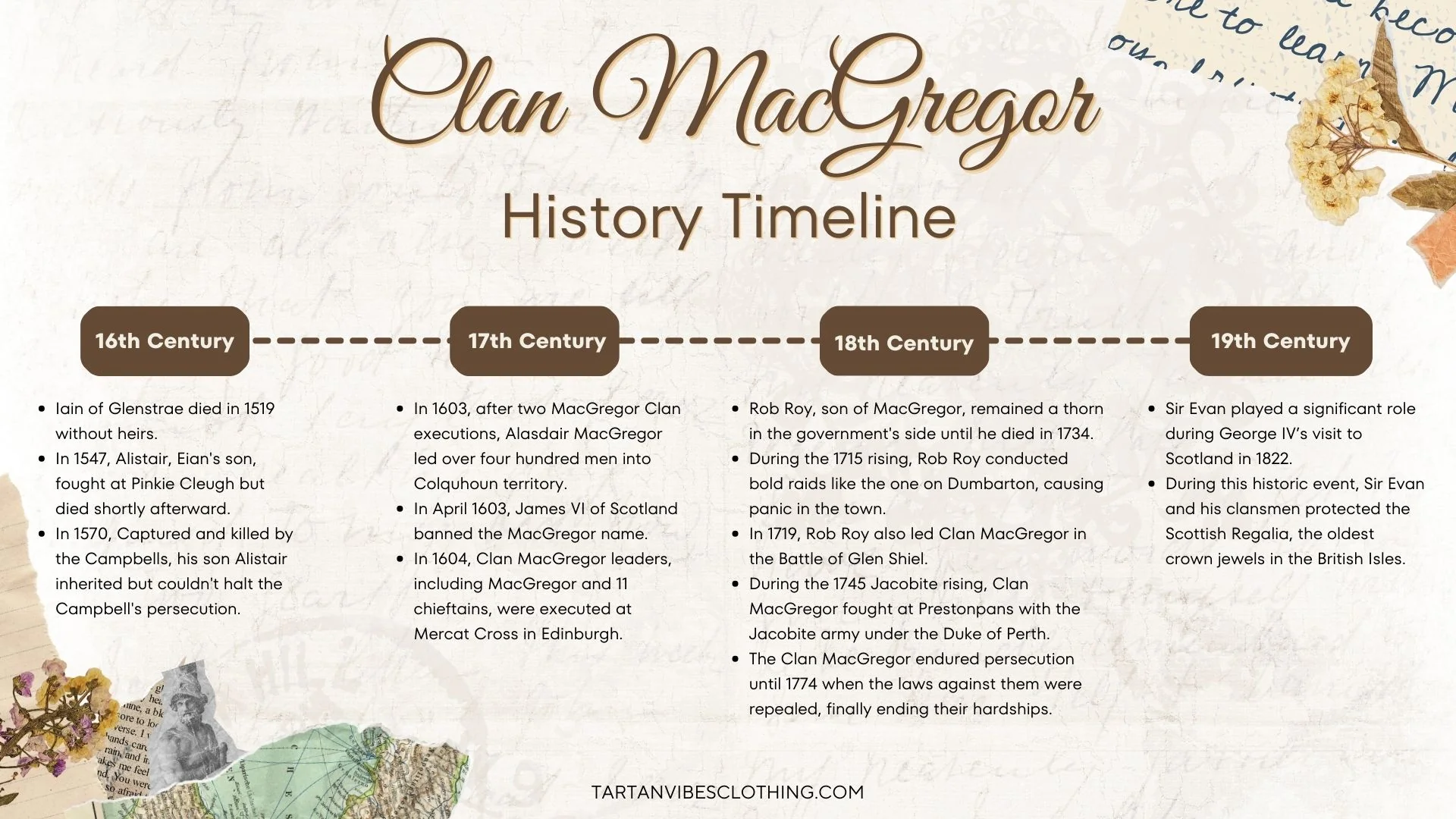
Iain of Glenstrae, known as “the Black,” died without direct heirs and was succeeded by his son Eian. Eian was supported by the Campbells and married a daughter of Sir Colin Campbell of Glenorchy, strengthening ties between the families.
1519: Iain of Glenstrae (“the Black”) died without direct heirs.
1547: Alistair, son of Eian, fought at the Battle of Pinkie Cleugh but died shortly afterward.
Colin Campbell’s refusal to recognise Gregor Roy MacGregor’s claim led to a decade-long conflict. Gregor became an outlaw, known for raids and for hiding in remote glens.
1570: Gregor Roy MacGregor was captured and killed by the Campbells.
After his death, his son Alistair inherited leadership but was unable to halt Campbell persecution. The clan’s continuing losses during this period contributed to the MacGregors being known as the “Children of the Mist.”
Additionally, the death of John Drummond—after he had hanged MacGregors for poaching and was condemned by the Privy Council—was attributed to the chief.

2. 17th Century: The Banning of the MacGregor Name
In the 17th century, Clan MacGregor in Scotland faced violent conflict followed by royal suppression and prolonged persecution.
1603: After two MacGregor clan members were executed, Alasdair MacGregor retaliated by leading over four hundred men into Colquhoun territory. The chief of Clan Colquhoun, commissioned to suppress the MacGregors, assembled eight hundred foot soldiers and cavalry and marched to Glen Fruin. MacGregor’s tactical split, attacking from both front and rear, led to the deaths of over two hundred Colquhouns and their retreat into the Moss of Auchingaich.
Late 18th century: The conflict later saw a gesture of reconciliation when the clan chiefs met and shook hands at the site of the encounter.
April 1603: James VI of Scotland banned the MacGregor name.
1604: Clan MacGregor leaders, including MacGregor and eleven chieftains, were executed at Mercat Cross in Edinburgh.
The Clan MacGregor ban marked a period of intense persecution. Many MacGregors were forced to adopt new surnames, such as Murray or Grant, were hunted with bloodhounds, driven from hiding in the heather, and scattered across the land. Despite this, Clan Lamont of Cowal and Clan Chattan offered aid and refuge to fleeing MacGregors.
During the Scottish Civil War, two hundred MacGregors fought alongside the Earl of Glencairn in Glencairn’s rising against the Commonwealth. Charles II later lifted the ban on the MacGregor name, but William of Orange reinstated it after James VII’s deposition.

3. 18th Century: Rob Roy and the Jacobite Era
The story of Rob Roy MacGregor and his clan stands as one of the most dramatic chapters in Highland history. Rob Roy MacGregor was one of the most famous figures in Clan MacGregor history, later immortalised by Sir Walter Scott in the novel Rob Roy. Known for his daring exploits and persistent defiance of government authority, he became a central symbol of Highland resistance.
- 1671: Rob Roy MacGregor was born, the son of MacGregor of Glengyle, though he adopted his mother’s surname, Campbell.
1715: During the Jacobite rising, Rob Roy supported the Jacobite cause and carried out bold raids, including one on Dumbarton that caused panic in the town.
1719: He led Clan MacGregor at the Battle of Glen Shiel.

Rob Roy remained a persistent opponent of government forces throughout his life.
1734: Rob Roy MacGregor died and was later buried in Balquhidder churchyard.
Jacobite rising of 1745: Clan MacGregor members fought at Prestonpans alongside the Jacobite army under the Duke of Perth.
1746: Some MacGregors were present at the Battle of Littleferry but missed the Battle of Culloden due to their late arrival.
After returning home from the uprising, Clan MacGregors travelled through Atholl without interference, passing Finlairg Castle where the Clan Campbell militia openly defied Lord Campbell’s outposts.
1774: The laws against Clan MacGregor were repealed, bringing an end to their prolonged persecution.
4. In the 19th century
In an effort to revive the clan’s pride, the chiefs sought formal reinstatement of their leadership and recognition of their rightful chief. A petition was signed by eight hundred and twenty-six MacGregors affirming General John Murray of Lanrick as the legitimate chief.
General Murray was a MacGregor who traced his lineage back to Duncan MacGregor of Ardchoille. General Murray’s son, Sir Evan, later played a prominent public role in Scotland.

1552: Duncan MacGregor of Ardchoille passed away.
1822: During George IV’s visit to Scotland, Sir Evan and his fellow clansmen were entrusted with safeguarding the Honours of Scotland, also known as the Scottish Regalia, the oldest crown jewels in the British Isles.
IV. Clan MacGregor Crest and Coat of Arms
The crest and coat of arms of Clan MacGregor are among the most recognisable heraldic symbols in Highland history, reflecting a lineage that claims descent from ancient royal bloodlines. Despite centuries of persecution and the banning of their name, the MacGregors preserved their identity through powerful symbols of kinship, loyalty, and defiance.
1. Clan MacGregor Crest
The Clan MacGregor crest features an erased lion’s head, depicted in natural colors, and adorned with an antique crown. This symbolizes strength, courage, and nobility, reflecting the proud heritage of the clan. The MacGregor family motto, "S’ Rioghal Mo Dhream", meaning “Royal is my race,” further emphasizes the clan’s esteemed lineage and noble ancestry. Together, these elements encapsulate the spirit and identity of Clan MacGregor, instilling a sense of honor and pride among its members.
Clan MacGregor/ Clan Gregor
Gaelic Name: MacGrioghair
Crest: A lion’s head erased Proper, crowned with an antique crown, Or
Motto: ’S Rioghal Mo Dhream (My race is royal)
Origin of Name: Son of Gregory (Flocksman)
Badge: Pine
Lands: Argyll and Perthshire
Historic Seat: Bannatyne, Newtyle, Angus
Clan Chief: Sir Malcolm MacGregor of MacGregor Bt

2. Clan MacGregor Coat of Arms
The Clan MacGregor Coat of Arms features a shield in Argent, displaying an oak tree eradicated in a bend sinister in its natural color. The oak tree, symbolizing strength and endurance, is surmounted by a sword with a pommel positioned in a bend. At the point of the sword, an antique crown is depicted in Gules, representing nobility and leadership.
This combination of symbols embodies the proud heritage and warrior ethos of Clan MacGregor, highlighting traits such as valor, resilience, and royal lineage.

V. Clan MacGregor Tartan
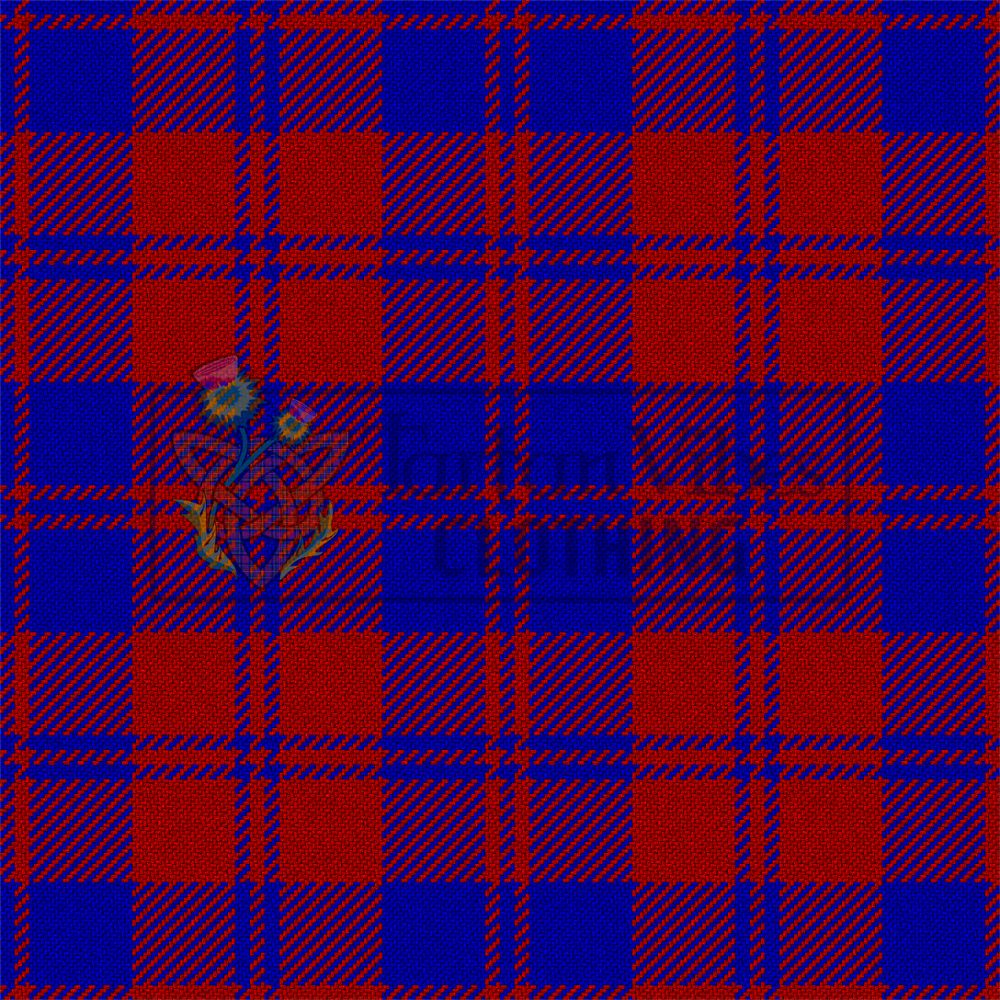
The MacGregor tartan pattern is one of the best-known Highland designs among traditional Scottish clan tartans. The distinctive MacGregor tartan colors, most notably the Red and Green and the Red and Black combinations, have become powerful symbols of the clan’s heritage. Historically, these two principal clan tartans associated with Clan MacGregor appear in early 19th-century tartan collections, including those compiled by the Highland Society of London, and are widely accepted as the official clan designs.
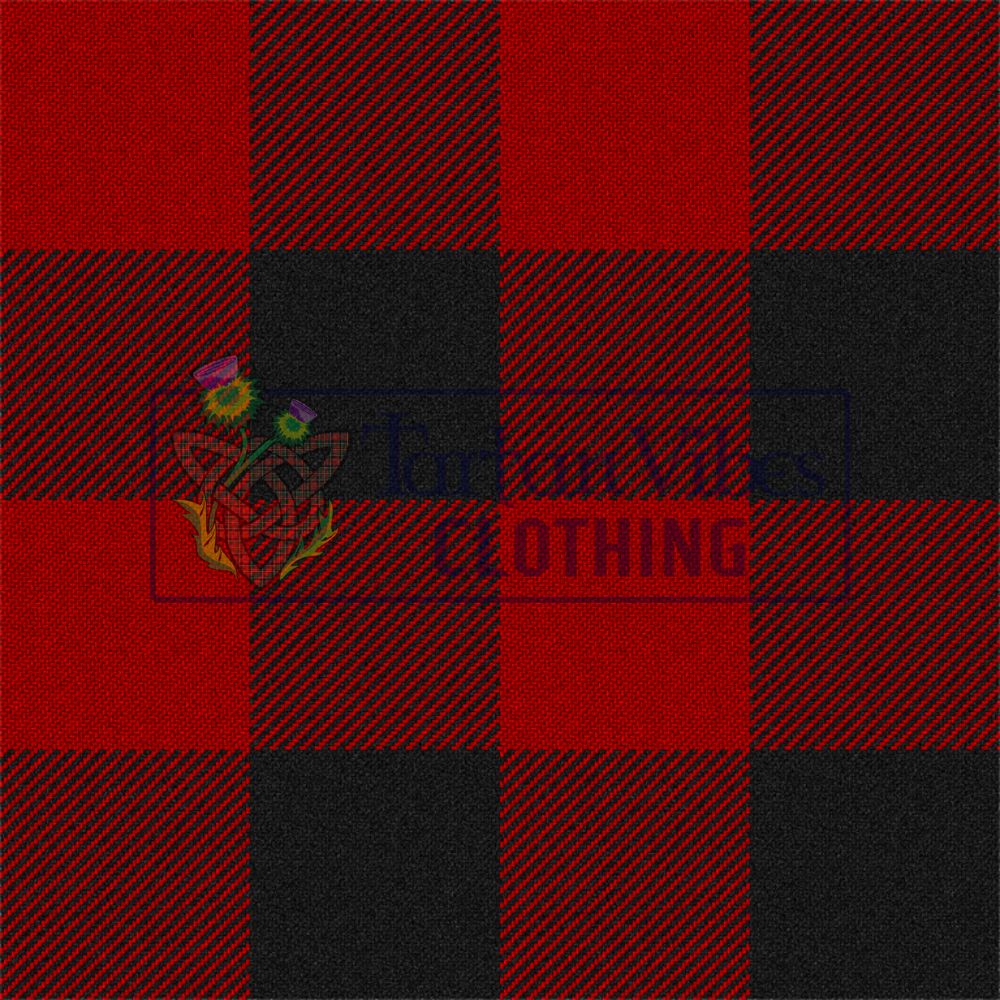

The Red and Black tartan is sometimes commercially referred to as the “Rob Roy” tartan due to its association with the famous clan member Rob Roy MacGregor. However, this is a popular nickname rather than a formally separate tartan.
In addition to the primary clan tartans, there are recognized branch variants such as MacGregor of Glengyle and MacGregor of Cardney, though these are considered secondary to the main Red and Green and Red and Black clan tartans.

Explore the timeless traditions of Clan MacGregor through our collection of tartan products on our website, thoughtfully curated as some of the best gifts for descendants of Clan MacGregor. Bring a meaningful piece of the clan's history into your present and celebrate your Highland heritage with pride.


VI. Prominent Members of Clan MacGregor
Prominent Members of Clan MacGregor encompasses many figures who have left indelible marks on Scottish history and culture. Among them, Rob Roy MacGregor stands out as a legendary folk hero who was celebrated for his defiance against oppression during the 17th and 18th centuries. Another notable figure is Sir Malcolm MacGregor of MacGregor, the 24th chief of Clan MacGregor, who is pivotal in guiding the clan’s traditions and legacy into the modern era.
Additionally, Alasdair MacGregor of Cardney, known for his contributions to the design of the Clan MacGregor tartan, holds significance within the clan’s history. Furthermore, Sir John Murray MacGregor’s leadership and dedication played integral roles in maintaining the honor and heritage of Clan MacGregor during the 19th century. Collectively, these prominent members exemplify the resilience, pride, and enduring spirit of Clan MacGregor.
📜 Please also see more clan chiefs at clangregor.com

Conclusion
In conclusion, the legacy of Clan MacGregor stands as a testament to resilience, heritage, and enduring pride. MacGregor Clan in Scotland has demonstrated unwavering loyalty to its traditions and values through centuries of challenges and adversities. Through the centuries, prominent members such as Rob Roy MacGregor, Sir Malcolm MacGregor of MacGregor, Alasdair MacGregor of Cardney, and Sir John Murray MacGregor have upheld the clan’s traditions, values, and cultural identity.
Their contributions and leadership have ensured that Clan MacGregor remains a symbol of pride and unity, embodying the determination and loyalty that defines Scotland’s historic clans. As custodians of a remarkable legacy, Clan MacGregor continues to inspire generations with its storied past and enduring heritage.
Frequently Asked Questions
Who is the current chief of the MacGregor clan?
Sir Malcolm MacGregor of MacGregor is the 24th chief of Clan Gregor and Chieftain of the Children of the Mist, called the most romantic title in Scotland.
What is Clan MacGregor known for?
Clan MacGregor, sometimes referred to as clan Gregor, is a Highland clan with ancestral roots tracing back to the 800s. In addition to being one of the earliest Scottish clans to embrace the bagpipes in the early 1600s, clan MacGregor is also renowned for producing Rob Roy MacGregor, a legendary figure in Scottish folklore.
Why was Clan MacGregor outlawed in Scotland?
Clan MacGregor was outlawed after the Battle of Glen Fruin in 1603, when MacGregor warriors killed many members of rival Clan Colquhoun.
In response, King James VI issued a proscription that made the name “MacGregor” illegal, ordered clan members to renounce their name or face death, and banned them from gathering or bearing arms as a way to dismantle the clan’s power.
What role did Clan MacGregor play in the Highland Rebellions?
Clan MacGregor supported Highland Jacobite uprisings to restore the Stuart monarchy. They fought with other Highlanders in early rebellions like the 1689 rising and participated in the 1715 and 1745 Jacobite efforts against the Hanoverian government, engaging in strategic operations.
Despite differing levels of involvement, the MacGregors are recognized for their loyalty and participation in significant battles against government forces during these uprisings.
Did the MacGregor clan have a castle?
The official clan seat of the MacGregors for over a hundred years, Lanrick Castle was also known as Clan Macgregor Castle located near Doune, Perthshire.

Aimee Li
An author dedicated to exploring the rich history, vibrant culture,... of the Scottish clans. As an avid historian and fashion enthusiast, I have always been fascinated by Scotland's heritage and the timeless elegance of its traditional attire. Join me on this journey through the highlands and lowlands, as we delve into the heart of Scottish legacy together.


