



Table of Content
Clan MacDuff stands tall in Scotland's history, renowned for its noble heritage, historic influence, and deep connection to the Scottish Crown. As one of the earliest recorded clans, the MacDuffs have carried a legacy shaped by loyalty, leadership, and an unshakable sense of identity. Through the generations, their name has become associated with acts of courage, ancient rights, and proud traditions that endure today.
In this article, you’ll uncover the origins of Clan MacDuff, explore the meaning behind their tartan and crest, and learn about the people, places, and customs that continue to honor their heritage. The journey of Clan MacDuff offers a powerful glimpse into Scotland’s past and the enduring values that define its clans.
I. Who Are Clan MacDuff?
The Scottish Clan MacDuff, also known as Clan Duff, has its roots in the Scottish Lowlands. This particular clan currently lacks a chief; thus, it's classified as an armigerous clan under the supervision of the Lyon Court. Initially, the chiefs of Clan MacDuff held the position of Earls of Fife; nevertheless, this prestigious title was transferred to the Stewarts of Albany toward the conclusion of the 1300s. Ultimately, the title reverted to the MacDuff leadership when William Duff was appointed Earl of Fife in 1759. Later, his relative, Alexander Duff, received the title Duke of Fife in 1889.

II. What Is the Origin of the MacDuff Surname?
This surname appears in multiple variations, including MacDuff, McDuff, and MacDuffie (Scotland and Ireland), alongside Irish adaptations such as McGiff, McGiffe, and McGuff; it traces its roots back to Gaelic origins before the 10th century and reflects the ancient origin of the surname MacDuff. While each spelling might be considered a distinct origin, and that idea may hold merit, a common interpretation remains.

Regardless of how it’s written, all of these names share the same core meaning. They all stem from the ancient Gaelic phrase "Mac Dubh," signifying "son of the black man." This is a direct translation, likely indicating a Celtic individual with dark hair and features rather than suggesting African ancestry. Significant portions of Scotland, Ireland, and the Isle of Man were under Viking control during the late First Millennium, and these people were generally fair-skinned, which could explain the adoption of this ethnic identifier among Scottish families named MacDuff.
Though the MacDuff name is strongly linked with the story of Macbeth, historians generally regard the MacDuff and Macbeth historical connection as more symbolic than historical. The name relates to the legacy of the MacDuff clan of Scotland, but the origin of the MacDuff name wasn’t actually in use during the 11th century.
1264: A person named Malisius McDuf was recorded as the seneschal of Strathearn.
1460: Neil M'Duffy was documented in Arane.
14th century: Irish surnames like McGiff and McGuff, found primarily in Connacht, may have been introduced by Scottish migration.
III. Where did Clan MacDuff originate?
The MacDuff lineage of Scotland traces its lineage back to the ancient royal Scoto-Pictish bloodline. Queen Gruoch of Scotland, spouse of Macbeth, who was King of Scotland, held the highest position within that family. This connection not only highlights royal ties but also reflects the deep heritage of the Duff family in Scotland has been preserved through the centuries.
Following Macbeth's demise, Malcolm III ascended to the throne of Scotland. His son, Aedh, took as his wife Queen Gruoch's daughter. Subsequently, Aedh received the title of Earl of Fife and also became the abbot of Abernethy. The Earls of Fife were the initial leaders of Clan MacDuff.

Sir Iain Moncreiffe indicated that Clan MacDuff held the most significant position among the Scottish Gaels. The Earls of Wemyss are currently believed to be the male-line inheritors of Gille Míchéil, Earl of Fife, whom many consider to be among the first chiefs of Clan MacDuff. Gille-Michael MacDuff's name appeared as one of the attestors on the substantial charter presented by David I of Scotland to Dunfermline Abbey.
IV. The History of Clan MacDuff in Scotland

14th and 15th centuries
- 1306: Edward I of England held young Duncan MacDuff, Earl of Fife, as a hostage during Robert the Bruce's coronation. Simultaneously, Isabella MacDuff, Duncan’s sister, crowned King Robert with a golden band. Subsequently, after being seized by King Edward's forces, Isabella was confined within a cage, which was hung from the fortifications of Berwick Castle.
1336: Duncan MacDuff, after marrying Mary (a relative of King Edward) and siding against the Bruce, was taken prisoner and died as a prisoner in Kildrummy Castle.
1384: The Earl of Fife was referred to as capitalis legis de Clenmcduffe, denoting his legal leadership within the clan MacDuff.
1404: David Duff received a land charter in Banffshire from King Robert III of Scotland.
17th, 18th and 19th centuries
- 1626: In Banffshire, territories first obtained by John Duff's predecessor in 1404 were transferred.
1745: Captain Robert Duff of the Royal Navy, a relative of the first Earl Fife, joined the British-Hanoverian forces during the Jacobite uprising and fought in the Skirmish of Arisaig.
1759: William Duff became the first Earl Fife and Viscount Macduff, restoring the earldom.
1809: James Duff, 4th Earl Fife, displayed bravery during the Peninsular War, sustaining an injury at the Battle of Talavera, and eventually received a knighthood within the Order of St. Ferdinand of Spain.
1889: Alexander Duff, 6th Earl Fife, married Princess Louise, the Princess Royal, who was Edward VII's eldest daughter, and was made the 1st Duke of Fife.
20th and 21st centuries
The passing of the initial Duke of Fife marked the end of the line for the clan MacDuff's leadership. As of June 15, 2024, a search began for individuals to serve as Clan Names and Commanders for the MacDuffee, Macfie, and MacPhee clans. The deadline to submit nominations is scheduled for May 2025.
V. Law of Clan MacDuff
The MacDuff family in Scotland earned official clan status from the Scottish Parliament through an act enacted in November of 1384. Both the Earl of Fife and the Abbot of Abernethy held prominent positions within Clan MacDuff's legal framework. This legal structure shielded those related to the Earl of Fife within nine degrees of kinship, granting them sanctuary near Abernethy's Cross of MacDuff. These individuals could ultimately receive forgiveness by offering financial redress to the deceased's next of kin.

The leaders of the clan possessed the authority to crown the monarch atop the Stone of Scone. Following the English King Edward I's seizure of the Stone of Scone, Robert I solidified his kingship, arranging a second coronation. This time, the ceremony was conducted by a Macduff relative: the sister of the Earl of Fife. In 1425, Murdoch Stewart, Duke of Albany and last Earl of Fife, was executed. With his demise, the hereditary privilege of the Clan MacDuff to carry the Scottish Crown was transferred to Lord Abernethy. Presently, Alexander Douglas-Hamilton, the 16th Duke of Hamilton, holds the position of Lord Abernethy, thus bearing the Scottish Crown.
VI. Clan MacDuff Crest and Coat of Arms
Clan MacDuff Crest
Clan MacDuff
Gaelic Name: MacDhuibh
Crest: A demi-lion Gules holding in the dexter paw a broadsword erected in pale Proper, hilted and pommelled Or
Motto: Deus Juvat (God assists)
Origin of Name: Gaelic, Dubh (Black)
Badge: Red whortleberry
Lands: Fife, Lothian, Strathbran, and Strathbogie
Clan Chief: None, armigerous clan

The Clan MacDuff crest features a bold red lion holding an upright sword, symbolizing bravery, strength, and justice. Emerging from a gold and red wreath, the lion reflects the clan’s noble spirit and warrior roots. Above the crest is the Latin MacDuff motto "Deus juvat" (God assists), expressing the clan’s deep belief in divine support and righteous cause. When exploring the MacDuff family crest meaning, you’ll see that each element reflects the clan’s commitment to honor, resilience, and leadership.
As one of Scotland’s most historic clans, the clan MacDuff held the right to Be Recognized by the Scottish Crown and played a key role in the country’s early independence. Today, the crest of Clan MacDuff continues to represent a proud legacy that endures across generations.
Clan MacDuff Coat of Arms
The Clan MacDuff coat of arms features a bold red lion rampant on a golden shield, symbolizing courage, loyalty, and noble authority. This design is deeply rooted in Scottish heraldic tradition and reflects the clan’s prestigious role in early Scottish history. The red lion represents valour and leadership, while the gold background symbolises generosity and high social status. As one of the oldest and most honored Scottish families, the MacDuff family coat of arms stands as a proud emblem of heritage and strength passed down through generations.

VII. Clan MacDuff Tartan
Numerous tartans represent Clan MacDuff in Scotland, each woven into the fabric of the history of Scottish clan tartans. The standard MacDuff tartan pattern, documented by the Bannockburn textile firm of William Wilson & Son between the late 1780s and 1819, features two variations; one has thin blue lines, while the other has green lines, appearing like track marks instead of black lines. These variations highlight the diversity within the MacDuff clan tartan colors, which subtly differ across centuries yet maintain a unified identity.

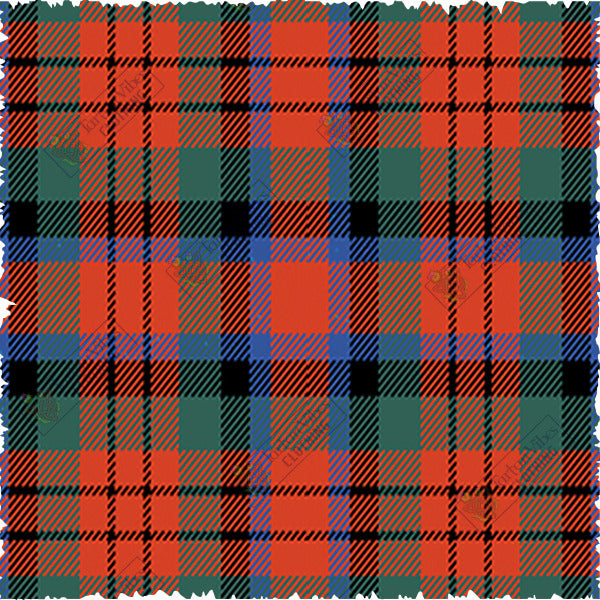


A related version, noted by the Highland Society of London between 1815 and 1820, swapped the broad black stripe for dark green and modified the pattern's dimensions. All of these designs closely resemble the royal Stewart tartan; the key difference is the absence of its slender yellow and white intersecting lines. One additional, distinct tartan first showed up in 1842 in the Vestiarium Scoticum, likely created by the "Sobieski Stuarts." Today, the Scottish tartan MacDuff remains a powerful symbol of identity, with additional variations such as "dress MacDuff" and "hunting MacDuff," each with their specific designation.
VIII. Where Can I Buy MacDuff Tartan?
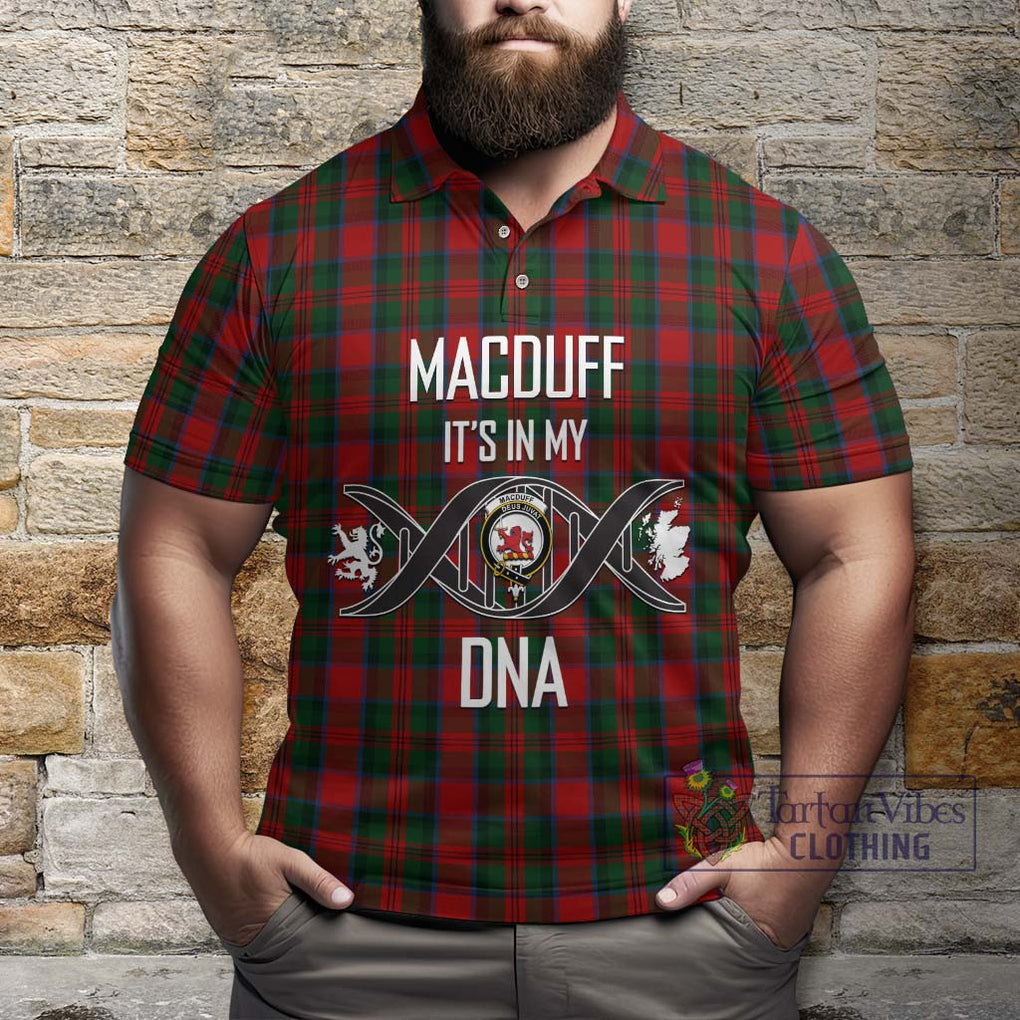
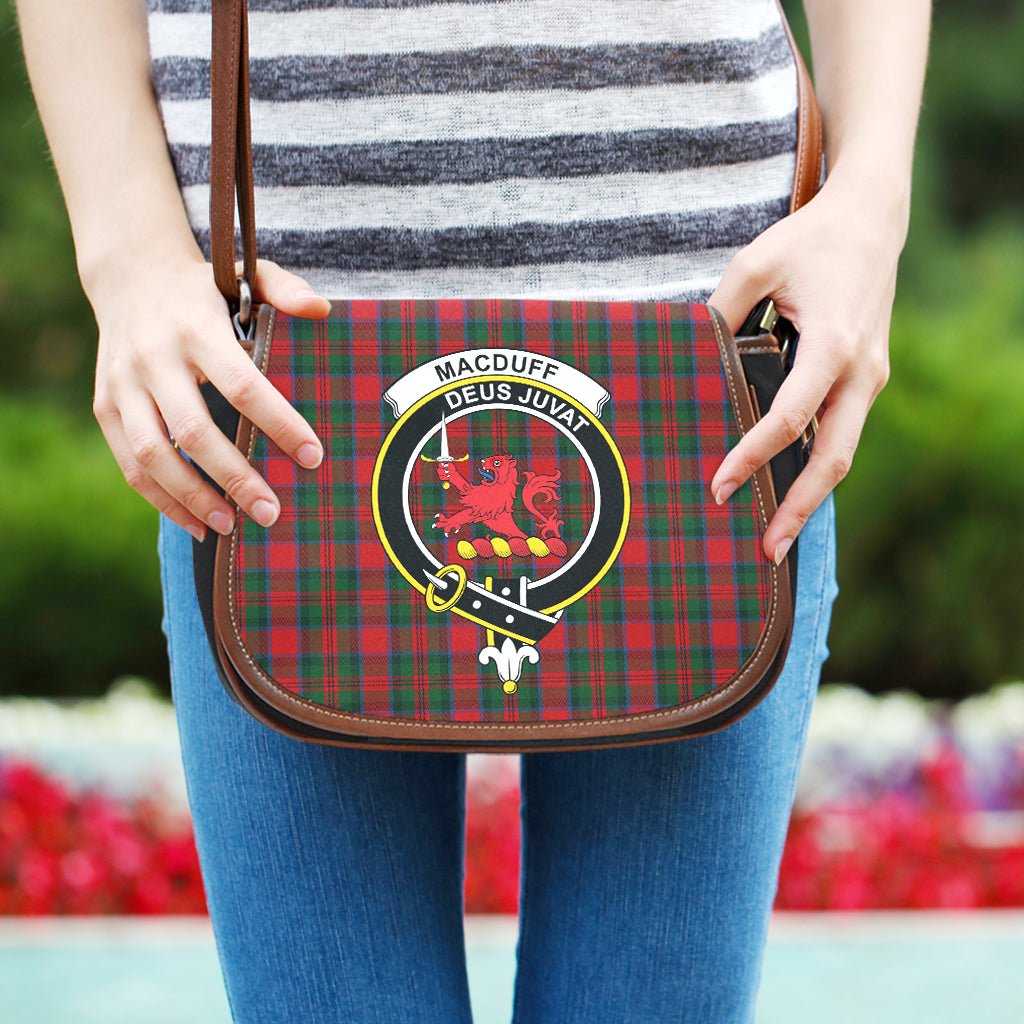
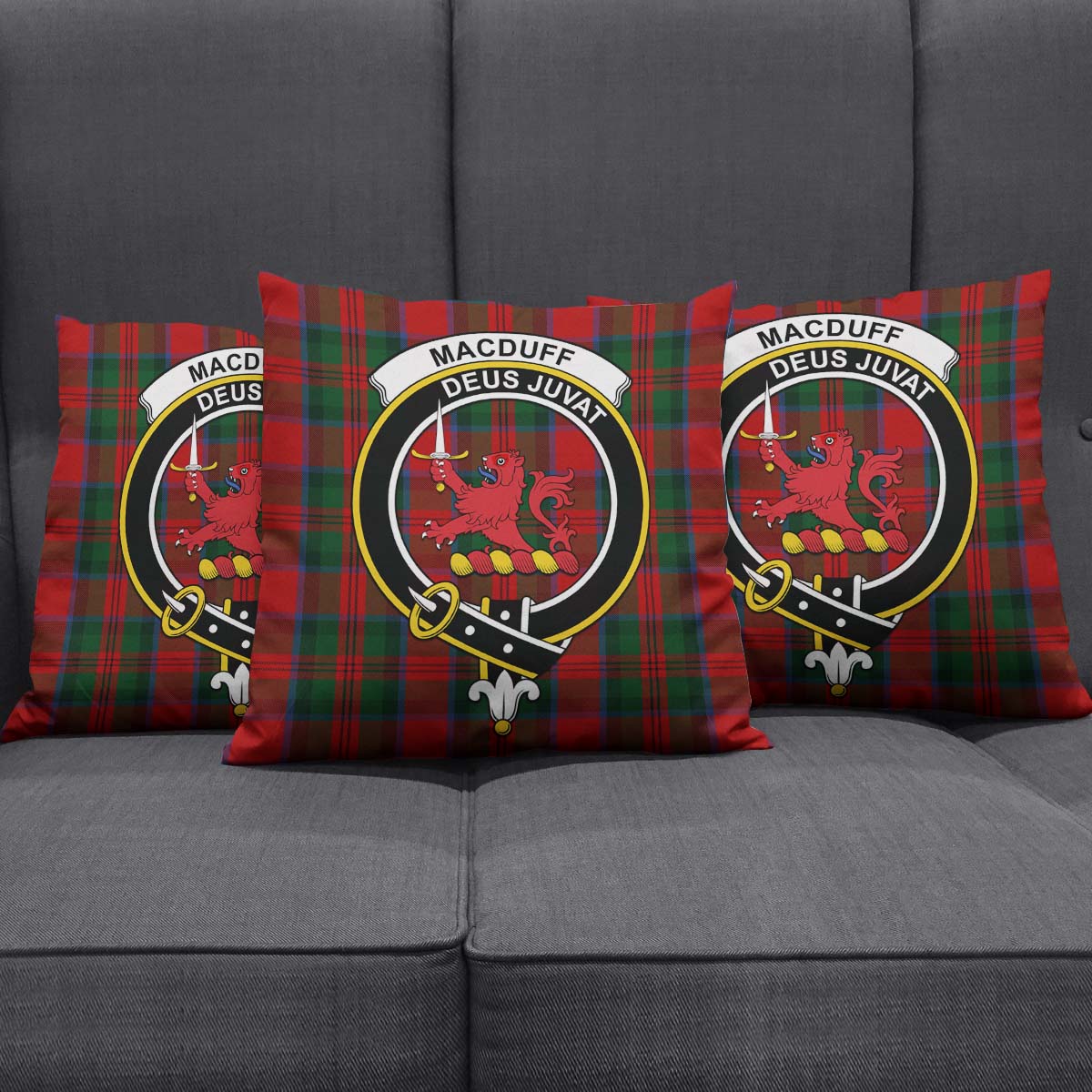
The MacDuff tartan is a bold symbol of Scottish heritage, cherished by many for its vibrant colors and deep ancestral roots. If you're looking for high-quality MacDuff tartan apparel or décor, Tartan Vibes Clothing is a trusted destination for authentic products. Our store proudly offers a wide range of Clan MacDuff products, including polo shirts, dresses, hoodies, throw blankets, pillow covers, tote bags, and more. Each item is designed to honor the spirit of the clan while blending traditional charm with everyday usability. Explore our collection and celebrate your connection to Clan MacDuff with style and pride.

Frequently Asked Questions
What does the clan MacDuff motto mean?
The motto of Clan MacDuff, "Deus Juvat", means "God Assists" in Latin. It reflects the clan’s strong belief in divine support and guidance, especially during times of struggle or leadership.
What is the origin of Clan MacDuff?
Clan MacDuff originated from the royal Scoto-Pictish bloodline in Scotland and was historically tied to the Earldom of Fife. The clan traces its ancestry to noble figures, including Queen Gruoch, and has held influential roles in Scottish governance and royal ceremonies.
What does the name MacDuff mean?
The surname MacDuff comes from the ancient Gaelic term Mac Duibh, meaning “son of the black man.” It refers to someone with dark hair or complexion and is not connected to African ancestry.
Who was the last recognized leader of Clan MacDuff?
The last titled leader was Alexander Duff, the 1st Duke of Fife, who married Princess Louise, daughter of Edward VII. After his death, the clan became armigerous and remains without a chief to this day.
Are there any famous castles associated with Clan MacDuff?
Yes. Notable castles include Macduff’s Castle in East Wemyss, Cupar Castle, Falkland Palace, and Fernie Castle—many of which were pivotal sites in Scottish medieval history.

Aimee Li
An author dedicated to exploring the rich history, vibrant culture,... of the Scottish clans. As an avid historian and fashion enthusiast, I have always been fascinated by Scotland's heritage and the timeless elegance of its traditional attire. Join me on this journey through the highlands and lowlands, as we delve into the heart of Scottish legacy together.


