



Clan Clark: Surname History, Crest, Tartan, and Heritage
by Aimee Li on Aug 14, 2025
The name Clan Clark has long been associated with wisdom, integrity, and service in Scottish history. While it may not be a Highland clan with a formally recognized chief, the Clan Clark in Scotland holds a respected place in Scottish history through its enduring legacy of literacy, loyalty, and contribution to the country's cultural heritage. This article explores the origins of the Clark surname, the meaning behind its crest and motto, and how families today carry forward this proud Scottish identity.
I. Who Are Clan Clark?
Clark is not a traditional Highland clan with a recognized chief, but rather an ancient Scottish surname derived from the Latin "Clericus", meaning scribe or scholar. It first appeared in Scotland in the 12th–13th centuries, with early figures like Roger Clericus of Kelso serving in clerical roles for church and state. While not a clan in the formal sense, Clark and its variants—Clarke, Clerk, and Clerke—are officially recognized as septs of two major Highland clans.
Clan MacPherson includes these names under its chief’s authority, and Clan Cameron also lists them as accepted septs, reflecting shared roots in ecclesiastical service and ties to the Lochaber region. In lowland clans of Scotland, a prominent family of Clerks (aka Clarks) based at Penicuik House in Midlothian rose in stature from the 17th century, achieving a baronetcy in 1679 and producing notable figures including Sir John Clerk (politician, composer) and eventually the ancestry of physicist James Clerk Maxwell.
II. Where the Clark Surname Comes From?
The Clark surname history has its roots in Anglo-Saxon heritage. It originated as a medieval job title for a scribe, secretary, or a member of a minor religious order. The word “clerc” comes from the Old English “cler(e)c”, meaning priest, and was initially used to describe those in spiritual service. As members of minor religious orders were eventually permitted to marry and form families, the name began to spread into everyday use.
During the Middle Ages, the vast majority of literate individuals were part of the church, so it became common for the term Clark or Clerk to refer to any educated man, especially professional scribes, scholars, or administrators. This widespread usage played a key role in shaping the origin of Clan Clark as a distinct family identity.

- 1086: Richerius Clericus of Hampshire is mentioned in the Domesday Book, one of the earliest official records in England.
1100: Willelm le Clerec is recorded in The Old English Byname Register of Somerset during the reign of King Henry I, also known as “The Lion of Justice” (1100–1135).
Early 1100s: The surname begins appearing in official documents as a hereditary name.
1205: Reginald Clerc appears in the Curia Regis Rolls of Rutland, showing early legal use of the name.
1272: John le Clerk is recorded in the Transcripts of Charters regarding the Gilbertine Houses in Lincolnshire.
As governments introduced systems of personal taxation, including the Poll Tax in England, surnames became a necessity for legal and civic records. This helped solidify the clan Clark and its variants as official family names.
1620: Richard Clarke is listed as a passenger on the Mayflower, joining the first wave of English settlers to the New World.
1846: Lawrence Clark, with his wife Margaret and son Thomas, emigrated from Liverpool to New York aboard the Shenandoah during the Irish Famine.
III. Clan Clark Crest
The Clan Clark crest features a bold red anchor entwined with a golden rope, framed by a traditional belt and buckle design. Scottish septs commonly use this heraldic style to symbolize loyalty to a parent clan. Although Clark is not a Highland clan with its own chief, it is a recognized sept of Clan MacPherson and Clan Cameron, and this crest is proudly associated with that heritage.

The anchor represents steadfastness, hope, and reliability—qualities deeply connected to the historical role of clerks and scholars, from whom the Clark name descends. The Clan Clark motto, “Sure and Steadfast,” reinforces these values, celebrating a lineage built on loyalty and intellectual strength. Today, many Clan Clark descendants wear this crest as a symbol of pride, honoring both their Scottish roots and their family’s enduring legacy.
IV. Clan Clark Tartan
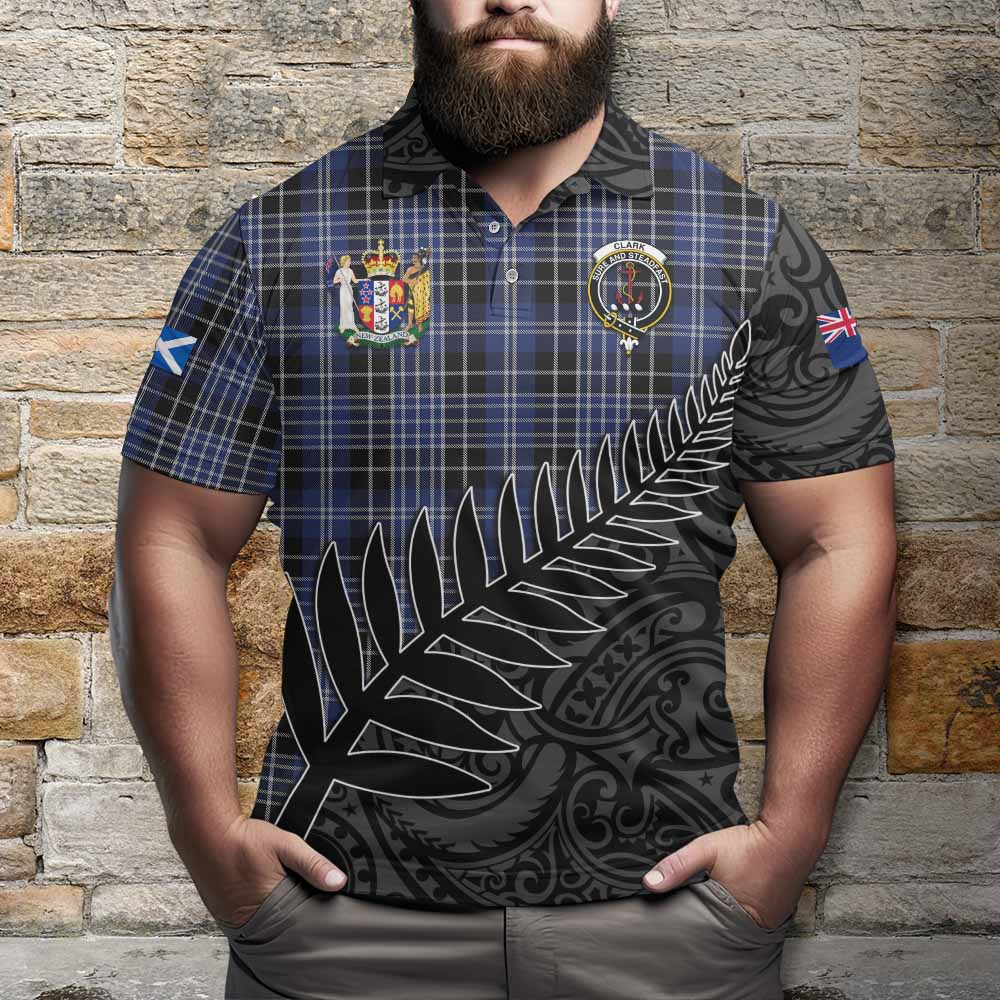
The Clan Clark tartan is most commonly seen in two main versions: Clark Ancient and Clark Modern. Both designs showcase a traditional Clan Clark tartan pattern of deep blue, black, and white, symbolizing strength and loyalty. The Ancient tartan uses softer, more muted tones for a weathered look, while the Modern version features richer, darker shades suited for contemporary Highland dress.


Although these are the most well-known styles, there are also other variations of the Clark tartan that offer additional choices for those who wish to express their heritage in different ways. Whether worn in kilts, scarves, or accessories, the Clark family tartan remains a proud symbol of Scottish identity and tradition.
V. Where Can I Buy a Clan Clark Tartan Product?
The Clan Clark tartan is a bold expression of Scottish heritage, admired for its deep colors and historical significance. If you are looking for authentic and beautifully designed Clan Clark tartan items, Tartan Vibes Clothing is your ideal destination. Our store offers a curated selection of Clan Clark tartan products, including polo shirts, hoodies, dresses, tote bags, pillow covers, blankets, and more. Each item is crafted to honor the proud legacy of the Clark name while providing comfort, quality, and style for modern life.
Add a piece of your heritage to your wardrobe or home, and celebrate your roots with timeless Clark tartan pieces from Tartan Vibes Clothing.



Frequently Asked Questions
Where does the Clark surname originate from?
The Clark surname comes from the Latin word clericus, meaning scribe or scholar, and originally referred to educated men in medieval religious or clerical roles.
Is Clark a recognized Scottish clan with its own chief?
No, Clan Clark does not have a recognized chief. However, it is officially acknowledged as a sept of both Clan MacPherson and Clan Cameron.
What does the motto “Sure and Steadfast” represent in Clan Clark symbolism?
The Clan Clark motto, “Sure and Steadfast” reflects the values of loyalty, integrity, and enduring strength often associated with the Clark name.
What are the main types of Clark tartan available today?
The two most common types of Clan Clark tartan are Clark Ancient and Clark Modern, each with distinct color tones representing tradition and modern style.

Aimee Li
An author dedicated to exploring the rich history, vibrant culture,... of the Scottish clans. As an avid historian and fashion enthusiast, I have always been fascinated by Scotland's heritage and the timeless elegance of its traditional attire. Join me on this journey through the highlands and lowlands, as we delve into the heart of Scottish legacy together.


