



What Is Scotland Famous For Today? A Modern Guide to Its Culture, Landscapes and Hidden Icons
by Teresa Finn on Mar 26, 2026
Table of Content
Most people get this wrong. When asking what is Scotland famous for, the usual answers are the Highlands, castles, whisky, and cultural traditions, but what really sets the country apart today is how those things are experienced.
Travel has changed. Many destinations now feel overcrowded, overheated, and overly curated. Scotland has moved in the opposite direction, offering cooler climates, open landscapes, and experiences that feel more natural and less staged.
That shift is why Scotland is gaining attention again in 2026. It is no longer just a place to visit for landmarks. It is a place where people go for space, slower travel, and a more authentic connection to culture and nature.
Why Are the Scottish Highlands So Famous?
If there’s one thing Scotland is known for, it’s this: the Highlands don’t just look different — they feel different.
This is where Scotland’s identity really takes shape — wide open glens, quiet roads, and landscapes that naturally slow you down. It’s a big reason why more travelers are turning to Scotland in 2026, especially those looking to escape crowded, overheated destinations.
Why the Highlands Feel So Wild (And Why That’s Misleading)
The Highlands are often described as untouched wilderness, but that’s only part of the truth. Much of this landscape was shaped by history — especially centuries of overgrazing and the Highland Clearances.
Today, that story is evolving through rewilding projects that aim to restore native forests and restore balance to the land. It’s a quieter shift, but an important one and part of what makes Scotland’s landscape more than just scenery.

The Rise of “Adventure Luxe” Experiences
What’s changed in recent years is how people experience the Highlands. It’s no longer just about sightseeing — it’s about being in the environment.
Experiences like:
Wild swimming
Loch-side saunas
Munro hiking
These experiences reflect a broader shift toward slower, more immersive travel. The focus isn’t on doing more, but on experiencing things more fully.

Climate Comfort — Scotland’s Unexpected Advantage
Another reason the Highlands are gaining attention is simple: the climate.
While much of Europe faces extreme summer heat, Scotland remains relatively cool, with average temperatures around 18–22°C. This shift has led to the rise of so-called “coolcations” — travel trends where people actively seek out cooler destinations for a more comfortable experience.
That’s made Scotland a natural choice for travelers who want to stay active outdoors without dealing with overwhelming heat.
Scotland’s Cultural Identity — Symbols That Define a Nation
If the Highlands shape how Scotland looks, its culture explains why it feels so distinct.
What makes Scotland different isn’t just the visuals — it’s the fact that many of its most recognizable traditions weren’t always celebrated. Some were suppressed, even banned, and later reclaimed. That history gives Scottish culture a certain edge — it’s not just preserved, it’s earned.
Kilts & Tartan — From Banned Clothing to Global Identity
Today, kilts and tartan are among the most recognizable symbols of Scotland. But they weren’t always worn with pride.
After the Jacobite uprising, the British government passed the Proscription Act of 1746, banning Highland dress in an attempt to dismantle clan identity. Wearing tartan could lead to imprisonment or exile.
That’s what makes their return so significant.
What started as practical Highland clothing evolved into a symbol of identity and resistance, and later into a global cultural marker. Today, tartan patterns are linked to clans, regions, and even modern fashion — connecting past and present in a way few national symbols do.

Bagpipes & Traditional Music — Sound of Scottish Identity
Few sounds are as instantly recognizable as the Great Highland bagpipes.
Originally used in battle and ceremony, bagpipes became a defining part of Highland regiments, carrying across landscapes in a way no other instrument could. Over time, that sound moved beyond warfare into celebrations, festivals, and national events.
Even today, whether at the Edinburgh Military Tattoo or local gatherings, the pipes aren’t just music — they’re a signal of presence, history, and continuity.

Highland Games — Ancient Strength Meets Modern Spectacle
At first glance, the Highland Games can look like pure spectacle — men in kilts tossing massive logs and throwing weights into the air.
But these events have deeper roots.
They began as Wappinschaws, gatherings where clan leaders selected the strongest and fastest men for battle or service. Strength, endurance, and agility weren’t entertainment — they were essential.
Today, events like the caber toss, hammer throw, and weight over bar still follow those traditions, but in a more celebratory setting. The Games have become one of Scotland’s most iconic cultural exports, blending history, competition, and community into a single experience.

Ceilidh & Social Traditions — Culture You Participate In
Not all Scottish traditions are meant to be watched — some are meant to be joined.
A ceilidh (pronounced kay-lee) is a social gathering built around music, dancing, and shared energy. It’s structured enough to follow, but informal enough that anyone can join in, regardless of experience.
What makes it stand out is the interaction. You don’t stay on the sidelines for long — partners change, groups rotate, and the whole room becomes part of the experience.
It’s a reminder that Scottish culture isn’t just something you observe. It’s something you step into.
As you move from culture into food, you’ll notice a similar pattern — traditions that began out of necessity, adapted over time, and are now being reinterpreted in a more modern, sustainable way.
Scottish Food & Drink — From Tradition to Sustainable Cuisine
Scottish food is often misunderstood. It’s usually reduced to stereotypes — heavy dishes, unusual ingredients, or something to try once for the experience.
But that misses the point.
At its core, Scottish cuisine has always been shaped by resourcefulness, seasonality, and a commitment to minimal waste. And in 2026, that foundation is being reinterpreted to align closely with modern ideas of sustainability and provenance.
Haggis — The Original “Nose-to-Tail” Superfood
Haggis is probably the most famous and misunderstood Scottish dish.
Traditionally made from sheep’s offal mixed with oats, spices, and fat, it was never designed to shock people. It was designed to use everything available, long before “nose-to-tail eating” became a global food trend.
That’s why haggis is being re-evaluated today.
In modern Scottish kitchens, especially at higher-end restaurants, the same principles are being applied with more refined techniques. The result isn’t just tradition for tradition’s sake — it’s a model for low-waste, sustainable cooking that feels surprisingly relevant.

Scotch Whisky — From Smuggling to Green Hydrogen
If there’s one product Scotland is globally known for, it’s Scotch whisky.
Its origins are far from polished. For centuries, whisky production was dominated by illegal distilling and smuggling, particularly in the Highlands. What is now a highly regulated global industry began as a form of resistance and survival.
Today, whisky remains one of Scotland’s most valuable exports — but what’s changing is how it’s being produced.
Many distilleries are now shifting toward:
Green hydrogen energy
Reusing byproducts like pot ale for fuel
Long-term net-zero production goals
This transformation is turning whisky into more than a heritage product — it’s becoming part of Scotland’s clean energy narrative.

The “Traditional Tech” Comeback
Interestingly, new technology is enabling a return to older methods.
With hydrogen enabling cleaner, high-temperature heating, some distilleries are reintroducing direct firing — a technique once abandoned due to environmental concerns. This process creates deeper chemical reactions during distillation, leading to richer, more complex flavor profiles.
It’s a rare case where innovation doesn’t replace tradition — it revives it more sustainably.
Beyond Taste — The Rise of Terroir & Transparency
Another shift happening in the whisky world is how people define quality.
In the past, age statements (12, 18, 25 years) dominated perception. Now, the focus is moving toward origin and traceability.
Consumers are increasingly interested in:
Where the barley is grown
How it’s processed
Which specific distillery practices are used
Some producers are even using digital tracking systems to show the journey from field to bottle. This shift reflects a broader trend across Scottish food and drink — one that values connection, transparency, and authenticity over simple labels.
Next, we move from what Scotland tastes like to where its stories live — in its castles, history, and legends.
Castles, History & Legends — Where the Past Still Feels Alive
Scotland’s history doesn’t sit quietly in the past — it still shapes how the country feels today.
Scotland’s history isn’t something you visit; it’s something you constantly run into.
It’s in the skyline of its cities, the ruins along its coastlines, and the stories that still shape how people see the country today. What makes Scotland different is how closely its past is tied to its identity — not polished or distant, but still very present.
Scotland’s Castles — More Than Tourist Attractions
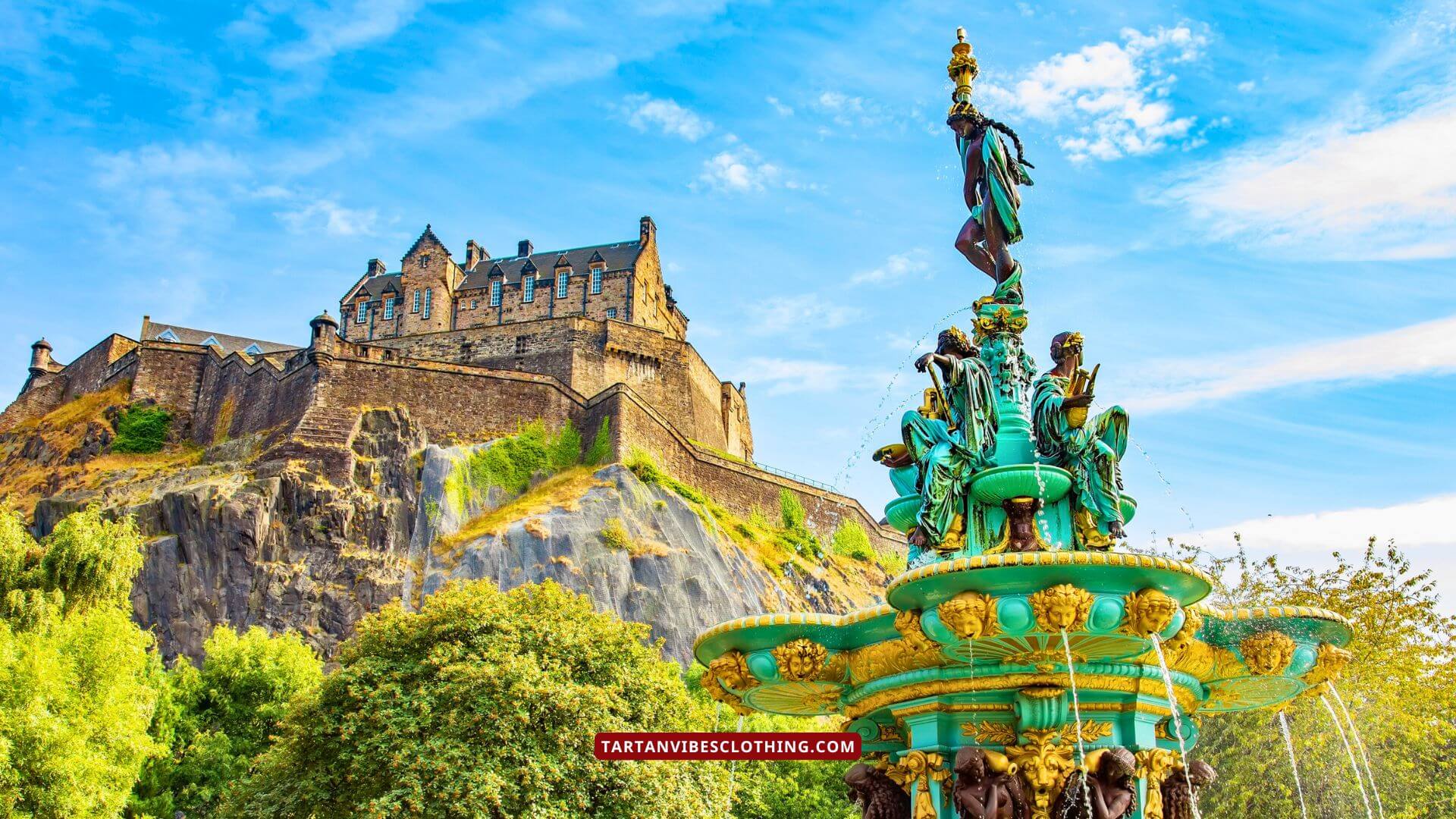
With over 2,000 castles across the country, Scotland has one of the highest concentrations of historic fortifications in Europe.
But these aren’t just scenic landmarks.
Many castles were built in strategic locations — on volcanic rock, overlooking trade routes, or guarding coastlines. Places like Edinburgh Castle or Stirling Castle weren’t designed to impress visitors; they were built to control territory and withstand conflict.
That’s part of what makes them compelling today. You’re not just looking at architecture — you’re looking at structures that shaped power, politics, and survival.
Legends That Became Global Icons
Some of Scotland’s most famous symbols don’t come from history alone — they come from stories that grew far beyond it.
The most obvious example is the Loch Ness Monster. Despite being widely debated (and often debunked), it remains one of the most recognizable legends in the world. The loch itself — deep, dark, and vast — plays a big role in keeping that mystery alive.
Then there’s the unicorn, Scotland’s national animal. Chosen for its symbolism of purity and strength, it reflects how myth and identity are often intertwined in Scottish culture.
These legends persist not because they’re proven, but because they’re believed in or at least enjoyed — across generations.

The Darker Side of History
Not all of Scotland’s past is romantic.
Between the 16th and 18th centuries, Scotland experienced one of Europe’s most intense periods of witch trials, with thousands accused and many executed. These events reflect a time of fear, instability, and deep social tension.
Sites like Mary King’s Close in Edinburgh offer a more physical connection to that past — a preserved underground street tied to plague outbreaks and urban life centuries ago.
Even objects like the Stone of Destiny, used in royal coronations, carry stories of theft, political symbolism, and national identity.
These elements don’t always make travel brochures, but they add depth. They remind you that Scotland’s history isn’t just dramatic — it’s complex.
Why Is Scotland Trending Again in 2026?
Scotland’s global image used to be built almost entirely on history. But in recent years, something has shifted.
This is what’s actually driving tourism right now.
It’s no longer just about what Scotland was; it’s about how it’s being experienced now. From film locations to cultural cities and changing travel behavior, modern Scotland is redefining what the country is famous for in a way that feels current, not nostalgic.
Set-Jetting — Travel Through Film & TV
One of the biggest drivers of modern tourism in Scotland is set-jetting — traveling to places seen on screen.
Series like Outlander have long drawn visitors to castles, standing stones, and Highland landscapes. More recently, shows like The Traitors have shifted attention to lesser-known areas such as Easter Ross, spreading tourism beyond the usual hotspots like the Isle of Skye.
This matters because it changes where people go — and how they experience the country. Instead of following traditional routes, travelers are building itineraries around stories they’ve already connected with.

Glasgow vs Edinburgh — Two Different Scotlands
Most first-time visitors focus on Edinburgh, and for good reason. It’s visually striking, historically rich, and home to events like the Edinburgh Festival Fringe, the world's largest arts festival.
But Scotland’s cultural energy doesn’t stop there.
Glasgow offers a completely different experience. Recognized as a UNESCO City of Music, it’s known for its live music scene, creative industries, and a more local, less curated atmosphere. It also continues to grow in global relevance, especially amid major events such as the 2026 Commonwealth Games.
Together, these two cities represent a broader truth: Scotland isn’t one-dimensional. It balances heritage with living culture, and that contrast is part of its appeal.
The Rise of “Anti-Tourism” Travel Choices
As global travel trends shift, more people are actively trying to avoid overcrowded destinations. Scotland has benefited from that — but not in the way you might expect.
Instead of concentrating visitors in the same places, there’s a growing move toward less obvious locations:
Choosing regions beyond the Isle of Skye
Exploring smaller towns and rural areas
Prioritizing local experiences over major attractions
This aligns with a broader mindset: travel that feels personal, flexible, and less staged.
In that sense, Scotland’s appeal isn’t just what it offers — it’s how it allows people to experience it differently.
Scotland’s Innovations — The Mindset That Changed the World
Scotland isn’t just famous for what you can see — it’s also known for ideas that reshaped how the world works.
For a relatively small country, its influence on science, philosophy, and technology is unusually large. And what connects many of these contributions isn’t luck — it’s a way of thinking that has carried through from the past into the present.
The Scottish Enlightenment — Foundation of Modern Thinking
In the 18th century, Scotland became one of Europe's intellectual centers during the Scottish Enlightenment.
What made it different was access.
Unlike more exclusive systems elsewhere, Scotland developed a broader educational culture in which ideas could come from a wider range of people. This gave rise to thinkers like:
Adam Smith, whose work laid the foundations of modern economics
David Hume, a key figure in empiricism and philosophy
This environment helped establish a tradition of questioning, reasoning, and practical thinking — something that continues to influence how Scotland positions itself today.

World-Changing Discoveries
Scotland’s impact isn’t just theoretical — it’s deeply practical.
Several major innovations that shaped modern life can be traced back to Scottish figures, including:
The telephone (Alexander Graham Bell)
Penicillin (Alexander Fleming)
Early developments in television (John Logie Baird)
The foundations of modern geology (James Hutton)
What’s notable isn’t just the inventions themselves, but how they emerged — often from curiosity, experimentation, and a willingness to challenge existing ideas.

Scotland in 2026 — Ethical AI & Green Energy
That same mindset is now being applied to modern challenges.
In 2026, Scotland is positioning itself as a hub for ethical, human-centered AI, focusing on transparency and trust rather than speed alone. This approach draws clear parallels with its Enlightenment roots — prioritizing thoughtfulness over disruption.
At the same time, Scotland is investing heavily in renewable energy, particularly wind power, and integrating sustainability into traditional industries.
Then and Now — How Scotland Keeps Reinventing Itself
Historical Contribution |
Modern Equivalent |
Adam Smith’s Economics |
Ethical AI & digital governance |
Ethical AI & digital governance |
Renewable energy systems |
Penicillin breakthrough |
Biotech & medical innovation |
Early geology (James Hutton) |
Climate science & land restoration |
One example is the whisky sector, where distilleries are adopting green hydrogen and low-emission processes, linking heritage production with future-focused energy systems.
Together, these developments show that Scotland’s reputation for innovation isn’t just historical, it’s ongoing and still evolving.
The One Mistake Most Tourists Make in Scotland
Scotland is famous for its Right to Roam — the freedom to explore mountains, lochs, and open land without strict restrictions. But this is also where many visitors get it wrong.
The mistake isn’t where people go, but how they treat the places they visit.
As more travelers choose Scotland for its space and nature, issues such as littering, irresponsible camping, and environmental damage have become more visible. That’s why access here comes with an expectation: respect the land as much as you enjoy it.
At its core, the rule is simple:
Leave no trace
Respect wildlife and local communities
Camp responsibly
Understanding this isn’t just about following guidelines — it’s part of what makes the experience in Scotland work.
Why Scotland Feels Different From Anywhere Else
By now, the answer to what is Scotland famous for should feel a little different.
Yes, it’s still the Highlands, castles, whisky, and traditions, but what makes Scotland stand out today is how those things come together to create an experience that feels real and unforced. In a world where travel is becoming more crowded and predictable, Scotland offers something quieter. There is space to explore, a culture that still feels lived-in, and a pace that lets you actually enjoy where you are.
If you do go, don’t just follow the usual checklist. Take time to explore beyond the obvious, experience local traditions, and travel a little slower. That is where Scotland starts to make the most sense.
FAQs About What is Scotland famous for
What is Scotland best known for worldwide?
Scotland is best known for its Highland landscapes, historic castles, Scotch whisky, and cultural traditions such as kilts and bagpipes. It is also increasingly recognized for its cooler climate and immersive travel experiences.
What is the national animal of Scotland?
The national animal of Scotland is the unicorn. It symbolizes purity, strength, and independence and has been part of Scottish heraldry since the 12th century.
What are the must-try foods in Scotland?
The most famous Scottish food is haggis, traditionally served with neeps and tatties (turnips and potatoes). Other well-known foods include Scotch whisky, shortbread, and smoked salmon.
What are the most famous landmarks in Scotland?
The most famous landmarks in Scotland include Edinburgh Castle, Loch Ness, the Scottish Highlands, and the Kelpies. These locations represent Scotland’s mix of history, nature, and cultural identity.
What inventions came from Scotland?
Scotland is known for major inventions such as the telephone, television, penicillin, and the steam engine. These innovations have had a lasting global impact on science, medicine, and industry.

Teresa Finn
As someone with a deep passion for clan heritage, especially the intriguing world of tartans and their rich traditions, I'm here to be your companion on this exciting journey. Together, we'll delve into the depths of clan history, uncovering the stories behind these vibrant tartans and making every connection to your heritage more meaningful.


