



Table of Content
I. Who Are Clan Ogilvy?
Clan Ogilvy, also spelled Ogilvie, is a distinguished Scottish clan originating from Angus in the eastern Lowlands of Scotland. The Ogilvy clan of Scotland is one of the oldest noble families tied to the region’s early feudal history.
As a prominent Scottish family name, Clan Ogilvy carries a legacy rooted in loyalty and leadership, with its lineage tracing back to Gilbert, son of Gillebride, Earl of Angus. In the 12th century, Gilbert was granted the barony of Ogilvy by King William the Lion, laying the foundation for generations of influence. Throughout history, the clan Ogilvys have played significant roles in Scottish affairs. David Ogilvy, 14th Earl of Airlie, is the current chief of Clan Ogilvy. His uncle, Angus Ogilvy, married Princess Alexandra, a cousin of Queen Elizabeth II.

Branches of Clan Ogilvy
Over the centuries, several branches of Clan Ogilvy have emerged:
Clan Ogilvy of Airlie: The chief line of the clan, holding the titles of Lord Ogilvy and Earl of Airlie. Their ancestral seat is Cortachy Castle in Angus.
Clan Ogilvy of Inverquharity: This branch held the baronetcy of Nova Scotia and resided at Inverquharity Castle. The title continues today with the Ogilvys of Winton House in East Lothian.
Clan Ogilvy of Findlater: The Ogilvys of Findlater were elevated to the peerage in 1638, when James Ogilvy was created the 1st Earl of Findlater.
Clan Ogilvy of Seafield: The Seafield branch emerged when James Ogilvy, the 4th Earl of Findlater, was granted the separate title of Earl of Seafield in 1701.
Ogilvy of Boyne: This branch of Clan Ogilvy was a prominent one, established in the late 15th century when Sir Walter Ogilvy received the thanage of Boyne. The family built Boyne Castle and was closely connected to the Scottish royal court. They remained influential in Banffshire through the 17th century before merging with the Seafield line in the early 1700s.
The clan also has several septs, including Airlie, Findlater, Gilchrist, MacGilchrist, Milne, Richardson, and Storie.
II. Where Did the Ogilvy Surname Come From?
This well-known Scottish family name has a long history. The Ogilvy surname origin can be traced to a geographic location—specifically, the Ogilvie barony near Glamis in what was once part of Angus. This region holds deep ancestral significance for the Ogilvie clan , one of the oldest and most prominent Highland families. Contemporary variations of the surname encompass forms like Ogilvie, Ogilvy, Ogelsby, and Ogilby.

The name's origin likely traces back to the Old English or Welsh words "ugl," signifying high, along with "ma," which denotes a place, dating back to before the 7th century.
1172 : Gilbert, Gillebride’s son and the initial Earl of Angus, adopted the surname after being granted the Ogilvy manor.
1267 : Early instance of the name appeared as de Oggiluill.
1316 : Recorded as de Ogelvey.
1425 : Walter de Ogilby held the post of High Treasurer of Scotland, while David of Ogilby was held by England as a royal hostage.
1232 : The oldest recorded variation of this surname, Alexander de Oggoluin, appeared in the charters of the Scottish Historical Society, found in Edinburgh, during the reign of Alexander II of Scotland (1214–1249).
1531 : Spelling appeared as Ogelbe.
1661 : Spelling appeared as Oglevie.
1665 : Spelling appeared as Ogglebie.
Surnames became essential once governments started implementing individual taxes. The passage of time has seen the continuous “evolution” of surnames in all nations, frequently resulting in surprising deviations from their initial spellings.
III. Where did Clan Ogilvy originate?
The historical roots of Clan Ogilvy can be traced back to the fertile lands of Angus, a region once governed by powerful Celtic nobles known as mormaers—early figures who later became Scotland’s first earls. Central to Clan Ogilvy's history is the strategic importance of Angus, where the family rose to prominence as landholders and loyal supporters of the Scottish crown. In 1163, Gillebride, the Earl of Angus, was granted a prestigious barony by King William the Lion. He passed this inheritance to his son Gilbert, gifting him the lands of Wester Powrie, Ogilvy, and Kyneithin, thus laying the foundation of Clan Ogilvy’s legacy.
IV. The History of Clan Ogilvy in Scotland
The history of Clan Ogilvy is a captivating journey through centuries of loyalty, warfare, and noble service in Scotland. As one of the most enduring names in Highland heritage, the Ogilvy Scottish family has played a significant role in shaping the nation’s cultural and political landscape.
Wars of Scottish Independence
Patrick de Ogilvy pledged allegiance to Edward I of England, and his name appears in the 1296 Ragman Rolls. In contrast, his descendants, Sir Patrick Ogilvy and Sir Robert de Ogilvy, were loyal supporters of Robert the Bruce. Sir Patrick was rewarded with a charter for the Kettins estates, while Sir Robert was regarded as one of Bruce’s most devoted companions.
Sheriffs of Angus (Forfar)
- 1365: The Clan Ogilvys were granted the title of hereditary Sheriffs of Angus
1369: Walter Ogilvy succeeded his uncle, Sir Malcolm Ramsay, as Sheriff of Forfar. He was later awarded the barony of Cortachy.
1391, as Sheriff of Angus, Sir Walter led the clan in defense against Alexander Stewart, Earl of Buchan—famously known as the Wolf of Badenoch—during the Raid of Angus.
14th and 15th Centuries
The clan Ogilvys were active in both national battles and political service throughout this period:
1411: Participated in the pivotal Battle of Harlaw.
1425: Sir Walter Ogilvy (younger son of Ogilvy of Wester Powrie) was appointed High Treasurer of Scotland.
1430: Served as ambassador to England.
- 1434: Escorted Princess Margaret to France for her wedding to the Dauphin.
- 1445: Clan Ogilvy fought at the Battle of Arbroath, allied with the Oliphant, Seton, Gordon, and Forbes clans against the Master of Crawford and the Lindsay family.
1459: Sir John Ogilvy of Lintrathern (Walter’s eldest son) received a charter for Airlie Castle.
1491: Sir James Ogilvy of Airlie, John’s son, was appointed ambassador to Denmark.
Meanwhile, Sir Patrick Ogilvy also earned the title Viscomte d’Angus after leading Scottish forces who fought alongside Joan of Arc in France.

16th Century and the Anglo-Scottish Wars
In 1547, James Ogilvy—the eldest son of the fourth Lord Ogilvy—was killed at the Battle of Pinkie Cleugh, a significant defeat for the Scots during the Anglo-Scottish conflict.
17th Century and the Civil War
Both sacrifice and heroism marked this era for the clan Ogilvys:
1615: Saint John Ogilvie was executed by hanging at Glasgow Cross.
1639: The seventh Lord Ogilvy was raised to the rank of Earl of Airlie. Despite this, the clan Ogilvy lineage faced hardship due to their dedication to the Stuart rulers. The Earl, along with his offspring, allied with James Graham, the inaugural Marquis of Montrose, in a struggle against those who opposed Charles I of England.

Key battles:
Battle of Kilsyth: The Earl of Airlie fought valiantly in this Royalist victory.
Battle of Inverlochy (1645): Sir Thomas Ogilvy, the Earl’s second son, led a regiment but died in combat.
Battle of Philiphaugh (Feb 1645): Lord Ogilvy was captured after Montrose's defeat. He escaped from St Andrews Castle disguised as his sister and eventually lived to witness the Restoration of the monarchy.
18th Century and the Jacobite Risings
The clan Ogilvys continued their support for the Clan Stuart cause during the Jacobite uprisings:
1715: Joined the Jacobite rebellion under the Earl of Mar.
1725: Lord Ogilvy was punished but returned home without regaining his titles.
1730: Upon Lord Ogilvy’s death, his brother John Ogilvy assumed the title Earl of Airlie.
- 1745: John’s son, David Ogilvy, raised a regiment to fight for Prince Charles Edward Stuart.
1746: The Ogilvy regiment fought at the Battle of Culloden. After the Jacobite defeat, David fled to France, joined the French royal army, and was promoted to general.
1896: The title Earl of Airlie was officially restored to David Ogilvy, 6th Earl, by Act of Parliament.
Interestingly, the Ogilvy Earl of Seafield took the opposite political path, supporting the Acts of Union in 1707 and aligning with the British Government.

V. Clan Ogilvy Crest and Coat of Arms
Clan Ogilvy Crest
The Ogilvy clan crest is a powerful emblem rich in symbolism, reflecting the clan’s noble heritage and enduring spirit. It visually represents the identity of the Ogilvy Scottish family, telling a story of strength, resilience, and honor.
At the heart of the design is a striking figure: a lady affrontée, shown from the waist up, dressed in azure blue vestments and richly adorned, holding a bold red portcullis (Gules). This portcullis—a fortified gate often associated with castles—signifies protection, strength, and steadfast guardianship, echoing the Clan Ogilvy's historical role as defenders of their lands and people. The lady’s forward-facing stance conveys openness, dignity, and resolve.
Clan Ogilvie
Gaelic Name: MacGhille Bhuidhe
Crest: A lady affrontée from the middle upward Proper in Azure vestments richly attired holding a portcullis Gules
Motto: A Fin (To the end)
Origin of Name: P lacename, Angus
Badge: Evergreen Alkanet
Lands: Angus
Historic Seat: Airlie Castle
Clan Chief: The Rt. Hon. The Earl of Airlie

So, what does the Ogilvy clan crest mean to modern descendants and clan admirers? It stands as a timeless symbol of their ancestral duty and honor. Above the crest, the motto of Clan Ogilvy: “A Fin” (To the End) proudly reinforces this legacy, expressing a commitment to loyalty and perseverance across generations. Often worn on the Ogilvy clan badge, the crest and motto together serve as a declaration of identity and pride for anyone connected to this storied Highland clan.
Clan Ogilvy Coat of Arms
The Clan Ogilvy coat of arms is a heraldic emblem that encapsulates the noble heritage and enduring legacy of the Scottish Clan Ogilvy. The primary blazon of the Ogilvy family coat of arms features a silver (Argent) shield adorned with a red (Gules) lion passant guardant, symbolizing courage and vigilance. This lion is crowned with an imperial crown and collared with an open crown, both rendered in gold (Or), reflecting the clan's royal connections and esteemed status. Distinct variations exist among different branches of the Clan Ogilvy.

For instance, the Earls of Airlie bear the aforementioned lion, emphasizing their prominence within the clan. In contrast, the Earls of Seafield incorporate additional elements into their arms, such as the Sinclair cross and the Grant crowns, which highlight their alliances and lineage.
VI. Clan Ogilvy Tartan
The tartan of Clan Ogilvy is a proud visual symbol of the family’s identity, woven with history, color, and heritage. Known for its vibrant contrasts and rich patterning, the Ogilvy tartan pattern has evolved over the centuries into several beautiful variations, each associated with different branches of the clan or specific historical contexts.
Variations of the Ogilvy Tartan
Over time, several variations of the Ogilvy Scottish tartan colors have emerged, each with its own significance and stylistic appeal. Here are some of the most prominent variations of the Clan Ogilvy Tartan :
1. Ogilvie Ogilvy Tartan
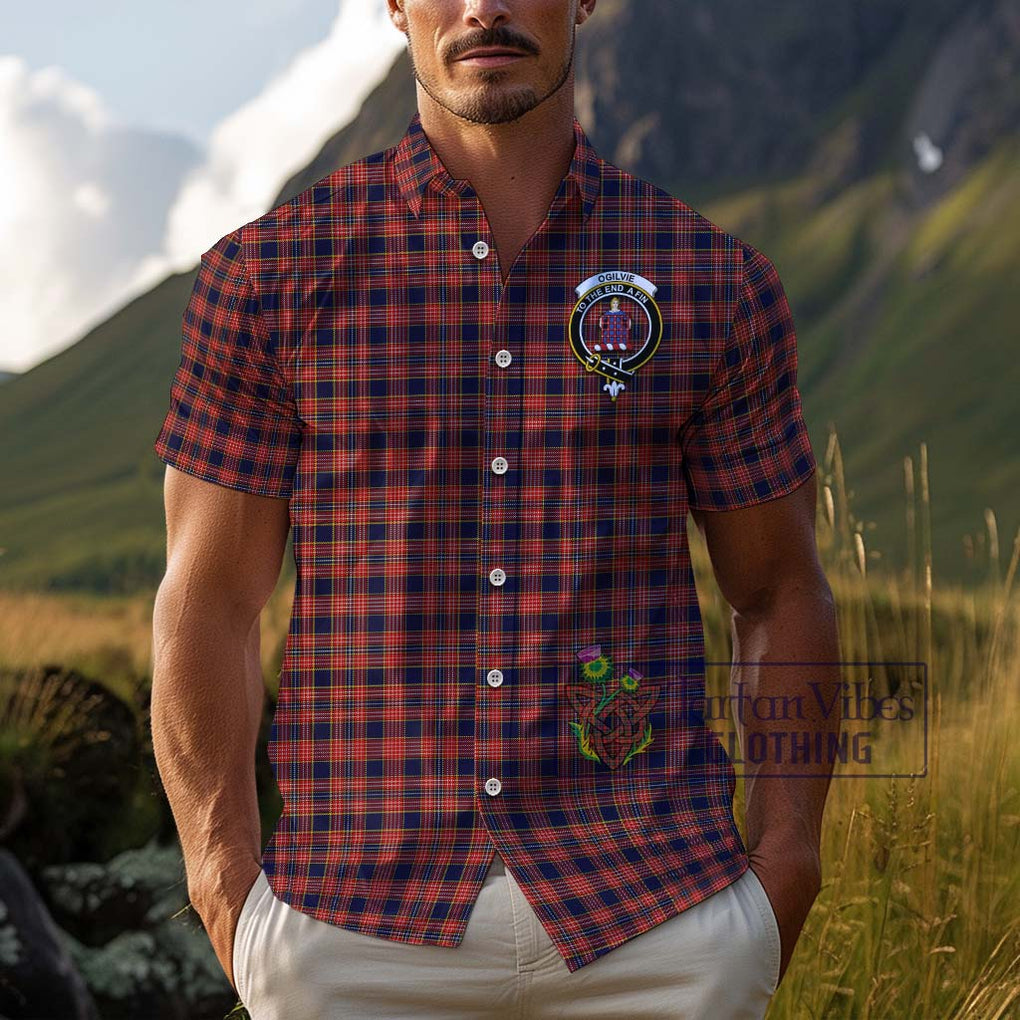
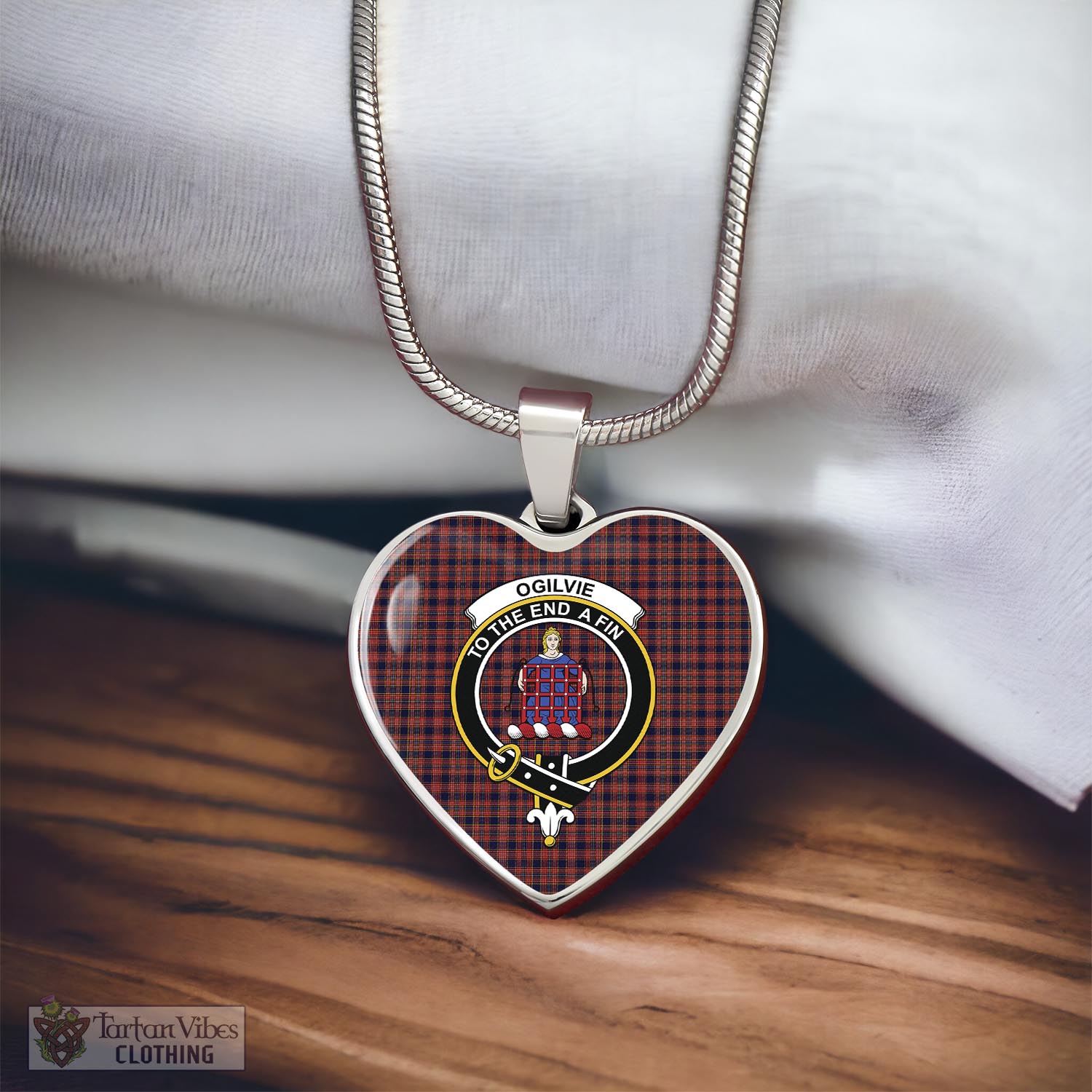
The Ogilvie (Ogilvy) tartan is a proud symbol of the clan’s heritage, originating in Angus, Scotland. Its bold mix of deep red, navy blue, yellow, and black reflects not just beauty but meaning—each color representing traits like loyalty, strength, creativity, and resilience. Today, the Ogilvie tartan is featured in a wide range of products, including kilts, home décor, and accessories—allowing wearers to celebrate their lineage with both style and pride.

2. Ogilvie Ogilvy of Strathallan Tartan
The Ogilvie of Strathallan Tartan, also known as the Drummond of Strathallan Tartan, is a distinguished pattern linked to the union of the Ogilvie and Drummond families, notably adopted by the 6th Earl of Airlie after his marriage to Clementina Drummond in 1812. Featuring bold red, gold, navy, and black tones, this tartan stands out for its striking contrast and intricate design, symbolizing strength, unity, and noble lineage.

3. Ogilvie Ogilvy Hunting Tartan
The Ogilvie Hunting Tartan is a distinguished variant associated with Clan Ogilvie, reflecting the clan's rich heritage and connection to the Scottish Highlands. Characterized by its deep green base interwoven with shades of navy blue, black, yellow, and red, this tartan embodies the natural hues of the Scottish landscape, making it a fitting choice for outdoor and hunting attire.

4. Ogilvie Ogilvy Hunting Ancient Tartan
The Ogilvie Hunting Ancient Tartan is a timeless variation of the clan’s hunting pattern, showcasing softer, earth-toned colors that reflect the use of natural plant-based dyes from centuries past. This tartan features a calming blend of muted forest green, weathered blue, and faded black, accented by subtle lines of light yellow and antique red. Its lighter, more natural palette gives it an aged, authentic feel, making it ideal for those who appreciate historical accuracy and heritage styling.

5. Ogilvie Ogilvy Hunting Modern Tartan
The Ogilvie Hunting Modern Tartan is a contemporary adaptation of Clan Ogilvie's traditional hunting tartan, reflecting both heritage and modern aesthetics. The Ogilvie Hunting Modern Tartan features a bold mix of royal blue, forest green, and deep black, accented by bright yellow and scarlet red stripes. Unlike the ancient version, this modern tartan uses vibrant, saturated tones that make the pattern stand out while still honoring the clan’s Highland hunting roots.

VII. Where Can I Buy Clan Ogilvy Tartan Products?
If you're looking to purchase high-quality Clan Ogilvy tartan products, Tartan Vibes Clothing offers a diverse selection of apparel, home decor, and accessories that celebrate the rich heritage of the Ogilvy clan. Our collection includes items such as tartan polo shirts, hoodies, t-shirts, dresses, quilts, and canvas bags.... all featuring the distinctive Ogilvy tartan patterns. Each product is meticulously crafted, ensuring both comfort and style. Whether you're looking to showcase your Scottish heritage or find a meaningful gift, our range caters to a variety of preferences and occasions.
Explore our full collection of Ogilvy tartan products at Tartan Vibes Clothing and embrace your Scottish heritage with pride!


Frequently Asked Questions
Who are the Clan Ogilvy, and where do they come from?
Clan Ogilvy is a historic Scottish clan originating from Angus in the eastern Lowlands of Scotland. The name comes from the Gaelic “Ocel-fa,” meaning “high plain,” and the clan's roots trace back to the 12th Century.
What is the significance of clan mottos and crests of Clan Ogilvy?
The motto "A Fin," translated as "To the End," reflects the clan's unwavering loyalty, resilience, and honor — values that have guided the Ogilvys for centuries through both war and diplomacy.
Who is the current chief of Clan Ogilvy?
The present chief is David Ogilvy, 14th Earl of Airlie. His family maintains a noble lineage and historical ties to the British royal family.
What are the main branches of the Clan Ogilvy ?
Major branches include:
Clan Ogilvy of Airlie (chief line)
Clan Ogilvy of Inverquharity
Clan Ogilvy of Findlater and Seafield
Each branch played unique roles in Scottish politics, military affairs, and nobility.
What products can I buy to celebrate my Ogilvy heritage?
You can explore Clan Ogilvy tartan apparel, accessories, and heritage gifts at Tartan Vibes Clothing — a dedicated store honoring Scottish clan identity through handcrafted and meaningful designs.

Aimee Li
An author dedicated to exploring the rich history, vibrant culture,... of the Scottish clans. As an avid historian and fashion enthusiast, I have always been fascinated by Scotland's heritage and the timeless elegance of its traditional attire. Join me on this journey through the highlands and lowlands, as we delve into the heart of Scottish legacy together.


