



Table of Content
A tartan is a patterned textile defined by a specific sett—a repeating sequence of colored stripes woven in both vertical (warp) and horizontal (weft) directions. Unlike general plaid, tartan follows strict structural rules and is often associated with Scottish clans, regions, and cultural identity. Each tartan design represents a unique combination of pattern, meaning, and heritage.
Key Takeaway
Tartan is a specific type of plaid with a defined sett pattern, cultural meaning, and formal design rules
Tartan ≠ plaid ≠ palaka ≠ gingham
Every tartan carries identity and meaning
Tartan-like patterns have ancient roots, from Bronze Age checks.
Scotland’s first verified tartan is the Falkirk fragment (3rd century AD).
A tartan’s pattern is built through warp, weft, and a repeating numerical sett, giving it structure, balance, and visual depth.
Tartans can be classified by purpose (clan, district, military, fashion, commemorative) or by color variants (ancient, modern, dress, hunting).
Famous tartans — like Royal Stewart, Black Watch, MacLeod, Campbell, and Isle of Skye — remain global cultural icons.
Tartan appears everywhere today, from Highland dress and modern fashion to home décor and pop culture.
The Meaning of Tartan: Identity, Structure, and Heritage
Tartan represents more than a visual pattern. It functions as a symbol of identity, linking individuals to family lineage, geographic origin, or cultural tradition. Each design carries meaning through its structure, colors, and historical associations.


In Scottish culture, tartans are often connected to clans, where each pattern reflects a shared ancestry and heritage. Beyond clans, tartans can also represent regions, military regiments, or modern institutions. This makes tartan not just a fabric, but a visual system of belonging and cultural expression.

A tartan becomes a tartan when it combines structure, meaning, and identity. Its precise sett sets it apart from ordinary plaid, its cultural associations connect it to lineage and history, and its visual rhythm makes it instantly recognizable. In essence:
Tartan = plaid + defined sett + cultural identity + formal rules.
It is this blend of structure and symbolism that allows tartan to endure as one of the most iconic and meaningful textiles in the world.
The Origins of Tartan: A Historical Journey Through Time
The history of tartan plaid stretches across centuries, evolving from a simple woven cloth into one of Scotland’s most potent cultural symbols. Its development can be traced through key milestones that reveal how tartan shifted in form, meaning, and identity over time.
Period / Date |
Key Features |
|
c. 2000–500 BC Bronze Age Europe |
Tartan-like patterns (Simple checked or striped fabrics) appear in parts of Europe, visually similar to checks but not called tartan. |
|
c. AD 230–300 Roman Britain |
Falkirk Fragment — the earliest proven Scottish tartan; undyed brown-and-white wool check found near the Antonine Wall. |
|
c. 1100–1500 Medieval Scotland |
Regional tartans emerged; patterns varied by dyes & local weaving; tartans are not yet clan-associated but widely worn in the Highlands. |
|
1500–1745 Early Modern Period |
Tartan becomes a Highland cultural symbol; belted plaids are widely used; more refined weaving and emerging stylistic distinctions. |
|
1746–1782 Tartan Prohibition |
The Act of Proscription bans tartan and Highland dress after the Jacobite uprising; it showcases tartan’s strong identity symbolism. |
|
1782 Ban Repealed |
Tartan re-enters public life; symbolic meaning grows stronger after decades of suppression. |
|
c. 1800–1850 Formation of Clan Tartans |
Formal clan tartan system developed; pattern books and romanticism solidified clan identities in tartan form; many patterns are standardized in books and registers. |
|
1830s–1900s Victorian Era |
Queen Victoria & Prince Albert revived tartan at Balmoral; tartan became fashionable across Britain and internationally. |
1900s–Today |
Tartan expands into high fashion, streetwear, interior décor, and pop culture while remaining deeply tied to Scottish identity. |
From ancient check-patterned textiles to its unmistakable role in modern culture, Scottish tartan’s journey spans centuries of evolution, adaptation, and symbolism. Each era added new layers of meaning — shaping tartan into not just a woven pattern, but a cultural emblem that continues to represent Scotland’s identity on a global stage.
How Tartans Are Made? Colors, Setts, and Weaving Techniques
The creation of a tartan is both a technical craft and an artistic tradition. Each pattern is shaped by the relationship between color, structure, and weaving methods — elements that together give tartan its unmistakable character.
What Is a Sett?
A sett is the essential blueprint of every tartan. It specifies the exact sequence of colors and stripe widths, determining how the entire pattern will look once woven. The sett must repeat consistently across the fabric, ensuring that the design remains balanced and recognizable.
A sett functions as the “code” of a tartan:
It defines the exact number of threads of each color, ensuring that every stripe, both warp (vertical) and weft (horizontal), appears in the correct proportion and repeats consistently across the cloth.
It determines whether the tartan will be symmetrical or asymmetrical, because reversing — or not reversing — the thread order affects the visual balance of the entire pattern.
It serves as a unique identifier, distinguishing one tartan from another. This also enables weavers to reproduce the same design precisely across different mills, generations, and materials.
Without a defined sett, a tartan would simply be plaid. With it, Scottish tartan becomes a structured textile with visual rhythm and cultural identity.
Warp and Weft: The Core of Tartan Weaving
Tartan gains its pattern through the interaction of warp and weft threads.
The warp consists of colored threads stretched vertically on the loom.
The weft is woven horizontally through the warp, crossing the colors to create blended tones.
Where different colors meet, new hues appear — from soft transitions to bold squares — creating the signature layered effect that makes tartan visually rich. The interplay of warp and weft also determines whether a tartan appears balanced, bold, muted, or complex.
This weaving method is what gives tartan its dimensional quality, where colors shift depending on light, movement, and viewing angle.

Traditional Dyes and Historical Color Palettes
Early tartans were dyed using natural materials, producing soft, earthy tones that reflected the local environment.
Common natural dyes include:
- Woad → blue shades
- Madder root → red tones
- Birch bark and lichens → yellow and green
- Walnut husks and peat → brown and dark tones
Color variations depended on local plants, minerals, and seasonal conditions, which is why early tartans often reflected regional identity.
Modern Materials and Contemporary Colors
Modern tartans are made from both traditional wool and synthetic fibers such as acrylic and polyester. Wool remains preferred for Highland dress due to its durability and structure, while synthetic materials offer lighter and more affordable options.
Advances in chemical dyes allow for brighter, more consistent colors. This enables both accurate reproduction of historical tartans and the creation of new designs for fashion and modern use.

Types of Tartans: Understanding the Variations
Functional Types of Tartans (Purpose-Based Classification)
Tartans have long been created to represent specific groups or purposes. These designs carry cultural meaning, organizational identity, or historical significance depending on who they were initially made for.
- Clan tartans → represent family lineage
- District tartans → linked to geographic regions
- Military tartans → used by regiments
- Commemorative tartans → created for events
- Fashion tartans → designed for style
These functional types show how tartan serves different identities — familial, regional, institutional, military, or stylistic — while still maintaining the same structural weaving principles.
Color Variants of Tartans (Palette-Based Classification)
In addition to their purpose, tartans can also vary by color palette. These variations do not change the sett itself but alter the visual tone, reflecting different dye technologies, historical periods, or ceremonial uses.
- Ancient → soft, natural tones
- Modern → bold, saturated colors
- Dress → lighter tones with white accents
- Hunting → darker, muted shades
These color variants of tartan types demonstrate how the same tartan pattern can appear dramatically different depending on tonal choices, while the underlying sett remains unchanged.


Famous Tartans Around the World
Some special tartans have grown beyond their regional or clan origins to become cultural icons recognized worldwide. These patterns carry deep associations with royalty, military history, Scottish clans, regional identity, and even film and television. Together, they show how tartan has influenced not only Scotland but also fashion, storytelling, and pop culture worldwide.
Royal Stewart Tartan
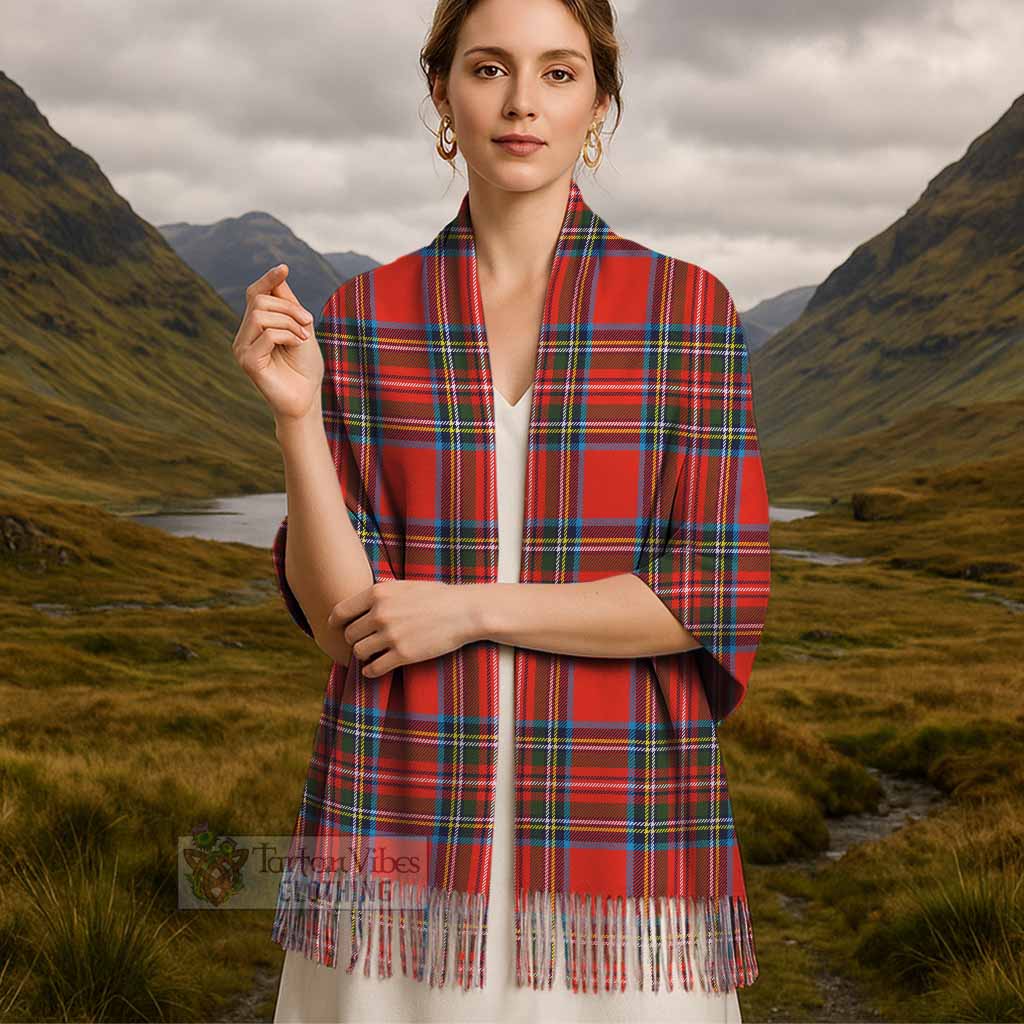
Distinguished by its vibrant red base and intricate sett, the Royal Stewart tartan has long been associated with the British royal family. Members of the monarchy often wear it during formal occasions, and its bold palette has made it one of the most instantly recognizable tartans in the world.
Its enduring popularity also reflects tartan’s close connection to national pride and ceremonial tradition.
Black Watch Tartan
Known for its dark blue, green, and black tones, the Black Watch tartan embodies Scotland’s military legacy. Initially worn by the Black Watch regiment, it carries connotations of duty, discipline, and identity.
Today, it is widely used across clothing and fashion due to its versatility and historical depth.

MacDonald, Campbell, MacLeod, and Fraser Tartans
Some of the most iconic clan tartans are associated with major Scottish families and carry strong historical identity.
Key clan tartans include:
- Clan MacDonald → bold red and black patterns
- Clan Campbell → deep green and blue tones
- Clan MacLeod → distinctive yellow and black design
- Clan Fraser → balanced red and blue pattern
These tartans represent some of Scotland’s most influential clans and remain widely used in Highland dress, ceremonial wear, and modern tartan products.
District Tartans such as the Isle of Skye
Not tied to specific clans, district tartans represent geographic areas. The Isle of Skye tartan, with its unique blend of purples, greens, and blues, pays tribute to the island’s landscapes — misty moors, heather fields, and coastal horizons. These regional tartans are highly popular among people connected to or inspired by the land itself.
Hollywood and Pop Culture Tartans
Tartan appears widely in film and media, helping introduce Scottish culture to global audiences.
Examples include:
- Braveheart → traditional Highland imagery
- Outlander → detailed historical costumes
- Rob Roy → classic red-and-black patterns
These representations reinforce tartan as a symbol of heritage, identity, and storytelling.
Famous tartans continue to evolve — appearing in fashion, media, and ceremonial life — yet they all share the same foundation: a sett pattern that embodies identity, history, and the enduring spirit of Scotland.
How is Tartan Used? From Traditional to Modern
Tartan in Traditional Scottish Clothing
Tartan has long been at the heart of traditional Highland dress, where every garment reflects history, identity, and craftsmanship. The structured sett patterns make tartan ideal for symbolic clothing worn during ceremonies, gatherings, and cultural celebrations.
- Kilts → represent clan identity
- Sashes and plaids → used in ceremonies
- Trews → an alternative to kilts
Through these garments, tartan transforms clothing into storytelling — each piece honoring ancestry, region, or community.
Tartan in Modern Fashion

Tartan has evolved from its traditional usage into a significant trend in modern fashion. Designers globally are reinterpreting tartan's patterns to craft striking silhouettes and modern styles.
- It's commonly found in streetwear, appearing in items like oversized jackets, skirts, and tailored pants.
- Luxury designers like Vivienne Westwood, Alexander McQueen, and Burberry have transformed tartan into a high-end motif, merging tradition with cutting-edge designs.
- Tartan is also featured in everyday accessories such as scarves, bags, hats, and shoes, enhancing contemporary outfits with color and flair.
This lasting attraction showcases tartan's ability to remain relevant while honoring its cultural heritage.


Tartan in Home Decor and Crafting
Tartan adds warmth, texture, and a timeless feel to interior design, enhancing various decor styles from rustic to modern.
- It's often used in blankets, wall art, cushions, and upholstery, bringing comfort and personality to spaces.
- Curtains, table runners, and seasonal decorations feature tartan, which helps create cozy atmospheres, particularly in fall and winter.
- Craft communities utilize tartan in quilting, embroidery, and other handmade items, showcasing its versatility beyond clothing.
Incorporating tartan into interiors and crafts gives homes a touch of Scottish charm while maintaining a classic yet modern look.


Whether woven into garments, showcased on global runways, or incorporated into home design, tartan continues to evolve while honoring its origins. Its versatility reflects not only aesthetic appeal but also the cultural depth woven into every sett.
Conclusion
In exploring "What is a tartan?," we uncover a world where fabric transcends its physical form, embodying the rich mosaic of Scottish culture, heritage, and identity. Through each Tartan pattern and color, we celebrate the diversity and significance of tartan, recognizing it as a universal symbol that bridges the past with the present, tradition with modernity. Tartan is not just fabric; it's a living, breathing narrative of Scotland itself, woven into the very core of its people and their legacy — with the facts of tartan revealing stories and meanings hidden in every stripe and color.
Frequently Asked Questions
Is tartan the same as plaid?
Not quite! Tartan refers specifically to Scottish woven patterns with a rich history and connection to clans. Plaid is a broader term encompassing any kind of checkered fabric, not limited to Scottish origins. Think of tartan as a specific type of plaid, like a square being a type of rectangle.
What are some surprising uses for tartan?
Tartan's not just for kilts and scarves! You can find it on everything from phone cases and pet accessories to furniture and home decor. It's a versatile pattern that adds a touch of Scottish flair to any setting.
Has tartan ever been out of style?
Tartan has seen its popularity wax and wane over the centuries, but it never truly goes out of fashion. From its historical significance to its modern design appeal, tartan remains a timeless symbol of Scottish heritage.
Do I need to be Scottish to wear tartan?
Nope! Tartan appreciation is for everyone. It's a way to connect with Scottish culture or simply enjoy the beautiful designs.

Marcus Harris
Greetings, I'm Marcus Harris—a passionate advocate for the profound beauty found in cultural and historical richness. Join me as your dedicated companion on a captivating journey through time and traditions. Together, let's unravel the vibrant threads of culture and history that intricately weave the fabric of our shared human experience.


