



Table of Content
To wear a kilt correctly, pair it with a sporran (centered), kilt hose (folded three inches below the knee), and ghillie brogues. For formal events, choose a Prince Charlie or Argyll jacket; for casual settings, a crisp ghillie shirt or plain sweater works best. Always ensure your kilt sits at the navel for a traditional silhouette.
While this forms the foundation of a proper kilt outfit, it only represents the surface of a much more structured system. Each component — from the kilt shirt to the jacket and accessories — plays a specific role in defining the outfit's overall formality, balance, and visual identity. Even minor variations in styling can significantly change how the look is perceived.
In this guide, we’ll break down exactly what to wear with a kilt outfit, how each element works together, and how to build an outfit that feels both appropriate and well-put-together for any occasion.
I. Understanding the Modern Kilt Outfit: A Complete System
Before choosing a shirt, jacket, or shoes, it’s important to understand one key principle: a kilt outfit follows a structured system. It is not a random combination of garments, but a coordinated ensemble where every piece reflects a consistent level of formality.
This is where many people make mistakes. A rugged Ghillie shirt paired with a formal Prince Charlie jacket, or casual day brogues worn with full evening wear, creates a visual imbalance. Even if each item is high-quality, the overall outfit can still feel mismatched. Once you understand how the system works, building a kilt outfit becomes far more intuitive.
1. The 5 Core Elements of Any Kilt Outfit
Every kilt outfit essentials—whether worn at a ceilidh, Highland Games, or a formal wedding—consists of five essential components:

A. The Kilt
This is the foundation of the outfit. A traditional 8-yard tartan kilt is associated with formal wear, while 5-yard or utility kilts lean more casual. Fit is critical: the hem should sit precisely at mid-knee. Too high or too low immediately disrupts the proportions.
B. The Shirt (Your Style Anchor)
The kilt shirt plays a defining role in the overall look. A Ghillie (Jacobite) shirt creates a relaxed, heritage feel. A standard point collar shirt offers modern versatility, while a wing collar shirt is reserved for formal occasions. Changing the shirt alone can shift the entire outfit's tone.
C. Jacket or Outerwear
Outerwear determines structure and formality. A Prince Charlie jacket signals full formal dress, the Argyll jacket provides a versatile semi-formal option, and tweed styles like Braemar or Crail introduce a more relaxed, country aesthetic.
D. Kilt Outfit Accessories
Accessories complete the outfit and carry both function and tradition. These include the sporran (day, semi-dress, or full dress), sgian-dubh, kilt pin, and belt with buckle. Each element contributes to the authenticity and balance of the look.
E. Footwear and Hose
Footwear and legwear anchor the outfit visually. Ghillie brogues are typically reserved for formal settings, while standard brogues are more suited to casual occasions. Kilt hose and flashes must be worn correctly to maintain proper proportions.
2. How Formality Shapes the Entire Outfit
A well-balanced kilt outfit depends on consistency. Every element should align with the same level of formality. A casual outfit might combine a Ghillie shirt, tweed jacket, day brogues, and a leather day sporran. A semi-formal look would introduce a standard collar shirt, an Argyll jacket, and a semi-dress sporran. Formal attire, by contrast, requires a wing-collar shirt, a Prince Charlie jacket, ghillie brogues, and a full-dress sporran.
Mixing elements from different levels is the most common reason an outfit feels “off,” even when individual pieces are correct.
3. Precision Details That Elevate the Look
Small details often make the biggest difference in how polished a kilt outfit appears.
The kilt should sit at mid-knee for proper proportion
The ideal gap between the top of the hose and the knee follows the “three-finger” guideline
Modern kilts often use 13oz wool for improved comfort compared to traditional 16oz fabric
Proper shirt tucking—especially with Ghillie shirts—prevents bulk around the waistline
These details may seem subtle, but they distinguish a well-executed outfit from an average one.
II. Choosing the Right Kilt Shirt for Every Occasion
If there is one piece that defines your entire kilt outfit—beyond the kilt itself—it is the shirt.
The kilt shirt options act as the visual anchor. It sets the tone before anyone notices your jacket, shoes, or accessories. A simple change from a Ghillie shirt to a wing collar can instantly shift your look from relaxed and rustic to formal and ceremonial. Understanding when and how to choose the right kilt shirt is what separates a well-composed outfit from one that feels inconsistent.
1. The Ghillie (Jacobite) Shirt: Rugged & Traditional
The Ghillie shirt, also known as the Jacobite shirt, is one of the most recognizable pieces in Highland wear. With its open neckline and lace-up front, it reflects a more historical, rugged aesthetic tied to traditional Highland life.

Best for:
Casual settings
Highland Games
Festivals and outdoor events
Historical reenactments
This shirt pairs naturally with:
5-yard or utility kilts
Tweed jackets (or no jacket at all)
Day brogues and leather day sporrans
The way you tuck a Ghillie shirt matters. Because of its looser cut, improper tucking can create visible bulk around the waist. A clean, controlled tuck keeps the silhouette sharp and prevents the outfit from looking oversized. Avoid pairing a Ghillie shirt with highly formal items like a Prince Charlie jacket or a full dress sporran. The contrast in formality creates visual tension that feels unintentional.


2. The Victorian Wing Collar Shirt: Black-Tie Essential
At the opposite end of the spectrum is the wing collar shirt, designed specifically for formal Highland dress. This is the standard choice for:
Black tie events
Formal weddings (especially evening receptions)
Ceremonial occasions such as Burns Night

It is traditionally worn with:
A Prince Charlie jacket
A bow tie
A full dress sporran and ghillie brogues
The structure of the wing collar elevates the entire outfit, creating a refined and formal silhouette that aligns with traditional evening wear. This is not interchangeable with a standard dress shirt. A regular collar disrupts the formal harmony of a Prince Charlie outfit, leaving the ensemble feeling incomplete.
3. The Standard Point Collar Shirt: Modern Versatility
For most modern wearers, the dress shirt with a kilt is the most versatile and practical option. It works well in:
Semi-formal events
Daytime weddings
Smart casual settings
Business or social gatherings
This shirt pairs effortlessly with:
Argyll jackets
Tweed jackets
Semi-dress sporrans
Both ties and open-collar looks

It offers flexibility that traditional Highland outfits didn’t originally emphasize, making it ideal for those who want to balance authenticity with contemporary style.
4. Fit, Fabric & Color: What Most Guides Miss
Beyond style, the details matter.
Fit: Avoid overly baggy shirts — a clean, tailored fit keeps the outfit sharp
Fabric: Cotton or lightweight blends work best; modern wearers often prefer breathable materials
-
Color:
White → formal and safe
Neutral tones → work well with tweed or casual looks
Black → more modern and bold
For ghillie shirts specifically, make sure the fabric drapes cleanly and doesn’t bunch when tucked — this keeps the waist area neat and balanced.
III. Jackets and Waistcoats: Defining Formality with Precision
Once your shirt is chosen, the next layer that defines your outfit is the jacket—and optionally, the waistcoat. Together, these pieces establish structure, sharpen your silhouette, and most importantly, lock in the level of formality. This is where many outfits either come together seamlessly or fall apart. A mismatch between shirt and jacket is one of the most common styling mistakes in Highland dress.
Understanding how each kilt jacket style works will help you build outfits that feel intentional, balanced, and appropriate for any setting.
1. The Prince Charlie Jacket – Full Formal Authority
The kilt jacket (Prince Charlie jacket) is the most formal option in Highland wear. It is the kilt equivalent of a tuxedo jacket and is reserved for evening and black-tie occasions. Best for:
Formal weddings (especially evening events)
Black tie functions
Ceremonial gatherings such as Burns Night
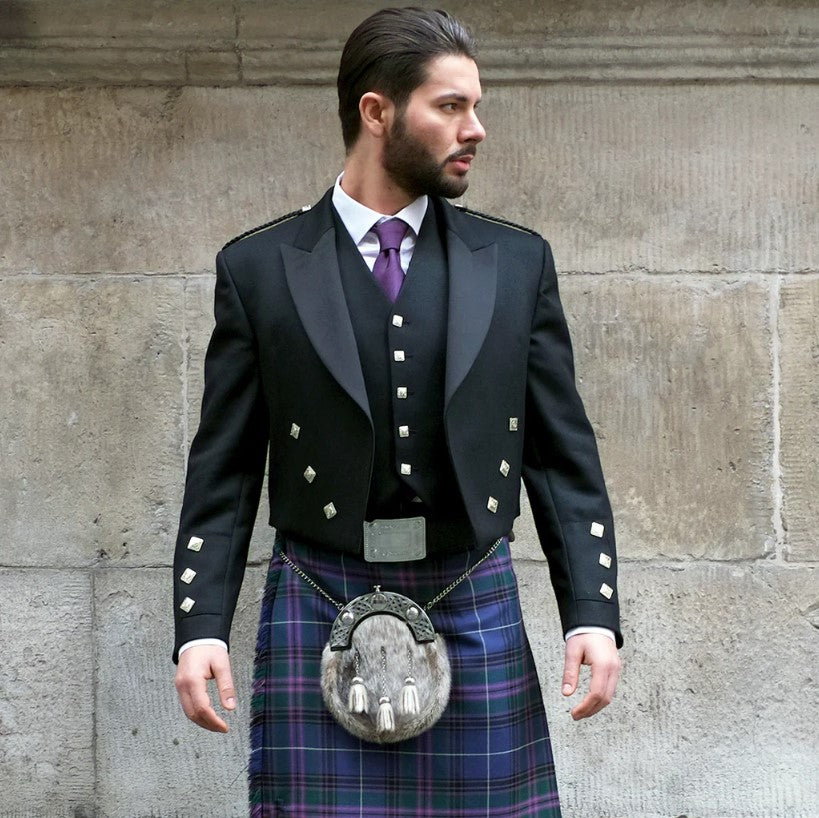
It is traditionally worn with:
A wing collar shirt
A bow tie
A matching waistcoat with a kilt
A full dress sporran
Ghillie brogues
The jacket itself is typically short and structured, designed to sit above the kilt and highlight the waistline rather than cover it.
2. The Argyll Jacket – The Versatile Classic
The Argyll jacket kilt outfit is the most adaptable option in modern kilt styling. It sits comfortably between formal and casual, making it ideal for a wide range of occasions.
Best for:
Daytime weddings
Semi-formal events
Business or social gatherings
Evening wear (less strict than black tie)

It pairs well with:
A standard point collar shirt
A tie (ruche tie or traditional necktie)
A semi-dress sporran
Brogues (either ghillie or standard, depending on formality)
The Argyll jacket offers structure without the rigidity of full formal wear, making it a reliable choice for those who want a polished look without going all the way to black tie.
3. Tweed Jackets (Braemar/Crail) – Smart Casual King
For more relaxed settings, tweed jackets such as the Braemar or Crail provide a perfect balance of texture, comfort, and style. These jackets are closely associated with:
Country wear
Outdoor events
Highland Games
Casual or daytime gatherings
They pair naturally with:
Ghillie shirts or standard collar shirts
5-yard or utility kilts
Day brogues
Leather day sporrans

Tweed introduces visual texture, softening the overall look and making it feel less formal without appearing careless.
IV. Essential Kilt Accessories: The Details That Define the Look
Once your core outfit is in place—kilt, shirt, and jacket—it’s the accessories that bring everything together. These elements are often underestimated, but in traditional Highland dress, they are what transform an outfit from simply “correct” into something that feels complete, intentional, and authentic.
Each accessory has both a functional role and a historical purpose. Wearing them properly is less about strict rules and more about understanding how they contribute to balance, proportion, and tradition.
1. The Sporran
The sporran with kilt is one of the most recognizable elements of a kilt outfit—and it serves a practical purpose. Since traditional kilts lack pockets, the sporran serves as a functional storage pouch.


There are three main sporran types:
Leather Day Sporran – simple and durable, ideal for casual wear
Semi-Dress Sporran – a balance of leather and fur, suitable for semi-formal outfits
Full Dress Sporran – highly decorative, often with fur and metal cantles, reserved for formal occasions
Positioning matters: The sporran should sit centered at the front of the kilt, roughly a hand’s width below the belt buckle area.
Practical etiquette insight: During active events like a ceilidh (traditional Scottish dance), it’s common to shift the sporran slightly to the side. This prevents it from swinging excessively and improves comfort without breaking etiquette.
2. Kilt Pins &Sgian Dubhs
The kilt pin is placed on the front apron, typically on the lower outer corner. It adds weight to help the kilt hang properly — but it’s mainly decorative.
The sgian-dubh is worn tucked into the top of the kilt hose. Traditionally, only about one inch of the handle should be visible, following long-standing etiquette.
These subtle details contribute to the outfit's authenticity.

3. Belt and Buckle
A kilt belt and buckle can add structure to a kilt outfit, especially in casual or semi-formal settings.
However, there’s one important rule: Do not wear a belt with a waistcoat (vest). The waistcoat already covers the waist area, making the belt unnecessary and visually redundant. This is a common mistake that disrupts the outfit's clean lines.

4. Optional Upgrades That Elevate Your Outfit
Once the essentials are in place, a few additional elements can further elevate your look—especially in formal or ceremonial settings.


- Plaid Brooch – used to secure a fly plaid over the shoulder in formal dress
Fly Plaid – adds a dramatic, traditional layer to formal Highland outfits
Cufflinks & Watches – subtle modern touches that enhance sophistication
Clan Tartan Tie or Ruche Tie – adds personality and ties the outfit together visually
These are not required, but when used thoughtfully, they create a more complete and refined appearance.
V. Footwear & Finishing Touches: Grounding the Outfit
1. Ghillie Brogues vs Day Brogues
The choice between kilt shoes (ghillie brogues) and standard day brogues comes down to formality and function.
Feature |
Ghillie Brogues |
Day Brogues |
Style |
Traditional, formal Highland footwear |
Modern, similar to standard dress shoes |
Design |
Long laces wrapping around the ankle, no tongue |
Standard closed lacing, more structured |
Best For |
Formal and semi-formal outfits, traditional events |
Casual outfits, everyday or urban wear |
Comfort & Practicality |
Less practical, more ceremonial |
Easier to wear, more comfortable for long use |
When to Choose |
When the outfit leans formal or traditional |
When the outfit is relaxed or modern |
2. Kilt Hose: Height, Fold & Color Rules
Kilt socks (hose) are not just socks—they are a key visual component that affects proportion and balance.
Correct height:
The top of the hose should sit just below the knee
Follow the “three-finger gap” rule between the knee and the top of the hose
This spacing creates a clean visual break and prevents the leg from looking compressed or overly exposed.

Folding technique:
Hose are folded over at the top (cuff style)
The fold should be even and consistent on both legs
Color coordination:
Neutral tones (cream, charcoal, lovat green) are the most versatile
Hose should complement—not exactly match—the kilt
Avoid overly bright or clashing colors unless intentionally styling a modern look
3. Mastering Kilt Flashes
Flashes for a kilt are the small strips of fabric that hang below the folded cuff of the kilt hose. While subtle, they add movement and color coordination to the outfit. How to wear them correctly:
Positioned on the outside of each leg
Just visible below the folded cuff
Even length on both sides
Color matching:
Often chosen to pick up secondary colors from the tartan
Can be matched with other accessories for a cohesive look
Flashes may seem like a minor detail, but when worn correctly, they enhance the outfit's overall rhythm and symmetry.
VI. Occasion-Based Styling: What to Wear with Your Kilt in Real Life
What you wear with a kilt ultimately depends on where you’re going. The same kilt can look completely different depending on how you style the rest of the outfit.
Occasion |
Shirt |
Jacket |
Footwear |
Accessories |
Black Tie / Formal Evening |
Wing collar shirt + bow tie |
Prince Charlie |
Ghillie brogues |
Full dress sporran, minimal accessories |
Wedding (Day / Guest) |
Standard collar shirt |
Argyll jacket |
Ghillie brogues |
Semi-dress sporran, optional tie |
Burns Night / Formal Dinner |
Wing collar or standard shirt |
Prince Charlie or Argyll |
Ghillie brogues |
Dress or semi-dress sporran |
Highland Games / Festivals |
Ghillie (Jacobite) shirt |
No jacket or tweed |
Day brogues or boots |
Leather day sporran |
Casual / Everyday Wear |
Polo shirt, Oxford, or sweater |
None or a light jacket |
Day brogues |
Minimal accessories |
Conclusion: Wearing Your Kilt with Confidence
A great kilt outfit isn’t built on strict rules—it’s built on understanding and balance.
When you choose the right kilt shirt, match your layers properly, and pay attention to small details like fit and proportion, everything starts to come together naturally. The outfit feels cohesive without trying too hard.
Modern kilt styling gives you room to experiment, but the strongest looks always respect the fundamentals. Start with a solid structure, then refine it to suit your style and the occasion.
In the end, confidence doesn’t come from the kilt itself—it comes from knowing you’ve put it together the right way.
Frequently Asked Questions
What shirt should you wear with a kilt?
For formal occasions, a wing collar shirt is the standard choice. For more flexible styling, a standard dress shirt or ghillie shirt works, depending on the level of formality.
Can you wear a normal shirt with a kilt?
Yes. A well-fitted button-down or Oxford shirt is one of the most versatile options, especially for semi-formal and casual outfits.
Do you wear a belt with a kilt?
You can — but not with a waistcoat. If you’re wearing a vest, remove the belt to keep the silhouette clean.
What shoes go best with a kilt?
Ghillie brogues are the traditional choice for formal outfits, while day brogues are more practical for casual or modern wear.

Aimee Li
An author dedicated to exploring the rich history, vibrant culture,... of the Scottish clans. As an avid historian and fashion enthusiast, I have always been fascinated by Scotland's heritage and the timeless elegance of its traditional attire. Join me on this journey through the highlands and lowlands, as we delve into the heart of Scottish legacy together.


