



Table of Content
Tartan is one of the most iconic symbols of Scottish heritage, deeply intertwined with the country’s history, clans, and regiments traditions. In Scottish regiments, tartan serves as more than just a fabric—it is a powerful emblem of identity, unity, and pride. From the battlefield to ceremonial parades, tartan has played a crucial role in shaping Scotland's armed forces' visual and cultural identity. This article explores tartan's history, significance, and evolution in Scottish regiments.
I. History of Tartan in Scottish Regiments
The connection between tartan and the Scottish regiments dates back centuries, originating from the traditions of Highland clans. In the medieval period, Scottish warriors wore tartan as a sign of clan allegiance, but it was not formally adopted into regiments until the 18th century. The Jacobite uprisings (1688–1746) were crucial in militarizing tartan. Highland clans fighting for the exiled Stuart monarchy wore tartan kilts and plaids in battle, reinforcing its symbolism of Scottish nationalism and resistance. After the Jacobite defeat at the Battle of Culloden in 1746, the British government enacted the Disarming Act, banning civilians from wearing tartan to suppress Highland culture.

However, Highland regiments in the British Army were exempt from this restriction, such as the 42nd Royal Highland Regiment (Black Watch) in 1739, officially integrated tartan into regiments uniforms. These regiments adopted tartan not only to distinguish themselves from English units but also to instill a sense of unity and pride among soldiers, marking the beginning of tartan’s enduring presence in Scottish regiments tradition.
II. Famous Scottish Regimental Tartans
Numerous renowned regimental tartans are linked to Scottish regiments units. Here are some examples:
1. Cameron of Erracht Tartan
This tartan is linked to the Cameron Highlanders, a Scottish regiment historically associated with the Clan Cameron, which participated in various conflicts during the 19th and 20th centuries. Its design consists of a dark green background accented with red, yellow, and black stripes.

2. Gordon Tartan
The Gordon tartan is connected to the Gordon Highlanders, a Scottish regiment historically associated with the Clan Gordon, which existed from 1881 until 1994. It predominantly features a dark green background interspersed with red, white, and black stripes.

3. Black Watch Tartan
The Black Watch Tartan belongs to the Black Watch, a regiment established in 1725. Its pattern includes a dark blue background with green, black, and white stripes.

4. Royal Scots Tartan
The Royal Scots tartan is tied to the Royal Scots regiment, which was created in 1633. The tartan showcases a dark green base with blue, red, and white stripes.

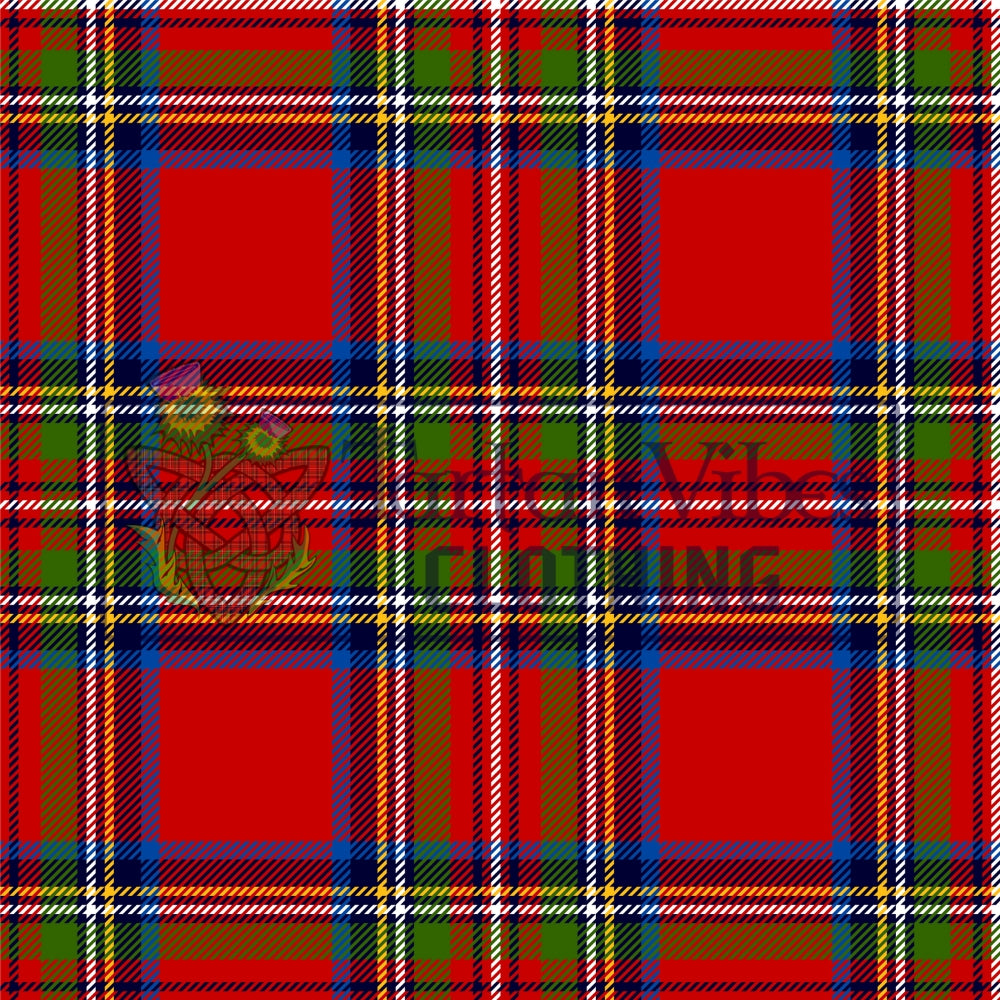
5. Royal Stewart Tartan
One of Scotland's most recognizable and commonly used tartans, the Royal Stewart tartan is associated with the Royal House of Stewart. It serves as the official tartan for the British royal family. Several Scottish regiments, such as the Scots Guards and the Black Watch, also wear it.
📚 Learn more top 10 Scottish Tartans You Should Know
III. Cultural Significance of Tartan in the Regiments

Tartan is a symbol of identity and unity in Scottish regiments. It reflects both individual clans and the shared history of the Scottish people. In the regiments, it fosters pride and belonging among soldiers. Each Scottish tartan pattern represents a specific clan, helping soldiers connect to their heritage while serving. This connection promotes teamwork and camaraderie. Tartan also unites soldiers from diverse backgrounds under a common emblem, enhancing morale and cohesion. Additionally, tartan serves as a mark of honor; in many regiments, wearing it is a privilege linked to service, reflecting a soldier’s loyalty and bravery. Thus, tartan remains a cherished symbol of unity within the regiments.
IV. Practical Uses of Tartan in Regiments Uniforms
Tartan in regiment uniforms is not just a symbol of heritage but also serves practical purposes. Traditionally made from wool, tartan offers durability and warmth, making it well-suited to the harsh Scottish climate and the demanding conditions of regiment life. Its resilience ensures that uniforms can endure rigorous use while keeping soldiers protected.

Additionally, tartan patterns provide a degree of camouflage in certain environments, particularly in wooded or rural areas. Beyond protection and concealment, tartan garments, especially kilts, offer exceptional comfort and mobility. Their flowing design allows for greater ease of movement compared to more restrictive uniforms, making them practical for soldiers engaged in physical activities or combat. Through these functional benefits, tartan remains a distinctive and effective element of Scottish regiments attire.
V. Tartan Kilts in Regiments Ceremonies
Kilts are not only part of regiment attire but are also worn during ceremonial events like parades and official gatherings. They hold significance in Scottish cultural and regiment practices, often highlighting Scotland's vibrant heritage. A notable occasion for wearing kilts is the Edinburgh Military Tattoo, an annual celebration in Edinburgh, Scotland, featuring regiment bands and dancers from various countries. This event, hosted at Edinburgh Castle, draws hundreds of thousands of attendees annually. The kilts donned by the Scottish regiments during the Edinburgh Military Tattoo play a crucial role in the celebration, symbolizing Scotland's rich regiments history.
VI. Evolution of Regiments Tartans Over Time

The evolution of Scottish regiment tartans reflects broader warfare and the army attire changes. The 19th century marked the golden age of regiment tartans, with regiments proudly wearing kilts in battle and official uniforms, each displaying distinctive patterns that reinforced their identity. However, by the 20th century, the practicality of kilts in combat diminished, particularly during World Wars I and II, leading to the adoption of modern regiment trousers for active duty. Despite this shift, tartan kilts remained essential to formal and ceremonial dress. In the 21st century, Scottish regiments continue to honor their tartan heritage through ceremonial parades, military tattoos, and traditional events. This enduring presence ensures that tartan remains a cherished and symbolic element of Scotland’s regiments history.
Frequently Asked Questions
Why do Scottish regiments wear tartan?
Scottish regiments wear tartan to honor their heritage, symbolize their regimental identity, and maintain long-standing regiment traditions.
What is the most famous Scottish regiments tartan?
The Black Watch tartan is the most famous, originally worn by the 42nd Royal Highland Regiment and now widely recognized worldwide.
Do Scottish regiments still wear tartan kilts in battle?
No, modern combat uniforms have replaced kilts, but Scottish regiments still wear tartan kilts for ceremonial occasions and official parades.
How did tartan become associated with the regiments?
Tartan became associated with the regiments through Highland clan warriors and later the formation of Scottish regiments in the British Army, where it was incorporated into official uniforms.
What is the significance of different tartan patterns in the regiments?
Each regimental tartan represents a specific regiment unit, its history, and affiliations, distinguishing it from other regiments while reinforcing camaraderie and tradition.

Aimee Li
An author dedicated to exploring the rich history, vibrant culture,... of the Scottish clans. As an avid historian and fashion enthusiast, I have always been fascinated by Scotland's heritage and the timeless elegance of its traditional attire. Join me on this journey through the highlands and lowlands, as we delve into the heart of Scottish legacy together.


