



Table of Content
Introduction
When you think of kilts, Scotland likely comes to mind first. The iconic tartan patterns, closely tied to specific clans, have become synonymous with Scottish culture. But Do Irish Wear Kilts? Though less famous than their Scottish counterparts, Irish kilts are unique in Celtic history and culture, boasting their styles, colors, and meanings.
This guide will explore the fascinating history of Irish kilts, their design differences, their cultural significance, and how they are worn today. Whether you’re a history enthusiast, a prospective kilt wearer, or simply curious, this in-depth exploration will provide all the answers.
KEY TAKEAWAY
The Irish do wear kilts — but their styles and origins differ from Scottish kilts.
Irish kilts emerged during the Celtic Revival, not from clan-based Highland history.
The saffron kilt is the most iconic Irish style, rooted in historic saffron-dyed garments.
Ireland does not have clan tartans; instead, it uses County Tartans
Pleating styles differ: Scottish kilts use deep back pleats, Irish kilts often use lighter side pleats.
Irish kilts are worn at weddings, St Patrick’s Day events, pipe band performances, and cultural festivals.
Do Irish Wear Kilts?

Absolutely! Irish people do wear kilts. When most people think of kilts, they immediately picture Scottish Highland dress with clan tartans — which leads many to assume kilts exist only in Scotland. In reality, Ireland has its own kilt tradition, with styles, colors, and meanings that differ clearly from Scottish kilts.
The Irish kilt tradition became widely recognized during the Celtic Revival of the late 19th and early 20th centuries, a period focused on reclaiming Irish heritage.
Today, Irish kilts appear in a wide range of cultural and ceremonial settings. They are often worn at weddings, formal celebrations, St Patrick’s Day parades, Celtic festivals, pipe band performances, and military or academic ceremonies. In modern Ireland, the kilt serves as both a symbol of heritage and a proud expression of national culture.
In short:
Scottish kilt = clan tartans + Highland tradition + strong family symbolism
Irish kilt = saffron or county colors + national identity + Celtic heritage
This makes both kilts unique — connected, yet clearly different in purpose, design, and cultural meaning.
Irish Kilts vs. Scottish Kilts: A Comparison
Although Irish and Scottish kilts share a similar appearance, their traditions, symbolism, and development differ significantly.
Scottish kilts are built on a clan-based tartan system where patterns represent family lineage, regiments, or ancestral districts. Scottish kilts use rich, multi-color tartans and deep back pleats, creating a structured, rhythmic swing when walking. Every tartan is officially registered in the Scottish Register of Tartans (SRT), reinforcing Scotland’s long, documented Highland heritage.
Irish kilts represent regional identity rather than clans, using 20th-century county tartans and solid colors such as saffron, green, or navy to express national pride. Irish kilts often feature lighter side pleating and a simpler fabric construction, giving them a cleaner, less structured appearance than their Scottish counterparts.
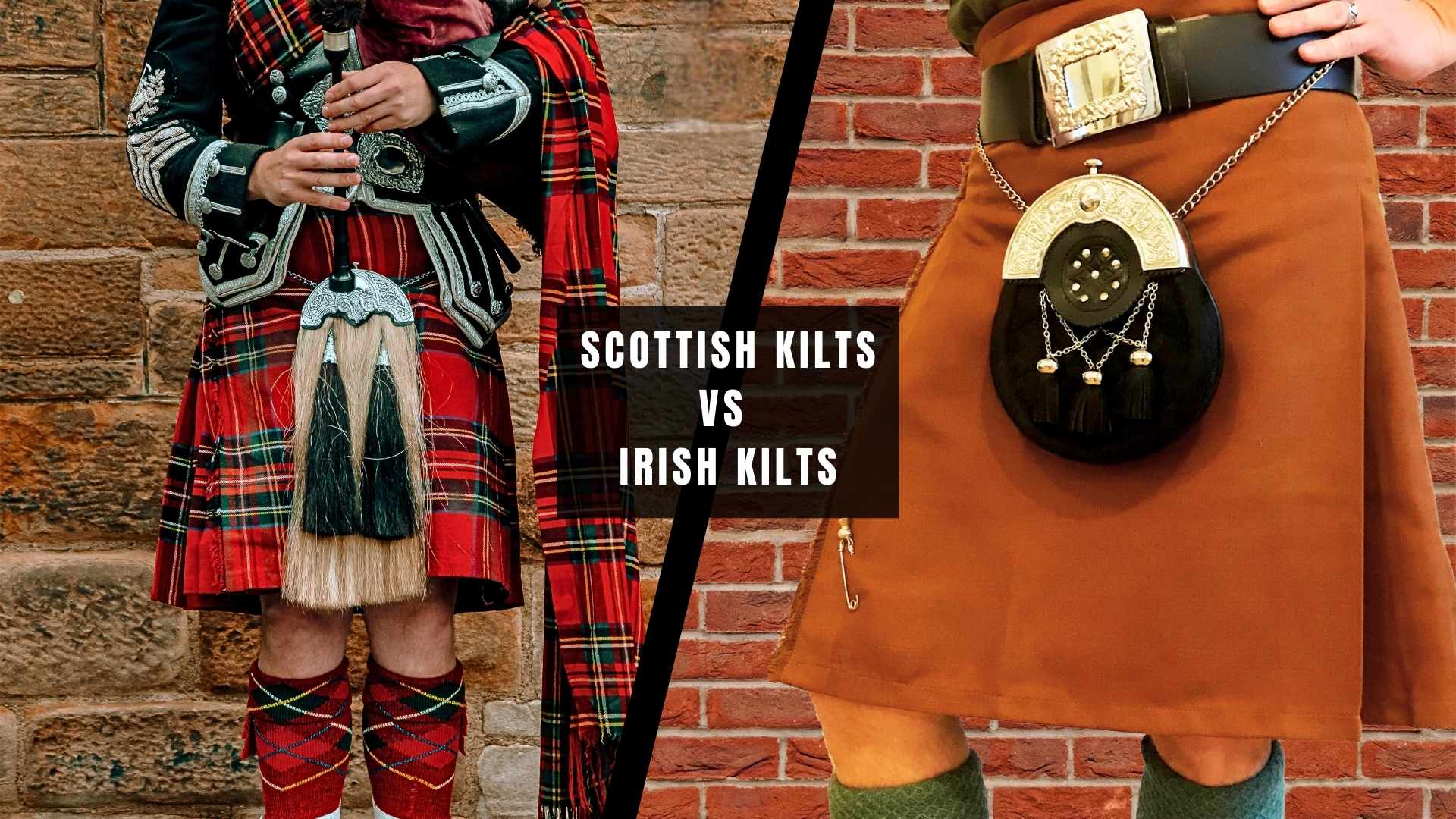
Together, these differences show how two similar-looking garments tell completely different cultural stories — and the comparison becomes even clearer in the table below.
Feature |
Scottish Kilts |
Irish Kilts |
Tartan Design |
Clan tartans that represent family lineage; thousands of registered patterns |
County tartans representing regions, plus solid-color kilts |
Colors |
Multi-colored tartans in complex weaves |
Saffron yellow, green, black; simpler color palettes |
Pleating |
Deep back pleats, heavily structured |
Side pleats or a lighter structure |
Cultural Meaning |
Clan identity + Highland national symbol |
National identity, Celtic symbolism, county representation |
Common Occasions |
Weddings, Highland Games, military dress |
Weddings, St Patrick’s Day, pipe bands, cultural festivals |
Historical Development |
Medieval Highland origins |
Formalized during the Celtic Revival |
Official Registration |
Registered in the Scottish Register of Tartans (SRT) |
County tartans are also registered in SRT |
Crest & Brooch |
Clan Crest Badge (buckled strap with motto) |
Shamrock or Harp pinned with a Tara Brooch |
Although they may look similar at first glance, each kilt carries its own story — its own cultural heartbeat.
One is rooted in clan bloodlines and centuries of Highland tradition, while the other reflects the call of homeland, the colors of its counties, and the enduring pride of Ireland.
The History: Myths, Reality, and the Celtic Revival
Ireland did not develop a kilt tradition in the same way Scotland did, but several early Gaelic garments and later cultural movements paved the way for what we now recognize as the Irish kilt.
Before 1000 AD – Early Garments, Not Kilts
The Irish wore the léine (long tunic) and brat (wool cloak). Some foreigners described these garments as “skirt-like,” but no structured kilt existed yet.
1200–1600 – The Yellow Léine Tradition
The iconic saffron-dyed léine was widely used by warriors and nobles. This long, yellow garment laid the cultural foundation for Ireland’s later preference for solid saffron tones.
1600–1800 – National Colors Without a Kilt Form
Ireland did not develop a Highland-style kilt during this era, but the tradition of wearing bold yellow or golden garments continued, especially in military and ceremonial contexts.
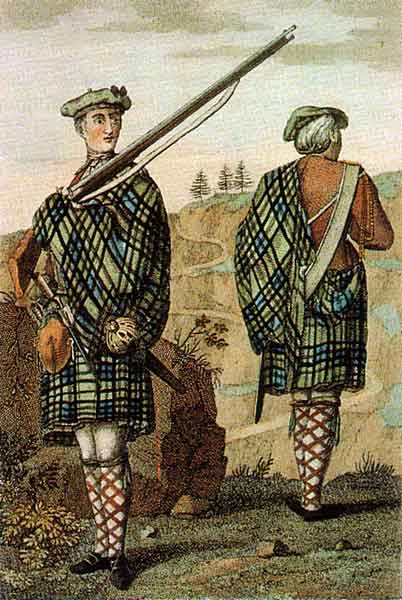
Late 1800s–Early 1900s – The Celtic Revival Creates the Irish Kilt
During the Celtic Revival, cultural leaders sought a distinctly Irish national dress. This movement formalized the idea of the “Irish kilt,” choosing solid colors and Celtic symbolism instead of clan tartans.
Early 20th Century – The Saffron Kilt Becomes National
Irish Volunteers, military units, and pipe bands adopted the saffron kilt. It became the most widely recognized Irish ceremonial garment.
Mid–Late 20th Century – County Tartans Emerge
County tartans were introduced as a modern way to express regional identity. Many were later registered with the Scottish Register of Tartans (SRT), since Ireland has no national tartan registry.
Today – Cultural Symbol, Not Clan Identity
Irish kilts are worn at weddings, St Patrick’s Day celebrations, Celtic festivals, graduations, and by pipe bands. They represent national and cultural identity, not family lineage.
Understanding Irish Tartans Kilt: How to Choose the Right One
Many people searching for “Irish Clan Tartans” assume Ireland has a tartan system similar to Scotland’s clan-based tradition. In reality, Irish tartans follow a regional and national system.
The Irish County Tartans
Irish county tartans are the closest equivalent to Scottish clan tartans, but instead of representing a family, they represent a geographic region.
Ireland is divided into 32 counties, and each one has its own unique tartan.
Many county tartans are officially documented in the Scottish Register of Tartans (SRT).
Color palettes often reflect nature or the county's symbolism — green for landscapes, blue for coasts, red or gold for historic influence.

The Irish National Tartan
For people with Irish heritage who don’t know their county of origin, or those who want a more unified national symbol, the Irish National Tartan is the ideal choice.
Designed to represent all of Ireland, not a specific county or family.
Worn widely by the Irish diaspora, especially in the United States, Canada, Australia, and New Zealand.
A good alternative when county roots are unknown or mixed.
It is one of the most widely worn Irish tartans worldwide, especially among the diaspora. If you want a tartan that represents Irish identity as a whole, not a region, then Irish National Tartan is the perfect choice.

So, Do Irish Families Have Clan Tartans?
No — Ireland does NOT have clan tartans like Scotland. Irish identity has always been tied to counties, surnames, and historical septs, rather than tartan-based clans. The idea of “Irish clan tartans” is a modern misconception.
Instead of clan tartans, the Irish tartan system consists of several versions:
32 County Tartans — representing regional ancestry at the county level
Irish National Tartan — representing Irish heritage as a whole
Ulster Tartan — a popular provincial tartan, not a county tartan.
How to Style an Irish Kilt: A Guide for Every Occasion
Styling an Irish kilt is all about matching the right pieces to the right event. Whether you’re dressing for a wedding, a cultural parade, or a casual night out, the Irish kilt can shift effortlessly from formal to relaxed while still maintaining its traditional charm.
The Formal Look (Weddings & Black Tie Events)
Perfect for grooms, groomsmen, and elegant evening celebrations.
When dressing formally, the Irish kilt leans toward a clean, refined aesthetic. The Brian Boru Jacket is the defining feature of this look. Similar to the Scottish Prince Charlie jacket but with distinct Irish detailing, it is the easiest way to separate Irish formalwear from Scottish attire.
🔷 Recommended Items: Brian Boru Jacket + Wing-collar or stand-collar dress shirt + Black bow tie + Solid-colored kilt hose (cream, green, or black) + Polished Ghillie Brogues.
💡Etiquette: Wear the fly plaid draped neatly over the left shoulder. Secure it with a traditional Tara Brooch (often featuring a harp or Celtic knots), ensuring it doesn’t cover the front of the jacket.
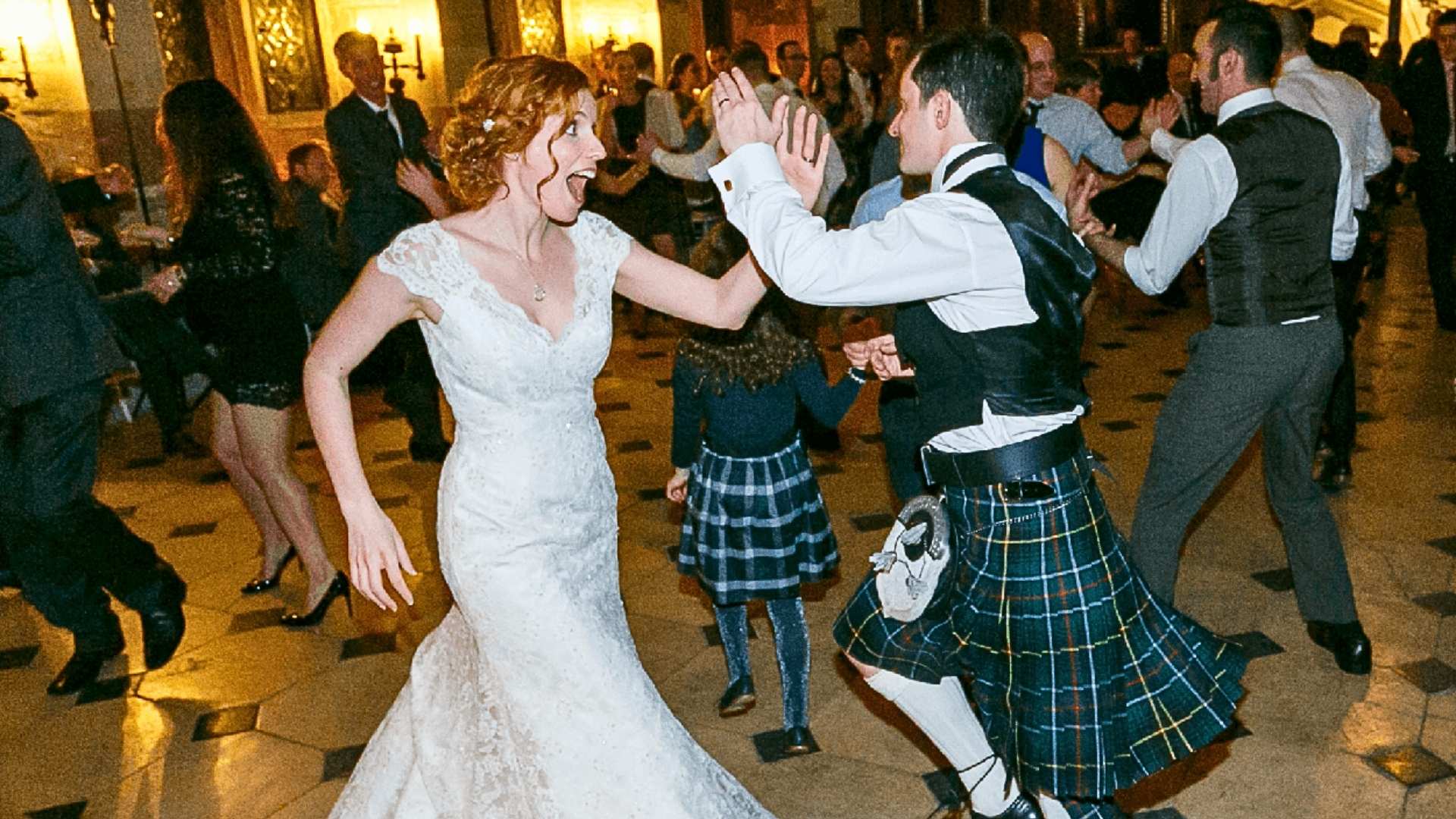
The Semi-Formal Look (St. Patrick’s Day Parades & Festivals)
A balanced and comfortable outfit suited for outdoor movement and long days.
For cultural celebrations, parades, or less formal weddings, aim for a polished yet relaxed look. This is where the Kilkenny Jacket shines — a versatile option often found in shades of Irish green that bridges the gap between formal and casual. Alternatively, heavy knitwear adds texture and warmth.
🔷Recommended Items: Kilkenny Jacket (or Tweed Argyle Jacket) + Aran Sweater (for colder parades) + Flat Cap.
🔺 Accessories: A leather Day Sporran is essential here. Look for designs with embossed shamrocks or Celtic knotwork to emphasize heritage.
A small note for you: Irish kilts for women are typically shorter and lighter. So, pair it with Aran knitwear, fitted jackets, or even a simple blouse for a clean, semi-formal appearance.
💡 Etiquette: Keep the outfit uncluttered. If wearing a sweater, you can skip the jacket, but always ensure your socks (hose) are pulled up neatly with flashes.

The Casual Look (Pubs, Highland Games & Ren Faires)
Rugged, masculine, and highly popular among younger wearers.
Casual styling allows the Irish kilt to shine in a relaxed, earthy way. The goal here is comfort without looking messy. The Grandfather Shirt (collarless shirt) paired with sturdy boots creates a traditional yet accessible look that feels right at home at festivals.
🔷Recommended Items: Grandfather Shirt (or Jacobite shirt) + Leather boots or high-top work boots + Wide leather belt.
💡 Note: This style is especially favored by travelers and festivalgoers because it offers freedom of movement while maintaining an authentic Irish feel.

3 Golden Rules of Irish Kilt Etiquette
No matter how casual or formal the occasion is, these foundational rules always apply.
- The Perfect Fit (Waist & Length): Unlike trousers, an Irish kilt should sit high at your natural waistline (navel level). The length must fall just above or at the center of the knee. If it covers your knees completely, it is too low.
- The Kilt Pin Rule: The Kilt Pin is functional (prevents flapping) and decorative. Important: Only pin it through the top layer (the apron) of the cloth; never pin the layers together. Opt for pins featuring Shamrocks or Harps to distinguish your outfit from Scottish styles.
- Saffron vs. Tartan Balance: If wearing a loud Saffron (yellow) kilt, balance it with solid earth-tone or black accessories. If wearing a complex County Tartan, stick to solid-colored hose (socks) in cream or green to keep the outfit visually cohesive.
Styling an Irish kilt is a flexible process: formal events call for polished tradition, festivals lean into comfort and heritage, and casual gatherings invite a rugged, relaxed look. No matter which style you choose, small details — like the right jacket, appropriate footwear, and proper etiquette — ensure your outfit feels authentically Irish and ideally suited to the moment.
Ready to wear your heritage? Dive into our Irish kilt collection and find the perfect match. 🙌
Conclusion
In conclusion, while kilts are often thought of as a Scottish tradition, they also hold a deep significance in Irish culture. The Irish kilt, especially the Saffron Kilt, reminds us of Ireland's rich Gaelic heritage and the Celtic Revival of the early 20th century. Today, Irish kilts are worn at weddings, festivals, and cultural events, making them an enduring symbol of Irish identity.
Frequently Asked Questions
Can I wear an Irish kilt if I am not Irish?
Absolutely. Unlike Scottish clan tartans, which can be seen as claiming a specific family lineage, Irish county tartans and the Irish National Tartan are worn to honor the region or the country. It is considered a gesture of respect and celebration of culture, provided it is worn with proper etiquette.
Do Irish wear kilts or just Scottish?
There is some disagreement about when they became popular, but kilts are definitely part of Ireland's culture. Many consider that the Irish first played bagpipes, and the Scots first wore kilts. They are both Celtic nations, and in both countries, kilts are worn as a matter of pride.
Do Irish wear kilts to weddings?
Kilts are a traditional garment worn by both Scottish and Irish men. Many Irish men choose to wear kilts for special occasions such as weddings or formal events, as a way to celebrate their Irish heritage
Do Irish men wear kilts?
Yes, Irish men do wear kilts, especially during formal occasions, cultural events, and national celebrations like weddings, Irish dancing, and military parades.
Do the Irish wear kilts and play bagpipes?
Yes, both kilts and bagpipes are part of Irish cultural traditions, especially during parades, festivals, and military events. However, bagpipes are more commonly associated with Scotland.
What is the traditional Irish kilt color?
The traditional Irish kilt is often saffron yellow, but county tartans in green or orange are also popular.
What are Irish tartans?
Irish tartans represent counties, not clans, and are a relatively modern addition to Irish kilt traditions.

Teresa Finn
As someone with a deep passion for clan heritage, especially the intriguing world of tartans and their rich traditions, I'm here to be your companion on this exciting journey. Together, we'll delve into the depths of clan history, uncovering the stories behind these vibrant tartans and making every connection to your heritage more meaningful.


