



28 Intriguing Facts About Highland Cows: Discover Scotland's Iconic Breed
by Marcus Harris on Nov 15, 2025
Table of Content
Introduction
Highland cattle — officially the breed name, though often affectionately called Highland cows — are one of Scotland’s most enduring symbols. With their long hair, sweeping horns, and calm nature, they embody the rugged spirit of the Scottish Highlands. Locals even refer to a group of them as a fold, a charming tradition tied to their historic winter shelters.
This article will explore 28 fascinating insights into Highland cows — from their origins, appearance, temperament, and diet to their cultural role, lifespan, behavior, and even where to see them in Scotland.
Ready to discover what makes these gentle, shaggy cattle one of Scotland’s most beloved symbols?
28 Fascinating Insights into Highland Cows
Highland cows are surrounded by curiosity, and many of the most common questions reveal just how unique this breed truly is. The insights below break down the facts people search for most — giving you clear, practical answers about their size, habits, lifespan, behavior, and more.
1. What are Highland cows?
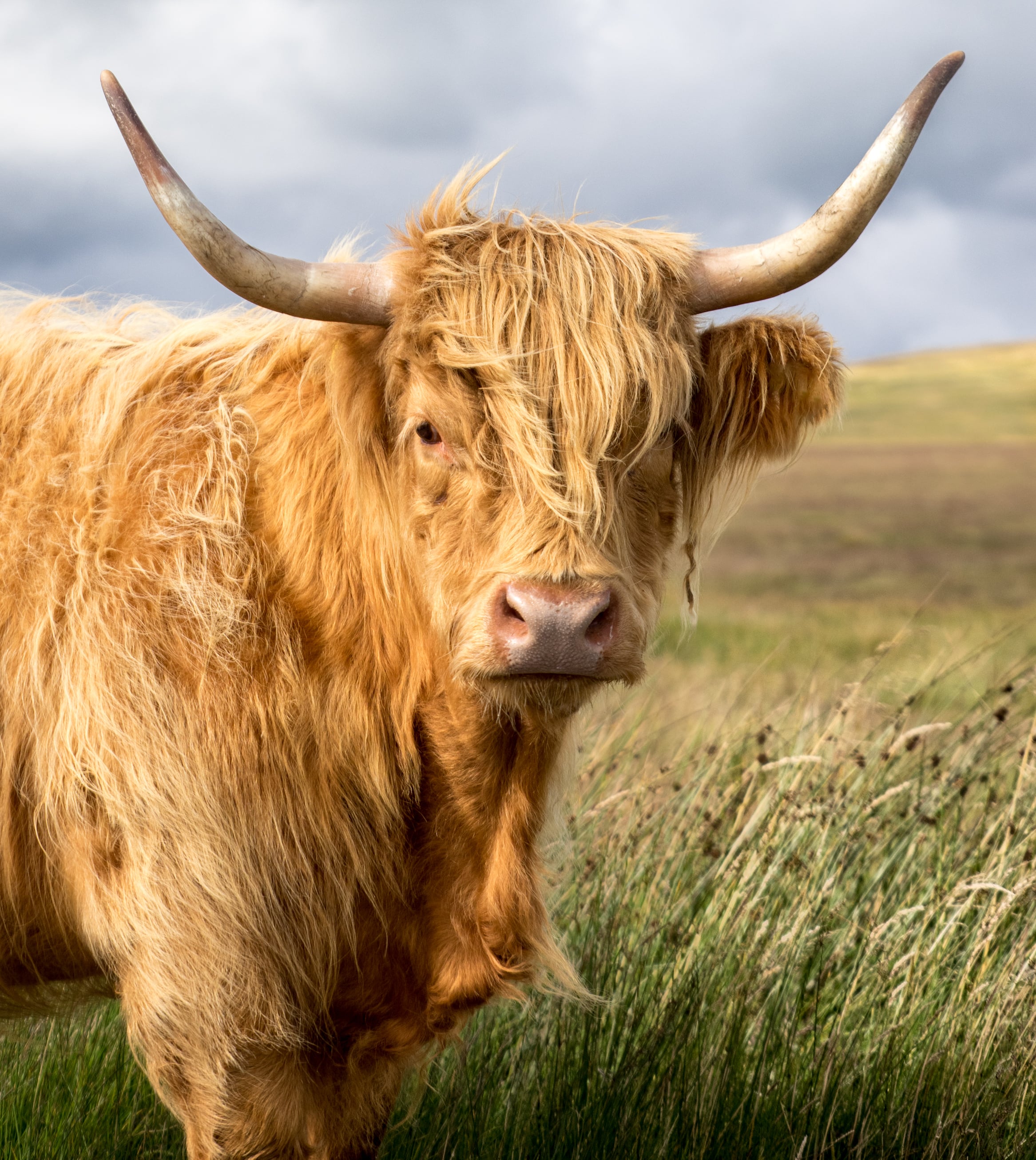
Highland cows are a cattle breed native to the Scottish Highlands, noted for their long reddish-brown coats and curved horns. Their thick hair insulates them from the cold, wet Highland climate, enabling survival in harsh terrain. Some rare color variations also exist, including the striking Highland cows white, which attract significant visitor attention. Highland cows were traditionally raised for meat, milk, and draft work, reflecting their versatility.
2. What were Scottish Highland cows used for?
In Scotland, Highland cows served multiple roles. They acted as draught animals, pulling plows and farm equipment in tough landscapes. Their milk provided nutrition for remote communities, and their meat supported local diets. Their ability to thrive on poor-quality grazing lands made them an essential multi-purpose breed in Highland farming.
Today, they are equally valued for conservation grazing and cultural representation.
From legendary landscapes to iconic traditions, discover What is Scotland Famous For and why it captures the world’s imagination.
3. Where do Highland cows originate from?
Highland cattle are indigenous to northern Scotland, specifically the rugged Highlands region. This is where the breed naturally evolved traits needed to survive the region's challenging environment, including long coats, curved horns, and a solid body. The Highlands provided the habitat and isolation for Highland cattle to develop into a distinct breed over centuries.

4. How big are Highland cows?
Mature Highland cows typically stand 52 inches (132 cm) tall at the shoulder. They can weigh between 800-1,400 lbs (363-635 kg), making them substantially sized livestock animals, though not as massive as some beef cattle breeds. Their long coats may make them appear even larger.
Normally, bulls are heavier than cows. Despite their bulk, Highland cows move confidently on uneven, rocky landscapes.
5. How do Highland cows see?
Highland cows have excellent peripheral vision due to the placement of their eyes on the sides of their head. This wide field of view helps them detect predators early. Their long fringes ("dossan") shield their eyes from wind, snow, and insects without obstructing vision.

6. Where do Highland cattle live?
Highland cattle still roam the Scottish Highlands, but their adaptability has allowed them to thrive in other countries, including Ireland, Canada, the U.S., and Australia. They are often used in conservation grazing because they can maintain grassland biodiversity.
Many estates in Scotland use Highland cows to preserve natural habitats while attracting tourists.
7. How long do Highland cows live?
On average, Highland cattle can live 15–20 years, with some reaching even older ages in good conditions. Their resilience to extreme climates contributes significantly to their longevity.
8. What does a Highland cow look like?
Icons of Scottish heritage, Highland cows have long reddish-brown coats all over their shaggy bodies. Majestic curved horns and a relaxed posture give them a calming presence. Their long hair provides insulation against damp and chilly climates while also serving as identification of the iconic breed.
Though reddish-brown is the most common color, variations such as black, yellow, dun, and the striking Highland cows white also exist.
9. Are there different names for Highland cows?
While universally known as Highland cattle in their home country of Scotland, these shaggy bovine giants have acquired some regional variations in name depending on location:
- In Ireland, they may be referred to as Gàidheal or Gàidhealtach cows in reference to their Gaeltacht Gaelic ancestry.
- In parts of Northern England just south of the Scottish border, the term West Highland cattle is sometimes used.
- On the North American continent, where they were exported, they are occasionally called Scotch Highland cattle to emphasize their Scottish heritage.
- Informal names, more descriptive because of their coat, such as longhair cows, shorthorn cattle, or fluffies, are colloquially applied by farmers and children.
However, their official breed registry name remains simply Highland cattle worldwide, honoring the rugged landscape that shaped their evolution over centuries in the Scottish Highlands. Regional names tend to be respectful variations that reflect local adaptation and cultural influences on the hardy breed.

10. Are Highland cows friendly?
Yes. Highland cows are known for their docile, calm, and intelligent nature. Their gentle temperament makes them safer to work with than many commercial cattle breeds.
They bond well with consistent handlers, and their predictability is one reason they’re used on family farms and agritourism locations where visitors interact with them frequently. However, like all large animals, they require respectful distance and careful handling.
11. Are Highland cows eaten?
Yes, Highland cow meat is consumed as a premium product, lean, nutritious, and flavorful. It contains less fat and cholesterol than many grain-fed cattle while remaining tender due to the breed’s slow-maturing nature. Historically, Highland cows provided essential protein for remote Scottish communities. Even today, small-scale farmers raise Highlands for specialty beef markets, although conservation and heritage preservation are now equal priorities.
12. What are the long haired cows called?
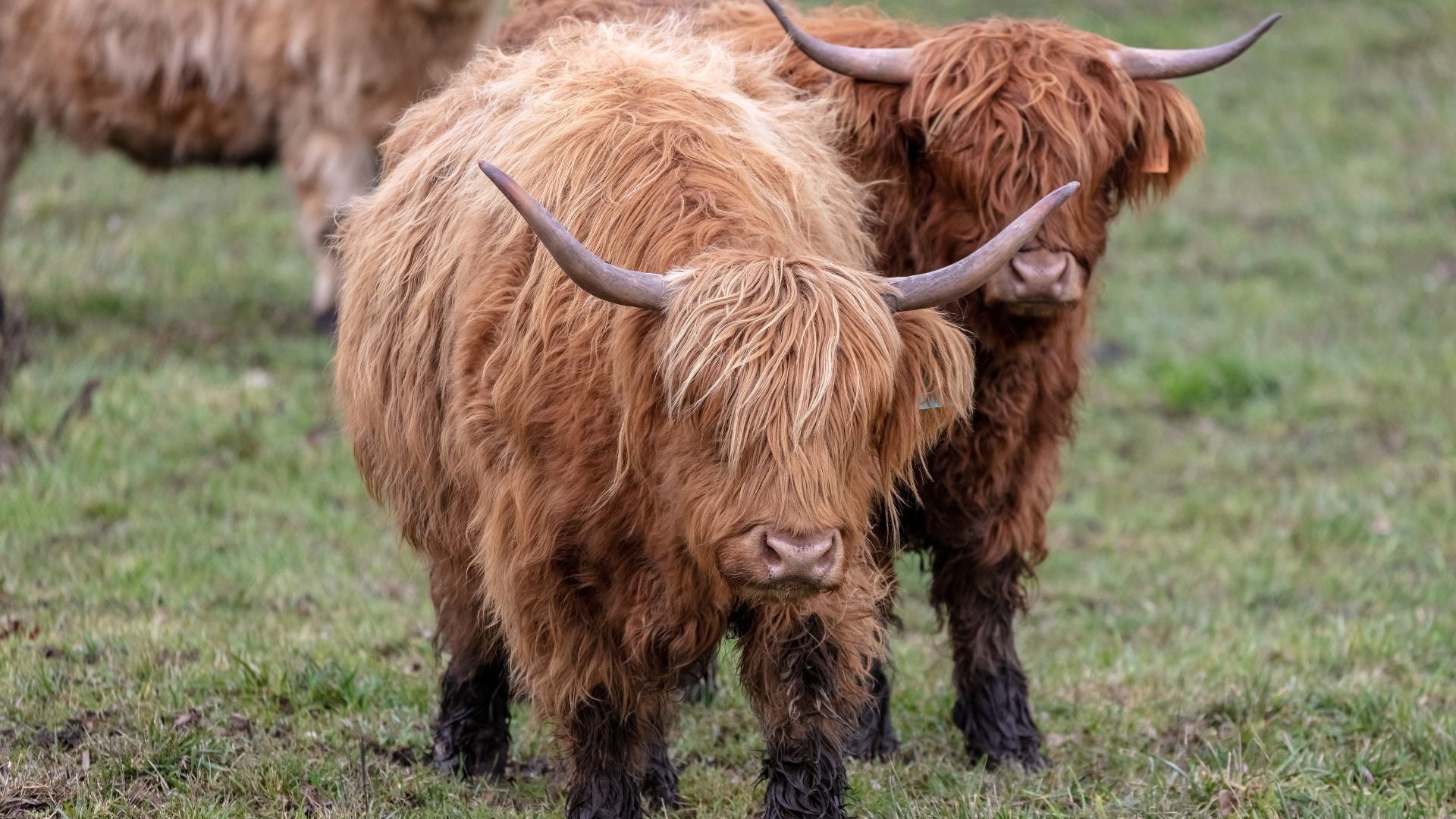
These “long-haired” or “fluffy” cows are simply Highland cattle. It is also known as longhaired cattle or fluffy cows. Their long coat is one of the breed’s signature features and helps them endure cold, wet climates. The coat grows longest during winter and naturally sheds in warmer months, reducing overheating and keeping the animal comfortable year-round.
13. What do Highland cows eat?
Highland cows eat grasses, shrubs, herbs, and even tree bark during winter. Their digestive system allows them to consume low-quality forage that many other cattle breeds cannot utilize efficiently.
14. Do Highland cows produce milk?
Yes. Highland cows produce rich, high-butterfat milk, though in smaller quantities than commercial dairy breeds. Historically, Highland milk was an important food source for families in remote Scottish communities. Today, their milk is valued by artisan cheese and yogurt makers who prefer quality over volume, as the high butterfat content enhances texture and flavor.
15. Are Highland cows good for meat?
Highland beef is lean, nutritious, and naturally flavorful. The breed matures more slowly than typical beef cattle, which enhances meat quality without the need for intensive grain feeding. Their forage-based diet results in healthier fat profiles, making Highland beef appealing to chefs, health-conscious consumers, and farm-to-table producers.
16. Do all Highland cows have horns?
Most mature Highland bulls grow large horns, while cows may have horns or be naturally polled. Many herds preserve horned bloodlines for tradition, while some farms selectively breed polled animals for safety.
17. How much do Highland cows weigh?
Adult Highland cows typically weigh 800–1,400 lbs (363–635 kg), while mature bulls can exceed this range due to their heavier bone structure and greater muscle mass. Their long, thick coat often makes them appear bulkier than their actual body weight.

18. Where can you find Highland cows?
Highland cows are most commonly found across the Scottish Highlands, especially in areas with wide open grazing such as Skye, Glencoe, and the Cairngorms. They also live in Ireland, England, Canada, the U.S., and New Zealand, where their resilience makes them ideal for extensive grazing. Many nature reserves and estates use them for conservation grazing, so visitors can often see them near scenic trails and rural farmland.
19. Are Highland bulls aggressive?
Highland bulls may show territorial behavior during the breeding season, but for most of the year, they remain calm and predictable. Their temperament is generally less aggressive than that of many heavier beef breeds. With proper management, Highland bulls can be as docile as their beefy size suggests. Caution is still advised around breeding bulls.
20. Are there Highland cows in Ireland?
Yes. Highland cows have long been present in Ireland due to historical connections with Scotland. Their thick coat and efficient metabolism make them well-suited to Ireland’s cool, damp climate. Several Irish farms continue to maintain Highland herds for heritage conservation and conservation grazing, ensuring the breed’s long-term presence in the region.
21. Are Highland cows dangerous?
Highland cows are generally safe and gentle, with a calm nature that makes them easier to manage than many other large cattle breeds. The main risks come from their size or from protective mothers with calves, so giving them space and avoiding sudden movements is the best way to ensure safe interaction.
22. How are Highland calves born and raised?
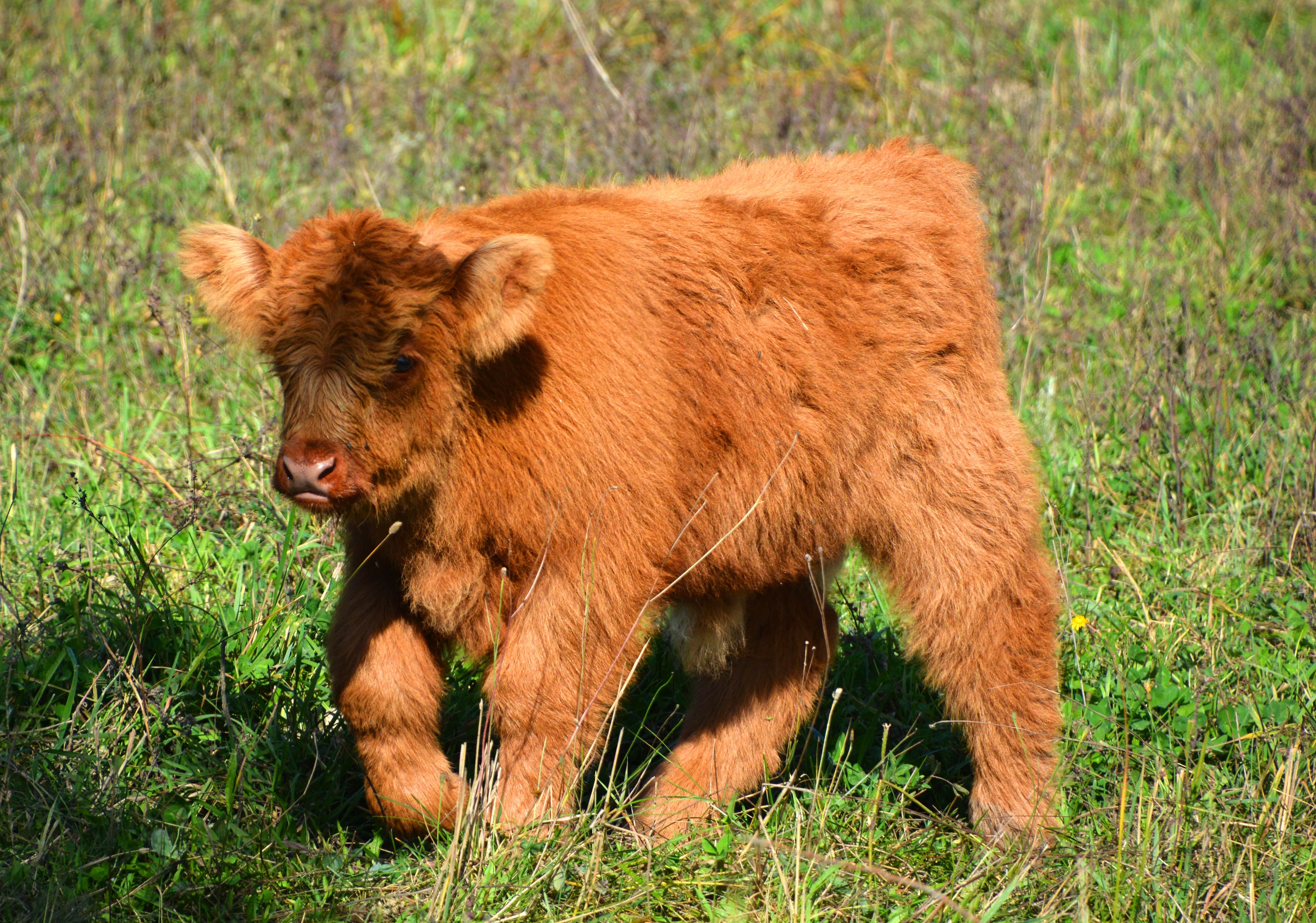
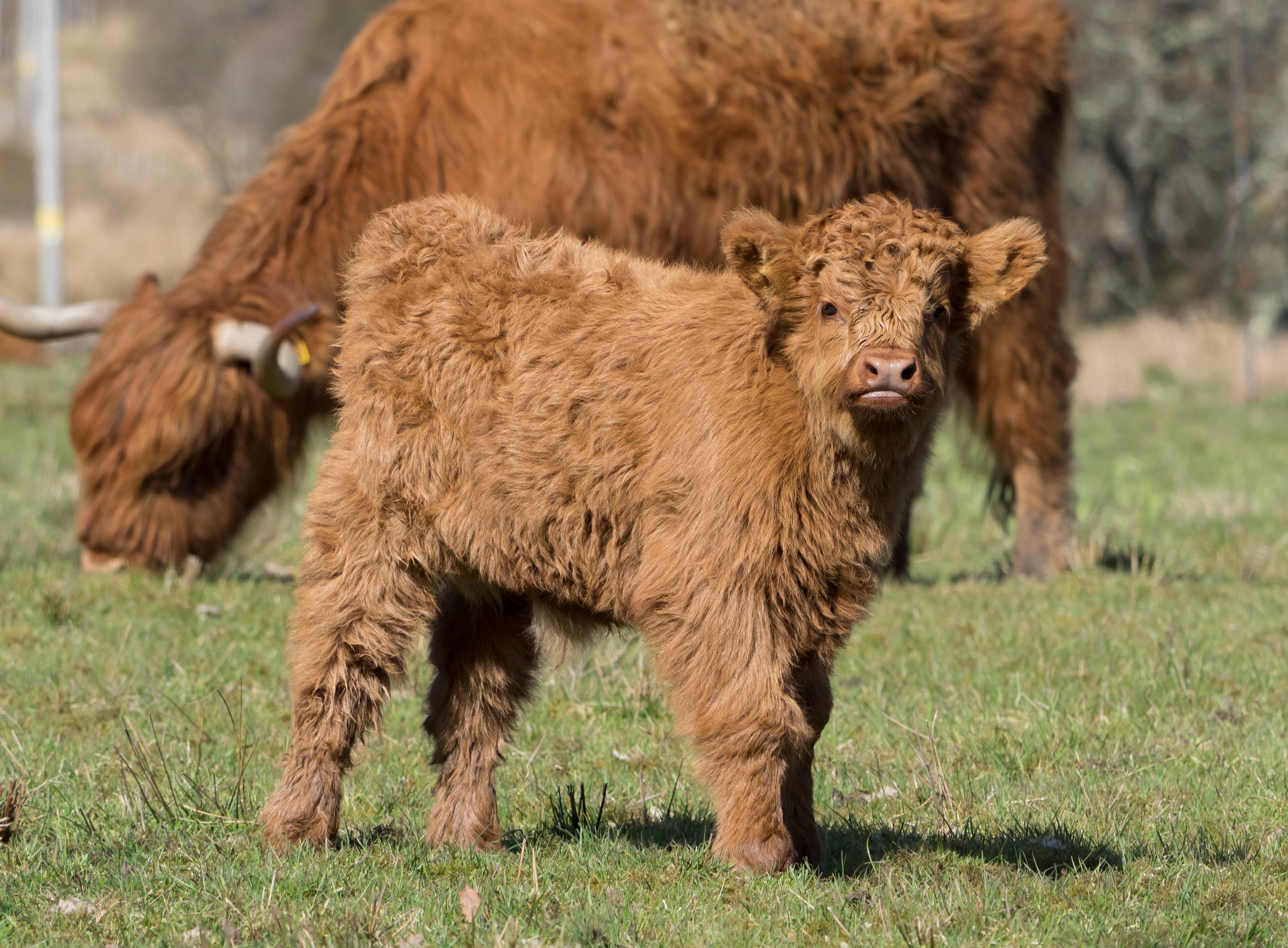
Highland calves are born between February and May after a gestation period of approximately 279 days. At birth, they typically weigh 35–45 lbs, and their thick undercoat allows them to tolerate cold Highland weather almost immediately. They nurse from their mothers for 6–8 months, though some may continue intermittently for up to a year as weaning happens gradually.
Heifers reach sexual maturity at 18–24 months, and many are bred at 15–18 months, so they calve at around 2 years old. Bull calves are usually castrated at 6–12 months, depending on herd management goals.
Highland calves spend their early months grazing alongside their mothers and are known for exceptionally low mortality rates thanks to the breed’s natural hardiness, strong immunity, and excellent maternal instincts.
23. Can you keep a Highland cow as a pet?
It’s possible, but not practical for most people. Highland cows require large grazing areas, regular veterinary care, hoof maintenance, and proper fencing—similar to the needs of a small horse. While their gentle temperament makes them easier to handle than many cattle breeds, they are still large, powerful livestock, not domestic pets. They suit experienced owners with adequate land and a conservation or small-farm purpose.
24. Are Highland cows cross-bred?
Yes. While many breeders preserve pure Highland bloodlines, cross-breeding does occur — often with Angus or dairy breeds — to produce calves with improved meat growth or milk traits. Cross-breeding is typically used for hybrid vigor in commercial settings, but heritage breeders prioritize maintaining the traditional Highland characteristics that define the breed.

25. How much does a Highland cow cost?
A Highland cow typically costs $2,000 – $6,000, but the price varies significantly based on pedigree, age, temperament, horn shape, coat quality, and whether the animal is registered with a breed society. Breeding females and proven bulls are at the top end of the market, while young calves cost less.
Buyers should also prepare for ongoing annual costs such as hay for winter feeding, mineral supplements, parasite control, fencing maintenance, routine vet check-ups, and transport, which often add $800 – $1,500 per year per animal depending on climate and pasture quality.
26. How big do Highland cows get?
Adult Highland cows reach about 52 inches (132 cm) at the shoulder, giving them a compact but powerful build. Their frame is stocky, with strong legs and a wide chest that helps them navigate steep, uneven Highland terrain with ease. As mentioned earlier, they generally fall within the 800–1,400 lb range, but their impressive size is often visually amplified by their long, shaggy double coat, which creates the illusion of a much larger animal.
27. How big do miniature Highland cows get?
Miniature Highland cows stand 36–42 inches (91–107 cm) tall and weigh 500–700 lbs, roughly half the mass of a standard Highland cow. They result from selective breeding focused on smaller, proportionate animals — not genetic dwarfism — so they remain structurally sound. They maintain the same long lifespan and hardy constitution as full-size Highlands, making them ideal for small farms that value the breed’s iconic look but lack extensive pasture.

28. Where to see Highland cows in Scotland?
To see Highland cows Scotland, the most reliable spots include the Isle of Skye, Glencoe, and the Cairngorms, where herds graze naturally in open landscapes. For guaranteed close-up encounters, visit Pollok Country Park (Glasgow), Auchingarrich Wildlife Park, or Highland estates that host visitor-friendly herds. Scenic rural routes across the Highlands also offer frequent roadside sightings, especially near wide grazing fields.
Conclusion
In conclusion, Highland cattle hold an important place in Scottish heritage and agriculture. Through centuries of adaptation, they evolved traits that allow them to thrive in rugged terrain where other breeds struggle. Highland cows continue to be raised for their versatility, from providing meat and fiber to supporting biodiversity through conservation grazing. With changing climates, their hardiness will ensure the breed remains a valuable genetic resource worldwide.
As ambassadors of rural Scottish traditions, Highland cattle play an important cultural role and help sustain their native landscape through historic grazing practices. Breeding programs worldwide work to conserve these iconic livestock and preserve their unique genetics for future generations. Highland cows will always represent the indomitable spirit of their Scottish homeland.

Marcus Harris
Greetings, I'm Marcus Harris—a passionate advocate for the profound beauty found in cultural and historical richness. Join me as your dedicated companion on a captivating journey through time and traditions. Together, let's unravel the vibrant threads of culture and history that intricately weave the fabric of our shared human experience.


