



Castles of Clan Campbell: Seats of Power Through History
by Aimee Li on Mar 02, 2026
Table of Content
For centuries, the Castles of Clan Campbell have stood as powerful symbols of authority, ambition, and resilience in Scottish history. Rising from rugged Highlands, strategic lochsides, and commanding coastal positions, these castles were far more than noble residences. They were political headquarters, military fortresses, and statements of dynastic power that shaped one of Scotland’s most influential Highland clans.
In this article, we explore the Castles of Clan Campbell as enduring seats of power, examining their origins, architecture, defining events, and cultural legacy across the centuries.
I. Overview of Major Castles of Clan Campbell
Before examining each site in depth, it is useful to understand the Castles of Clan Campbell as a connected network of Highland fortresses, Lowland residences, and coastal strongholds that shaped Scotland’s political and military history. These Scottish clan castles reflect territorial expansion, strategic defence, noble alliances, and architectural evolution across centuries of Campbell power. The overview below provides a concise comparison to help frame their historical significance and regional influence.
Category / Castle |
Inveraray Castle |
Kilchurn Castle |
Dunstaffnage Castle |
Cawdor Castle |
Castle Campbell |
Carnasserie Castle |
Region |
Argyll (West Highlands) |
Loch Awe, Argyll |
Near Oban, Argyll |
Near Nairn, Highlands |
Clackmannanshire, Lowlands |
Renamed by Act of Parliament 1489 |
Century of Origin |
15th (rebuilt 18th) |
15th |
13th |
14th |
15th |
16th |
Associated Branch |
Dukes of Argyll |
Campbells of Glenorchy |
Campbells (mid-15th c.) |
Campbells of Cawdor |
Earls of Argyll |
Kilmartin, Argyll |
Primary Function |
Political & ceremonial seat |
Military fortress |
Maritime defence |
Noble residence |
Earls of Argyll |
Renaissance residence |
Distinguishing Feature |
Gothic Revival ducal palace |
Peninsula fortress, barracks |
One of Scotland’s oldest castles |
Noble residence |
Renamed by Act of Parliament 1489 |
Statement of Reformation-era prestige |
II. Inveraray Castle – The Heart of Clan Campbell

Location: Loch Fyne, Argyll, Western Scotland
Clan Branch: Chiefs of Clan Campbell, Dukes of Argyll
Construction (current structure): Begun in 1746
Role: Principal seat and political centre of Clan Campbell
Status Today: Private residence, open seasonally
1. Origins and Historical Background of Inveraray Castle
Inveraray Castle stands on the shores of Loch Fyne in Argyll and has long been the ancestral power base of Clan Campbell and the Dukes of Argyll, symbolising their political authority in the western Highlands.

- 15th–16th century (1400s–1500s): An earlier castle occupied the site and served as the main stronghold of Clan Campbell.
1740s: The original medieval castle was demolished after being deemed largely uninhabitable.
October 1746: The foundation stone of the new Inveraray Castle was laid, marking the start of a major rebuilding programme.
The construction of the new castle coincided with the redevelopment of Inveraray as a planned Enlightenment-era town, transforming it into both a ducal residence and a strategic, symbolic centre of Campbell influence in the western Highlands.
2. Architectural design
Inveraray Castle is widely recognised as one of the earliest Gothic Revival country houses in Scotland, distinguished by its blend of Gothic, Palladian, and Baroque influences that made it strikingly modern for its time.
The design concept is linked to a sketch attributed to Sir John Vanbrugh, while the realised structure was developed through plans associated with Roger Morris and William Adam. After their deaths, William Adam's sons completed the project, extending construction over several decades.

3. Symbolism and landscape
4. Later transformation
III. Kilchurn Castle: A Strategic Fortress on Loch Awe
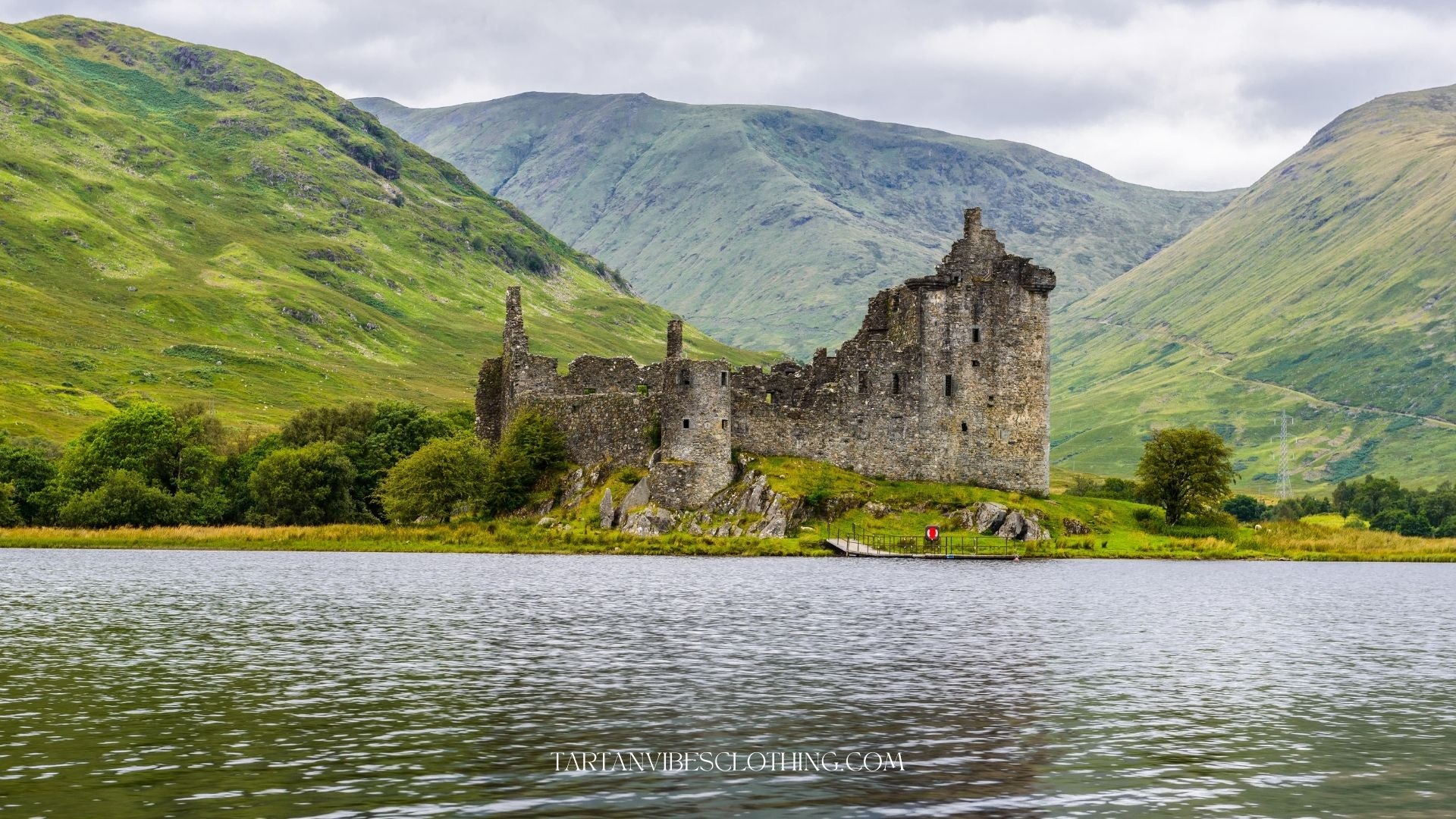
Location: Northeastern shore of Loch Awe, Argyll and Bute
Clan Branch: Campbells of Glenorchy
Founded: Mid-15th century
Primary Role: Strategic inland military stronghold
Status Today: Ruin, managed by Historic Environment Scotland
1. Origins and Early History of Kilchurn Castle Castle
Kilchurn Castle is a ruined medieval fortress located at the northeastern end of Loch Awe in Argyll and Bute, Scotland. It was originally built by Sir Colin Campbell, 1st Lord of Glenorchy, and served as the Campbells of Glenorchy's early power base, a prominent branch of Clan Campbell.

- Mid-15th century: Kilchurn Castle was constructed as a five-storey tower house with a protective courtyard, reflecting the rising power of the Campbells of Glenorchy.
Circa 1450: The castle was formally established and began functioning as the principal stronghold of the Glenorchy Campbells.
15th–17th century: Successive generations expanded the fortress with additional residential ranges, halls, and defensive features, mirroring both its strategic role and the family's growing social status.
Late 17th century: The Campbells of Glenorchy shifted their primary residence from Kilchurn Castle to Taymouth Castle.
For approximately 150 years, Kilchurn Castle remained the principal seat and stronghold of the Campbells of Glenorchy, anchoring their influence in the western Highlands before their eventual move eastward.
2. Strategic location
3. Defensive architecture and military role

4. Decline and legacy
IV. Dunstaffnage Castle – Ancient Stronghold of Scotland

- Location: Near Oban, overlooking the Firth of Lorn
Founded: Early 13th century
Originally Built By: Clan MacDougall
Transferred to Campbells: Mid-15th century
Role: Strategic coastal fortress
1. Early Origins and Royal Seizure

- Early 13th century: Dunstaffnage Castle was built by Duncan MacDougall, grandson of Somerled, and became the principal stronghold of the MacDougall Lords of Lorn during a period of conflict between Scotland and Norway over the Hebrides and western coast.
1308: The castle was besieged and captured by Robert the Bruce, after which it functioned as a royal castle under the Scottish Crown.
Mid-15th century: Dunstaffnage passed into the possession of the Campbells, Earls of Argyll, marking its integration into Campbell power and Highland political life.
2. Jacobite Association and Cultural Memory
3. Maritime and Political Significance
V. Cawdor Castle – Legendary Highland Fortress of the Campbells

- Location: Near Nairn, Scottish Highlands
Founded: Late 14th century (core tower)
Associated Branch: Campbells of Cawdor
Role: Northern Highland alliance stronghold
Status Today: Private estate, open seasonally
1. Historical Origins and Early Development
Cawdor Castle has its roots in the late medieval period, with its earliest surviving structures forming the foundation of what would become one of Scotland's most evocative fortified residences.

- Circa 1380 (late 14th century): Architectural evidence suggests the original stronghold at Cawdor was established around this time.
1454: William Calder, 6th Thane of Cawdor, was granted a licence to crenellate and fortify the tower that became the core of the castle.
Early 16th century: Through marriage, Cawdor Castle passed from the Calder (Caddell) family into the hands of the Campbells of Cawdor, uniting the ancient thanedom with one of Scotland's most powerful clans.
Cawdor Castle also occupies a lasting place in literary history. Shakespeare's Macbeth immortalised the title "Thane of Cawdor," although the real castle itself was constructed several centuries after the historical period portrayed in the play.
2. Architecture and Evolution

3. Literary and Cultural Significance
VI. Castle Campbell (Dollar Castle): Lowland Stronghold of Clan Campbell

Former Name: Castle Gloom
Location: Dollar Glen, Clackmannanshire
Constructed: Circa 1430
Renamed: 1489 by royal approval
Role: Lowland political stronghold
Status: Ruin under Historic Environment Scotland
1. Origins and Early History of Castle Campbell
Originally known as Castle Gloom, a name likely derived from the Scottish Gaelic glom meaning "chasm," the fortress stands on a naturally defended platform that may have been in use since the medieval period. Its location provided strong natural protection and made it an ideal site for a fortified residence.

- 12th century: The site was possibly used as a defended platform, taking advantage of its natural chasm and elevated position.
Circa 1430: The present tower house was constructed, likely for John Stewart, Lord Lorne, or a close relative.
1465: Castle Gloom passed to the Campbells when Colin Campbell, 1st Earl of Argyll, married Isabel Stewart, daughter of Lord Lorne.
1489: Colin Campbell successfully petitioned King James IV of Scotland and the Scottish Parliament to rename the fortress Castle Campbell, formally reflecting the family's rising power and status.
Through this acquisition, the Campbells secured a prestigious Lowland stronghold near Stirling, strengthening their political presence and access to the royal court while extending their authority beyond their traditional Highland territories.
2. Political and Religious Importance
Unlike many purely Highland fortresses, Castle Campbell positioned the clan closer to the royal court near Stirling. This Lowland foothold strengthened their national political access. The castle also played a role during the Scottish Reformation. John Knox is said to have preached in the gardens, and Mary, Queen of Scots, visited in 1563. These events demonstrate that the Castles of Clan Campbell functioned not only as military sites but as arenas of religious and royal influence.
3. Strategic Value
VII. Carnasserie Castle: Renaissance Ambitions of the Campbell Elite

- Location: Near Kilmartin, Argyll
Built: Circa 1559–1565
Associated Figure: John Carswell, Bishop of the Isles
Role: Elite Renaissance residence
Status: Ruin
1. Historical Context and Construction of Carnasserie Castle
Carnasserie Castle is a striking 16th-century tower house located near Kilmartin in Argyll and Bute. It is closely associated with the rise of Campbell power during Scotland's Reformation, reflecting both political authority and religious change in western Scotland.
1559: The Earl of Argyll granted the lands of Carnasserie to Master John Carswell, rector of Kilmartin and a trusted ally of the Campbells.
1565: John Carswell was appointed Bishop of the Isles, further strengthening his political and religious standing within the emerging Church of Scotland.
This historical context explains why Carnasserie Castle was conceived not as an isolated defensive keep, but as an elite statement residence. Its construction and location reflect Carswell's close connection to Argyll and the Clan Campbell's influence and the broader power networks shaping Argyll and western Scotland during the Reformation era.
2. Architectural Innovation
Unlike earlier fortresses built primarily for defence, Carnasserie embodies Renaissance ideals. It integrates a five-storey tower house with a refined hall range and detailed stonework that signals education and elite status. Its architectural sophistication suggests that by the mid-16th century, some Campbell strongholds were statements of cultured authority rather than purely martial dominance.
VIII. Saddell Castle – Campbell Expansion in Kintyre

- Location: Saddell Bay, Kintyre Peninsula
Built: 1508
Original Patron: Bishop David Hamilton
Later Association: Campbell control in Kintyre
Role: Coastal strategic stronghold
1. Strategic Maritime Position
2. Conflict and Regional Power
IX. Lesser-Known Castles and Fortified Homes of Clan Campbell
1. Barcaldine Castle

Built between 1601 and 1609 by Sir Duncan Campbell of Glenorchy, Barcaldine Castle — sometimes called the “Black Castle” — reflects the turbulent clan rivalries of the early 17th century. Its thick stone walls, bottle dungeon, and secret passages illustrate defensive ingenuity. After falling into disrepair, it was later restored, preserving its historic character while offering insight into regional Campbell dominance.
2. Carrick Castle

Situated on Loch Goil, Carrick Castle likely dates to the late 14th century. Its position allowed control over key waterways into Argyll. The castle hosted Mary, Queen of Scots, and later suffered damage during 17th-century conflicts linked to the Campbells. Though partially ruined, it remains a striking reminder of medieval maritime defence.
3. Caisteal na Nighinn Ruaidhe

Conclusion
Frequently Asked Questions
What is the most important castle of Clan Campbell?
Inveraray Castle is considered the primary seat and symbolic heart of Clan Campbell.
Did Clan Campbell build all these castles?
The Campbells built some, while others were acquired through royal grants or strategic expansion.
Are Clan Campbell castles open to the public?
Many are open to visitors, including Inveraray and Dunstaffnage Castle.
Did Clan Campbell castles ever fight against other Scottish clans?
Yes. Campbell castles were involved in conflicts with clans such as the MacDonalds, MacGregors, and others during territorial disputes.

Aimee Li
An author dedicated to exploring the rich history, vibrant culture,... of the Scottish clans. As an avid historian and fashion enthusiast, I have always been fascinated by Scotland's heritage and the timeless elegance of its traditional attire. Join me on this journey through the highlands and lowlands, as we delve into the heart of Scottish legacy together.


