



Scottish vs Irish Kilts: How Style, History, and Symbols Set Them Apart
by Teresa Finn on Nov 02, 2025
Table of Content
I. The Great Celtic Debate
Think kilts are just for Scots? You’re not alone. One of the most common cultural misconceptions about Celtic fashion is the assumption that kilts belong solely to Scotland. In truth, both Scottish and Irish kilts carry rich, though different, legacies deeply rooted in heritage and national pride.
While they may look similar to the untrained eye—pleated, patterned, and traditionally worn by bagpipers—the differences go far beyond aesthetics. The Scottish kilt is famously linked to family clans and ancestral identity. In contrast, the Irish kilt often reflects county ties and modern expressions of cultural pride.
Curious about the key differences in the Scottish Kilt vs Irish Kilt debate? Let’s take a quick look:
At a Glance: Irish vs Scottish Kilts
Aspect |
Scottish Kilts |
Irish Kilts |
Origins |
16th century, clan-based |
19th century, Celtic revival |
Tartan System |
Family/clan-specific |
County/district-based |
Color Palette |
Earth tones, muted shades |
Bright saffron, green, vivid hues |
Pleating Style |
Stitched, structured pleats |
Looser, often free-hanging |
Material |
Heavy wool |
Wool blends, polycotton, versatile fabrics |
Accessories |
Sporran, sgian-dubh, kilt pin |
Sporran, Celtic brooch, Aran sweater |
Symbolism |
Clan lineage and Highlands |
Cultural identity, national pride |
II. The Visual Identity: Recognizing the Look
A. The Scottish Signature
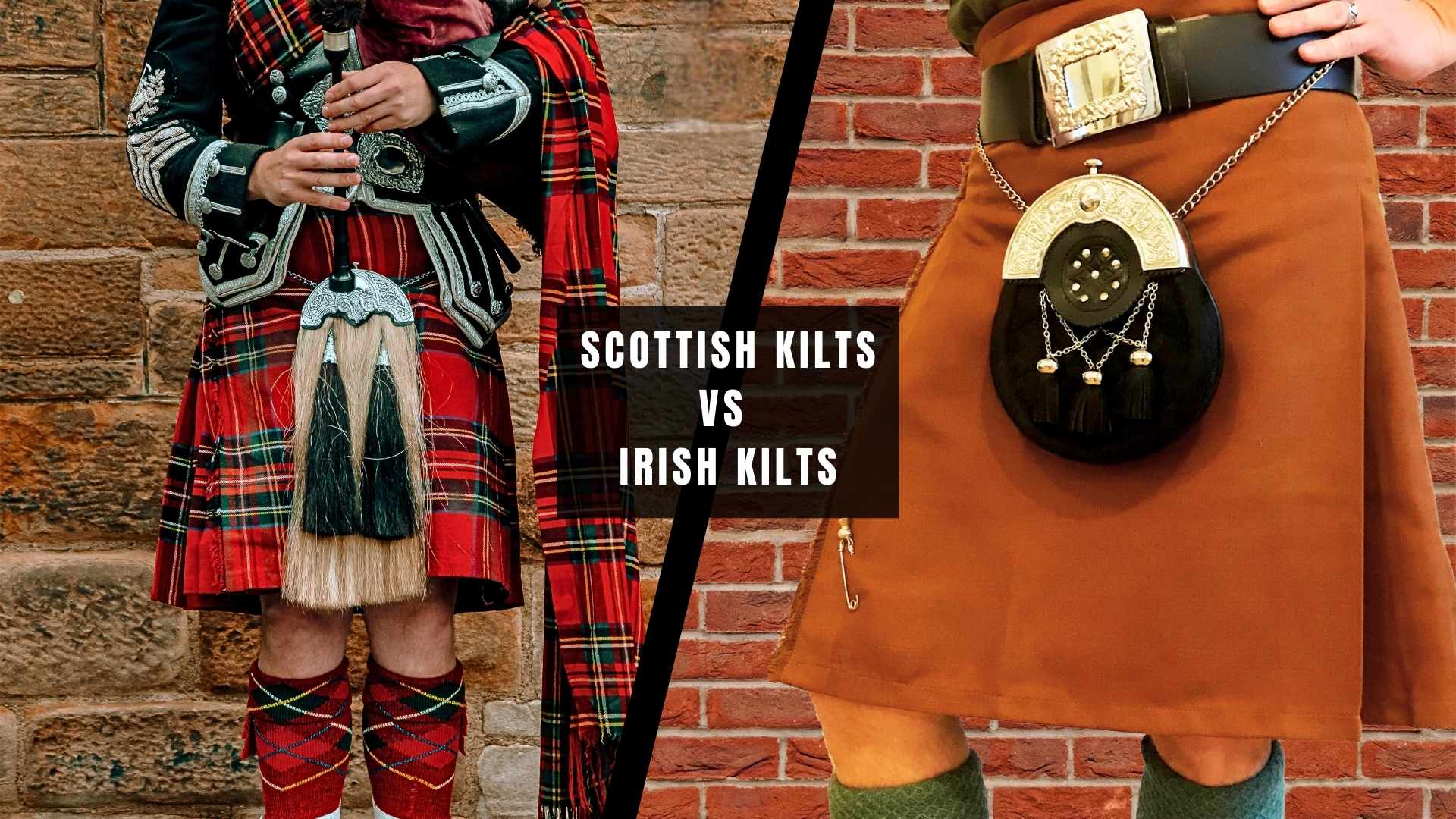
If you see a sharply pleated woolen kilt in a bold crisscross tartan pattern, odds are it’s Scottish. These kilts are deeply tied to specific clans and regions, each with its own registered tartan design. The colors often lean toward dark greens, navy, burgundy, and earthy browns—all chosen for both symbolism and camouflage in Highland terrain.
Traditional Scottish kilts are made from heavyweight wool, crafted to withstand the harsh Scottish climate. The structured pleats at the back give it a flared, tailored shape. Accessories complete the look: the sporran (a front pouch), sgian-dubh (a small knife worn in the sock), and kilt pin all reflect function and formality.

B. The Irish Distinction
Irish kilts take on a different visual story. The most iconic version is the saffron kilt—a mustard-yellow, solid-color garment traditionally worn by pipe bands and military regiments. Though less focused on clan lineage, Irish kilts often represent counties such as Cork, Kerry, and Dublin through their respective county tartans.
Design-wise, Irish kilts may feature Celtic knot embroidery, shamrock motifs, or green-and-gold color palettes—symbols of Irish national identity. Fabrics range from polycotton blends to wool, offering lightweight, flexible options suitable for both ceremonies and everyday wear. Accessories include Aran sweaters, Celtic brooches, and saffron or green hose.

III. Origins & Evolution: How They Diverged
A. Highlands Roots: The Scottish Kilt
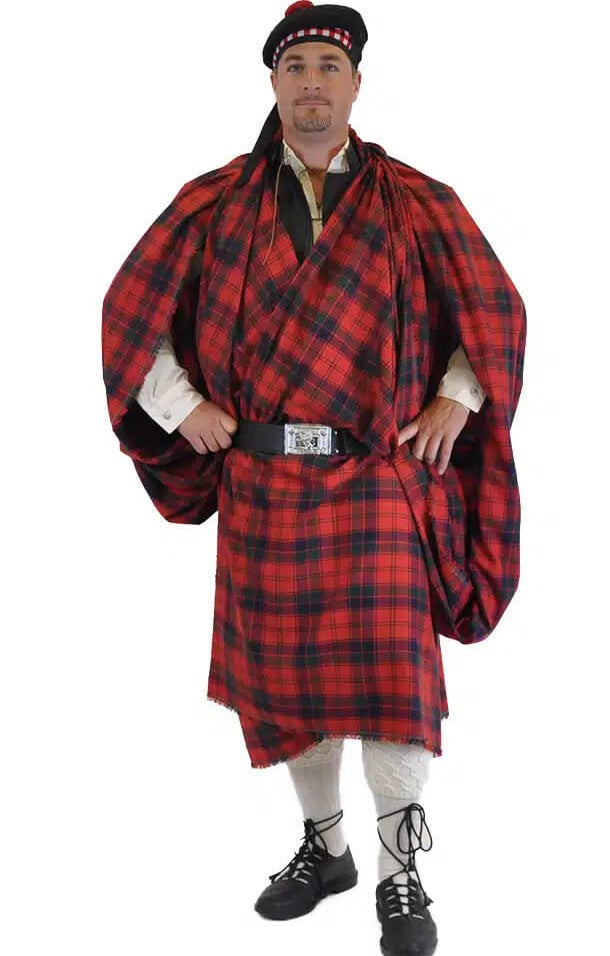
The Scottish kilt originated in the 16th century as the Féileadh Mòr, or “Great Kilt”, a full-length garment that doubled as both clothing and a blanket. Over time, it evolved into the shorter Féileadh Beag or “small kilt”, more practical for daily wear. By the 18th century, clan-specific tartans became symbols of identity, especially in the Highlands.
Despite being banned after the Jacobite uprising (1746), kilts survived as emblems of cultural pride, especially after their reintroduction in Highland dress during the 19th-century romantic revival.
B. The Irish Path: From Léine to Revival
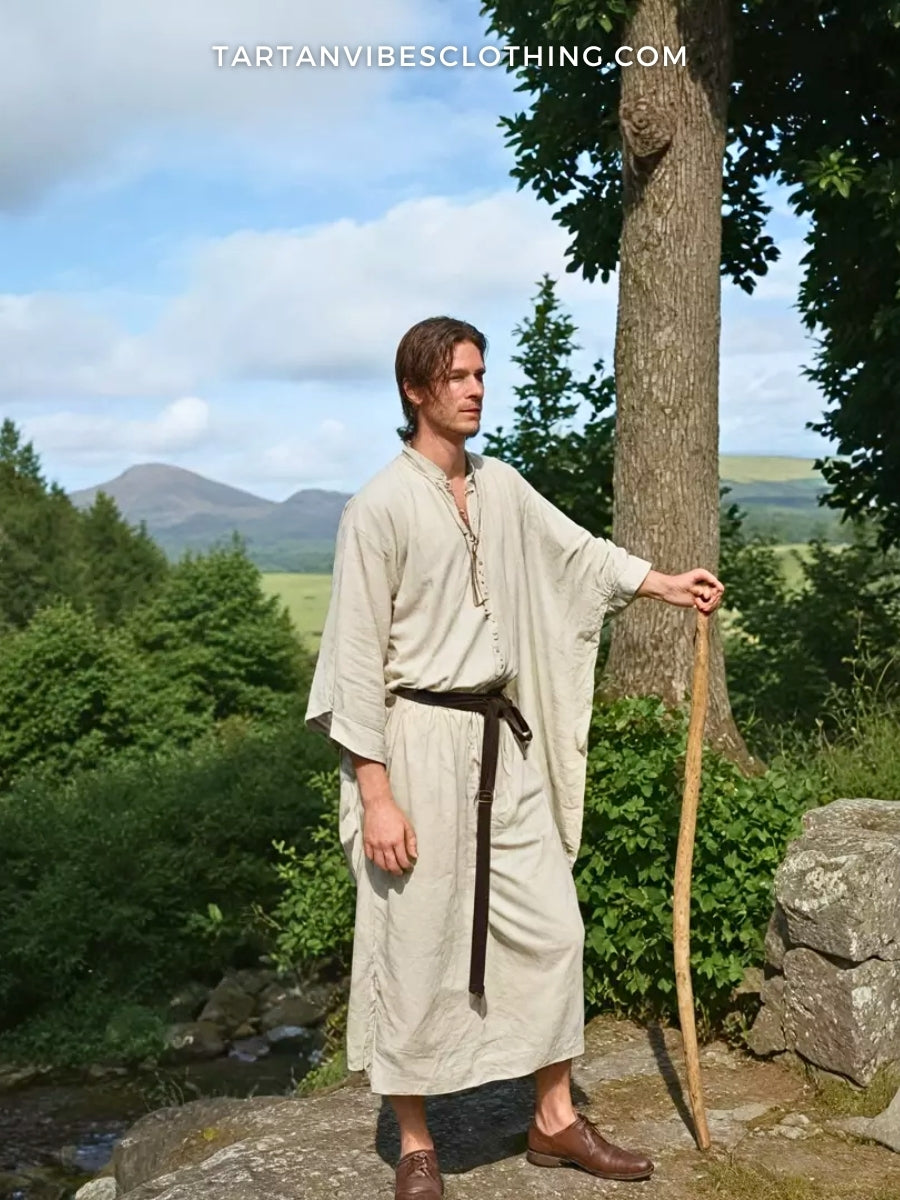
Ireland’s traditional attire was historically the léine (a long tunic), worn with cloaks or wraps. The modern Irish kilt appeared during the Gaelic Revival of the late 19th and early 20th centuries—a period when Irish nationalists sought to revive the native language, music, and dress.
Irish military bands and cultural groups adopted the saffron kilt as a statement of national pride and Celtic unity. Unlike Scotland’s ancestral tartans, Ireland’s kilts became more symbolic of modern identity rather than ancient lineage.
C. Shared Heritage: The Celtic Revival
Tracing the Roots: Scottish vs Irish Kilt Origins
Element |
Scottish Kilt |
Irish Kilt |
Historical Origin |
16th century (Féileadh Mòr) |
Late 19th century (Gaelic Revival) |
Traditional Base |
Clan-based, Highland heritage |
County-based, cultural symbolism |
Key Symbolism |
Family lineage, ancestral identity |
National pride, Celtic unity |
Revival Period |
19th-century romanticism |
Irish nationalism movement |
IV. The Tartan System: Clan vs. County
A. Scottish Protocol: Family First
In Scotland, tartans are clan-specific and often registered officially with the Scottish Register of Tartans. Each family or surname has its own pattern, and wearing a kilt with the wrong tartan can be considered disrespectful. There are also military and district tartans, but family identity remains the heart of the tradition.
Popular examples include the MacDonald, MacLeod, and Campbell tartans. Each tells a story of battles, alliances, and generations of Highland heritage.

B. Irish Framework: Counties Over Clans
Irish kilts aren’t linked to family names, but rather to counties or districts. The county tartan system was introduced much later than Scotland’s, offering patterns like the Dublin, Cork, or Antrim tartans. These designs are more about regional pride than genealogical ties.
This makes Irish kilts more inclusive and flexible, ideal for those who wish to celebrate Irish roots without specific ancestry.

C. Universal Options: Kilts for All
If you’re neither Scottish nor Irish (or unsure of your lineage), fear not! There are plenty of universal tartans anyone can wear.
Black Watch Tartan: One of the most recognized tartans, historically used by military regiments.
Tara Brooch Tartan: A popular Irish design representing general Celtic pride.
Heritage of Scotland/Ireland Tartans: Designed for people who love Scottish and Irish culture.
These options allow modern wearers to embrace Celtic heritage without strict lineage rules.
V. Accessorizing Your Kilt: The Full Outfit
A. Irish Kilt Accessories
Irish kilts come with a range of accessories that highlight Irish heritage:
Sporran: Typically simpler than the Scottish version, often adorned with shamrocks or Celtic motifs.
Saffron or Green Kilt Hose: Symbolic colors representing Irish nationalism and tradition.
Celtic Brooches: Used to fasten garments, featuring intricate knot designs.

- Aran Sweaters: Woolen, cable-knit sweaters for warmth and texture.
Brian Boru Jacket: A looser-cut jacket with embroidered details, unique to Irish kilt ensembles.
B. Scottish Kilt Accessories
Scottish kilts include classic Highland dress items that emphasize clan pride:
- Sporran: Often ornate, made from leather or fur, used for utility and decoration.
Sgian-dubh: A symbolic dagger tucked into the kilt hose.
Prince Charlie Jacket: Formal jacket with peaked lapels, worn for events and ceremonies.
Kilt Pin: Decorative and functional, it keeps the front apron in place and adds flair.

VI. How to Choose Your First Kilt
Choosing your first kilt can feel overwhelming, but it doesn’t have to be. Whether you’re leaning towards a traditional Highland design or a modern Irish version, use this Scottish Kilt vs Irish Kilt guide to decide what suits your heritage and personality best.
Pick a tartan: Clan, county, or universal.
Choose a purpose: Casual, formal, or utility.
Match accessories: Stick with tradition or modernize your look.
Fit matters: Kilts should sit at the natural waist and fall to mid-knee.
If you're unsure, opt for a universal tartan or county-based Irish kilt. You can always build your look over time.

VII. Kilt Myths Debunked
#1: "Kilts are skirts." → Kilts are tailored garments with deep cultural roots.
#2: "Only Scottish people wear kilts." → The Irish have their own kilts too!
#3: "Kilts are only for formal events." → Modern kilts are worn daily.
#4: "Real men don’t wear kilts." → Wrong! Kilts are a symbol of pride, not gender.
VIII. Conclusion
Kilts aren’t just garments—they’re cultural symbols, worn with pride and purpose. While Scottish kilts honor clan lineage and Highland resilience, Irish kilts celebrate national identity, county pride, and modern Celtic artistry. From saffron to tartan, from pleats to brooches, every stitch tells a story. The ongoing Scottish Kilt vs Irish Kilt discussion is less about rivalry and more about appreciating two paths of Celtic pride.
Whether you're drawn to a clan-based tartan or the bold saffron of Ireland, the age-old question remains: Are kilts Scottish or Irish? Truth is, they’re proudly both.
🔹 Ready to wear your story?
Explore our Irish and Scottish products at Tartan Vibes Clothing
FAQs About Scottish Kilt vs Irish Kilt
Are kilts Irish or Scottish?
Both! Scottish kilts date back to the 16th century, while Irish kilts gained popularity in the 19th century.
Do Irish people wear kilts?
Yes. Irish kilts, especially saffron kilts, are worn during cultural events, weddings, and by military pipe bands.
What’s the difference between Irish and Scottish kilts?
Scottish kilts are clan-based with tartan patterns; Irish kilts often feature solid colors or county tartans.
When did Scots start wearing kilts?
Around the 16th century with the Great Kilt (Féileadh Mòr).
Are Irish and Scottish the same?
Culturally distinct but connected through Celtic roots, traditions, and shared Gaelic history.

Teresa Finn
As someone with a deep passion for clan heritage, especially the intriguing world of tartans and their rich traditions, I'm here to be your companion on this exciting journey. Together, we'll delve into the depths of clan history, uncovering the stories behind these vibrant tartans and making every connection to your heritage more meaningful.


