



Table of Content
The Scottish Saltire is more than just a blue flag with a white diagonal cross – it’s one of the oldest Scottish national symbols in the world and a timeless emblem of Scotland’s identity, pride, and spirit. But how much do we really know about it? And why has this simple design become such a powerful cultural icon for millions of people across generations?
From ancient legends of Saint Andrew to the flag’s surprising role in the Union Jack components, the Saltire carries layers of history, symbolism, and hidden stories that many Scots and visitors have never heard.
Now, we’ll discover surprising historical details, unusual traditions, and little-known facts that reveal why the Flag of Scotland remains one of the world’s most meaningful national symbols — and why the meaning of Saltire still resonates today.
Ancient Origins & Legend (The Epic Backstory)
Before the Saltire became the national flag we recognize today, its story began in the world of ancient battles, medieval devotion, and mythic signs in the sky. This section uncovers the legendary roots that shaped the very first appearance of Scotland’s most enduring symbol.
Fact 1: It’s One of the Oldest National Flags in Europe
Did you know the Saltire is one of the oldest national flags still flying today? While many modern nations only finalized their flags in the 18th, 19th, or even 20th centuries, Scotland’s white diagonal cross on a blue background had already been a recognized symbol for centuries. This long, uninterrupted history gives the Saltire a unique place in European identity and symbolism.
Origin: Traditionally linked to the 9th century - early Middle Ages, making it over 1,100 years old.
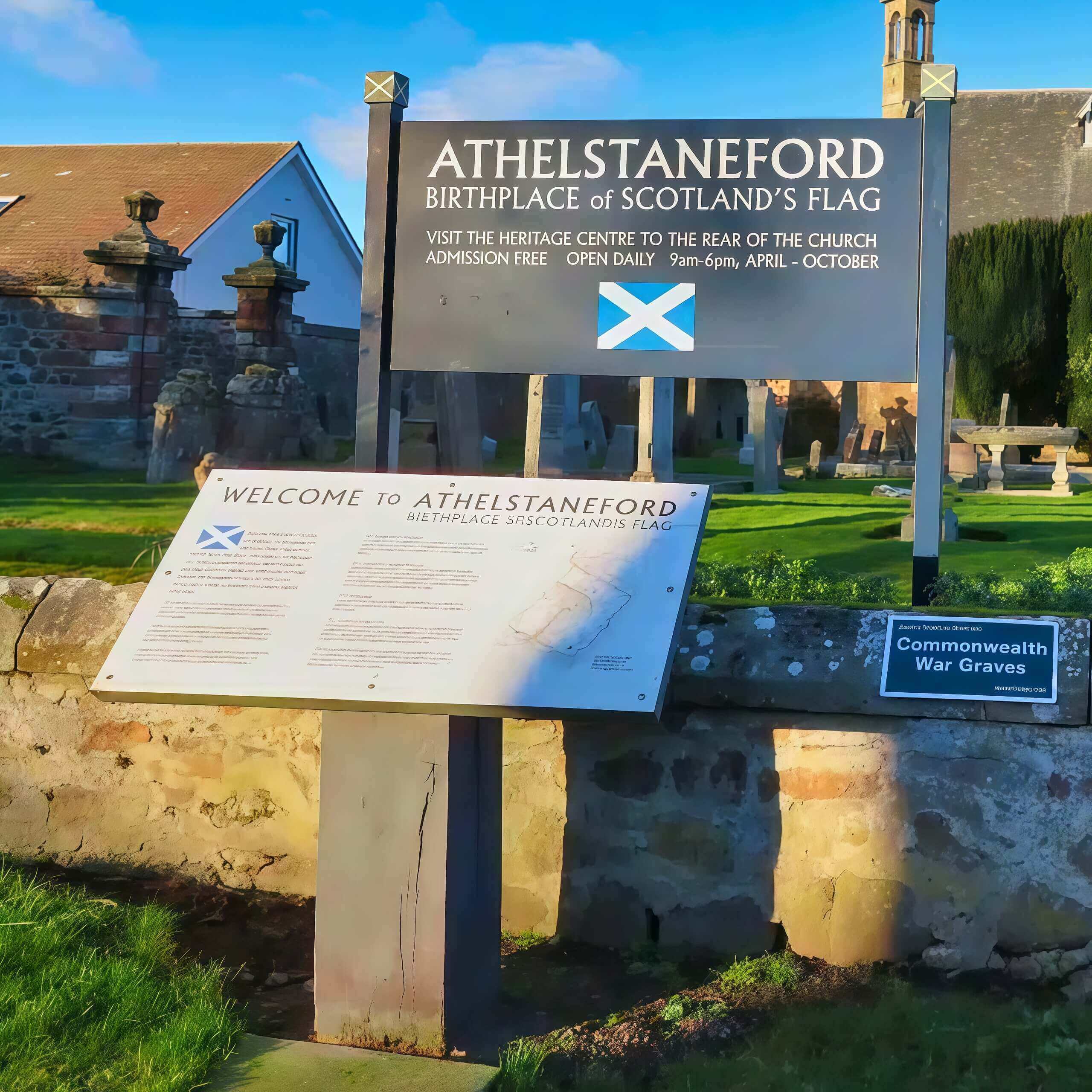
Historical anchor: The commonly associated event — the Battle of Athelstaneford (circa 832 AD) — when a white cross is said to have appeared in the sky.
Continuity: The Saltire has been used continuously for more than a millennium, unlike many European flags that have evolved or changed completely.
Its longevity shows just how deeply the Saltire is woven into Scottish history and national identity — a powerful symbol that has survived wars, kingdoms, and centuries of change. Let’s keep going, because the story only gets more fascinating.

Fact 2: The Saltire Comes Directly From Saint Andrew
The iconic white Saltire on the Scottish flag derives from Saint Andrew - the patron saint of Scotland. According to tradition, Saint Andrew was martyred on an X-shaped saltire cross (which later became known as the St Andrew’s Cross or Heraldic Saltire). This is why the Scottish flag uses a white diagonal cross instead of the upright style seen in many Christian emblems.
As early Scots adopted Saint Andrew as their patron saint, his cross quickly became a symbol of protection, humility, and national unity.
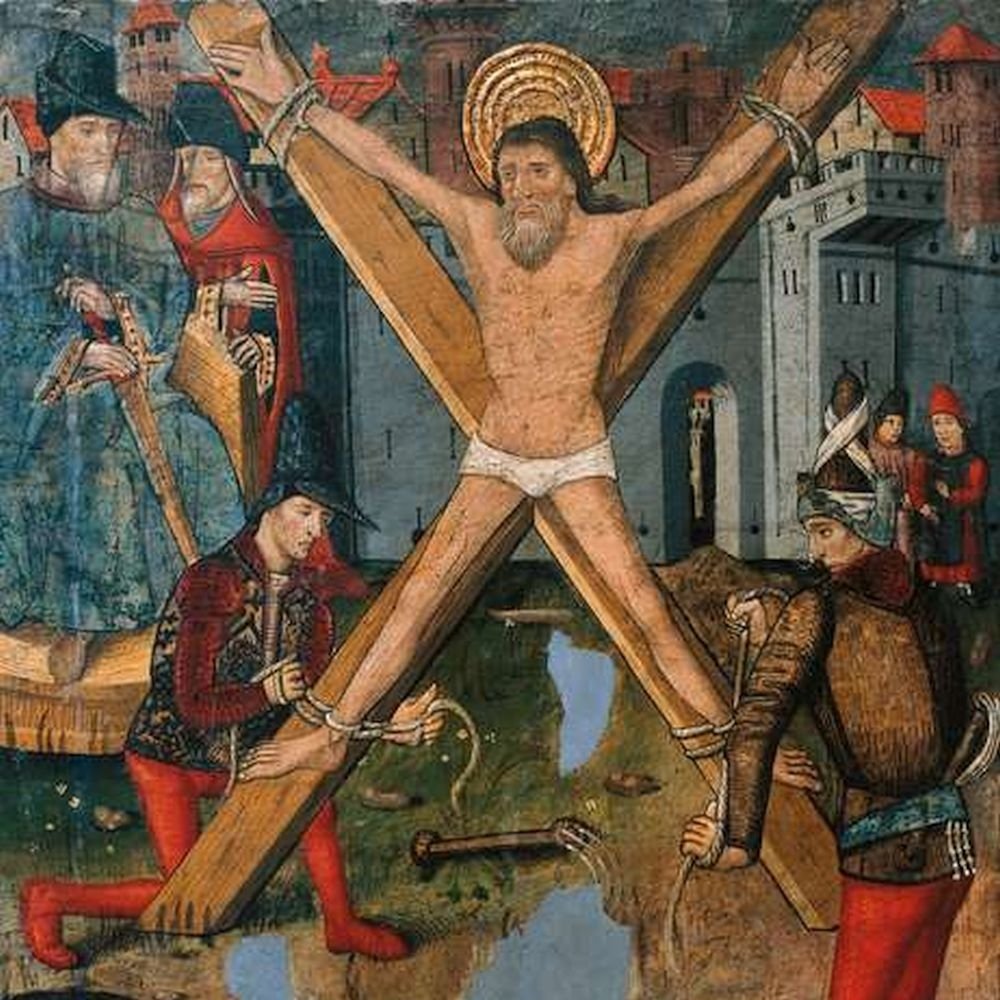
Over time, it appeared on seals, banners, and religious imagery across the country. This spiritual foundation shaped the saltire definition as a national emblem of Scottish identity and heritage, still carried proudly today.
Fact 3: The Blue Color Represents the Scottish Sky
The blue field of the Saltire symbolizes the clear Scottish sky, giving the flag a natural and instantly recognizable identity. This connection to the landscape reflects the calm, open, and enduring character often associated with Scotland itself.
Across history, the shade of blue has changed several times — from light sky blue to darker tones used in later centuries. Today, the official color is Pantone 300, chosen to keep the modern Flag of Scotland consistent while still honoring its traditional meaning.
Fact 4: Saltire’s Origin Story Begins With a Legendary Battle
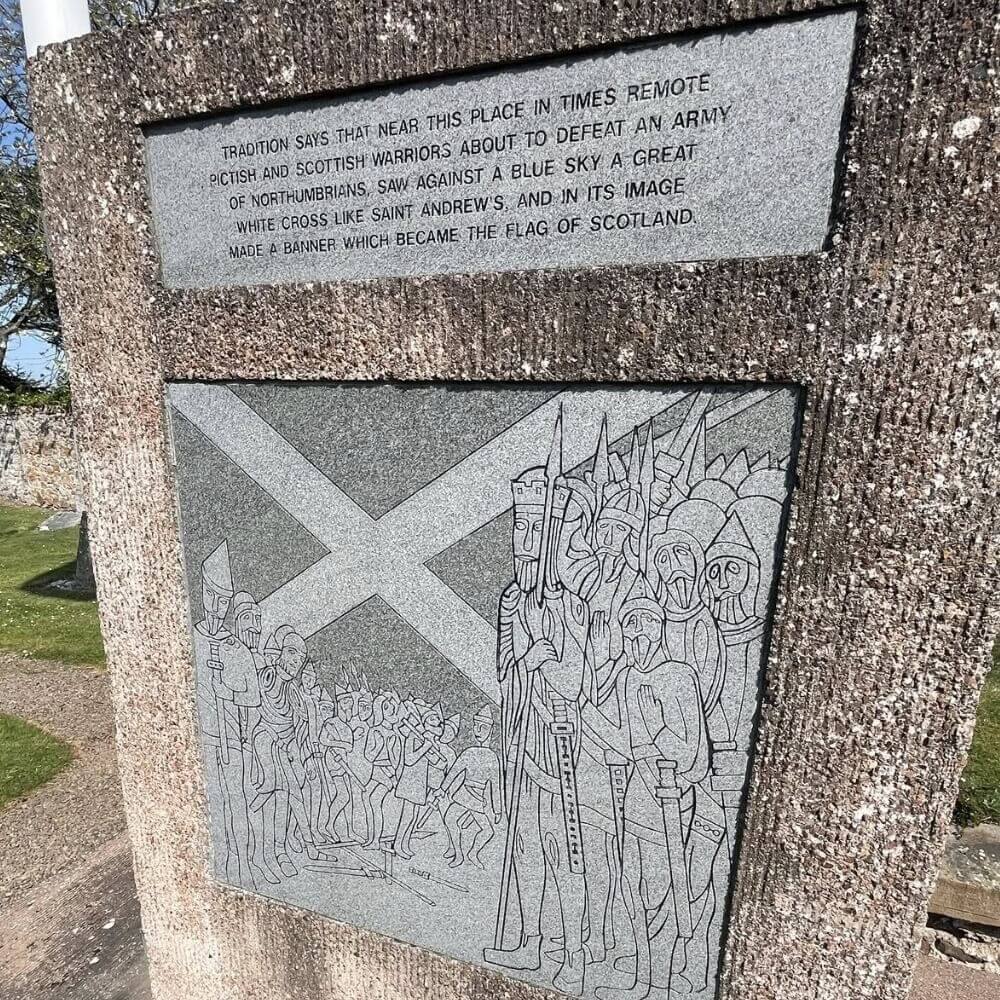
One of the most famous stories behind the Saltire traces its origin to a legendary battle near Athelstaneford in the early 9th century. In this, Scots faced a much larger enemy force.
According to tradition, before the fighting began, a white diagonal cross appeared in the sky, giving the Scots renewed courage, and they ultimately claimed victory. From that moment onward, the white St Andrew’s Cross became a sacred emblem for the Scots as a lasting marker of identity, faith, and unity.
Fact 5: The Saltire Appeared Early in Scottish Coins and Seals
The Saltire became a national symbol long before Scotland had an official flag. It first appeared in medieval heraldry and royal seals as early as the 12th–13th centuries, when Scottish kings used the St Andrew’s Cross on documents to represent authority and legitimacy.
By the 14th century, the Saltire also appeared on government charters and ecclesiastical seals, reinforcing its role as a unifying emblem across the kingdom.
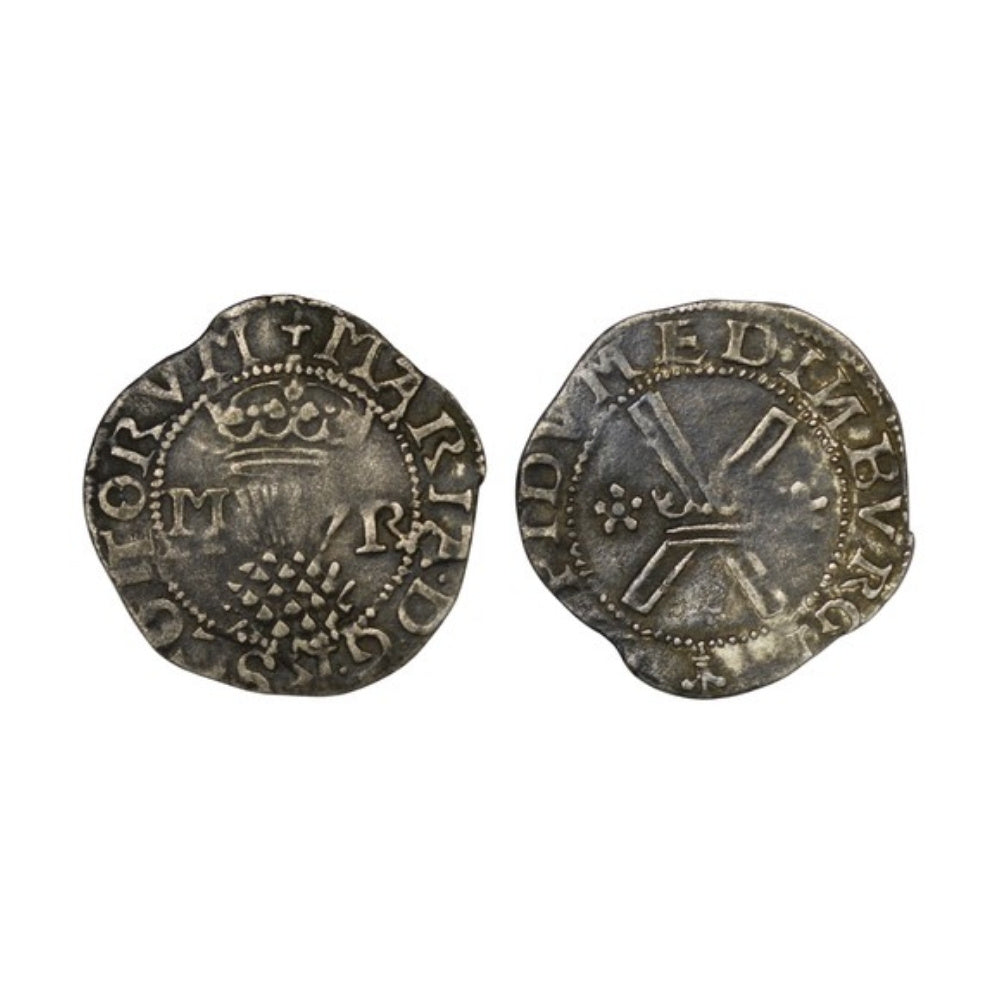
The modern Saltire as a national flag wasn’t formally recognized until the 16th century, when it began appearing consistently on military banners and state insignia. But its presence on coins, seals, and official symbols centuries earlier helped establish the St Andrew’s Cross as one of the oldest and most enduring markers of Scottish identity.
Design, Color & Official Design Drama
Although the Saltire looks simple at first glance, its design has stirred surprising debates over color, proportion, and printing standards. Let’s explore the design details and the surprising history behind them.
Fact 6: The Blue Shade Changes When Incorporated Into the Union Jack
The blue used in the Union Jack is noticeably darker than the shade on Scotland’s Blue Saltire. While the modern Flag of Scotland uses a lighter sky-blue tone — Pantone 300 — the Union Jack uses a deep navy, standardized as Pantone 280. This visual adjustment balances the bright red of St George and Saint Patrick’s Saltire flag.
As a result, the Union Jack version of Scotland’s diagonal cross looks very different from the lighter Blue Saltire flown today.

Fact 7: The Official Proportion for the Flag Is 3:5
The modern Saltire follows an official 3:5 proportion, a ratio used by the Scottish Government and most public institutions. This specific layout keeps the white diagonal cross balanced and visually proportional within the blue field, ensuring the flag maintains a consistent and recognizable appearance wherever it’s flown.
Fact 8: Not Every Saltire Sold Today Follows the Legal Design Standard
Not all Saltire flags on the market match the official specifications set by the Scottish Government. Many commercially made versions use the wrong proportions, incorrect angles, or shades of blue that are far darker than the approved Pantone 300. Others ignore the proper 3:5 ratio, making the diagonal cross look too thin or too wide.
To reduce this problem, Scotland regularly publishes clear flag-flying guidelines and promotes official standards for public institutions, schools, and manufacturers. While there’s no strict nationwide enforcement for private sellers, government bodies, councils, and major organizations are encouraged to follow the correct specifications — helping keep the official Flag of Scotland consistent and recognizable.
Rules, Traditions & “Forbidden” Uses
Not all national flags come with strict guidelines, but the Saltire does. These facts reveal the surprising regulations behind this iconic emblem.
Fact 9: Saint Andrew’s Day Is the Most Celebrated Day for Flying the Saltire
Time: Celebrated every year on 30 November
Location: Marked across Scotland, especially in Edinburgh, St Andrews, and public buildings nationwide
Saint Andrew’s Day is the moment when the Saltire appears everywhere — from government offices to schools, homes, and city squares. As the national day honoring St Andrew, this celebration highlights the deep connection between the patron saint and the Flag of Scotland. It’s the time of year when Scots proudly display the Saltire to celebrate heritage, identity, and national spirit.

Fact 10: The Scottish Government Has Official Rules for Flying the Flag
The Saltire isn’t something you just hang whenever you feel like it. In Scotland, the national flag is governed by clear, formal guidelines issued by the Scottish Government, ensuring the Saltire is displayed with proper respect and consistency across the country.
One of the most important rules is that the Saltire must be flown every day on Scottish Government buildings. This has been the official policy since 2010, making Scotland one of the few nations where the national flag is displayed year-round on state properties. Another key rule states that the Saltire should take precedence over other flags on most occasions, except when the Royal Standard is flown to represent the monarch.
There are also guidelines on raising and lowering the flag, nighttime illumination, and half-mast protocol. These regulations ensure the Flag of Scotland is displayed with dignity and consistency across the country.

Fact 11: Scottish Athletes Cannot Use the Saltire at the Olympics
Despite the Saltire being Scotland’s national flag, Scottish athletes are not allowed to compete under it at the Olympic Games. Instead, they participate under the United Kingdom banner, representing Team GB rather than Scotland as an independent nation.
This rule highlights the distinction between the national flags of the UK and the way international competitions classify countries. While the Saltire is proudly used in many sporting events, the Olympics remains one arena where Scotland’s identity is represented collectively under the Union Jack.
Fact 12: In Medieval Times, Flying the Saltire Was Restricted
Global & Modern Cultural Impact
The influence of the Saltire stretches far beyond Scotland. Whether appearing in logos, clan crests, fashion, sports, or global celebrations, its blue-and-white cross continues to inspire people worldwide.
Fact 13: The Saltire Appears in Many Global Logos and Organizations
The Saltire’s bold blue and white design has become a powerful visual shorthand for Scottish identity and heritage, so much so that it shows up in logos and organizations far beyond Scotland’s borders.
Many Scottish clans, diaspora groups, cultural associations, and even international sports teams incorporate elements of the Saltire to signal their connection to Scotland.
It’s more than just a flag — it’s a recognizable emblem that instantly communicates Scottish roots, pride, and tradition. You’ll spot the Saltire at cultural festivals, Highland Games abroad, heritage societies, and sporting events where supporters display the cross to show unity and national spirit. Wherever Scottish culture travels, the Saltire tends to travel with it.
Fact 14: The Saltire Is a Key Component of the Union Jack
The Saltire provides the white diagonal cross that appears in the Union Jack. When the Union Flag was created, Scotland’s St Andrew’s Cross was combined with the red cross of St George (England) and later the red saltire of St Patrick (Ireland). This makes the Saltire an essential structural element of this flag — a visual reminder of Scotland’s historic place in the union.
Interestingly, while the Saltire forms part of the Union Jack’s design, Scotland does not always use the Union Flag in modern contexts. In events where Scotland competes or is represented independently — such as national sports or cultural celebrations — the Flag of Scotland replaces the Union Jack. This reinforces Scotland’s distinct identity and the Saltire’s role as the country’s primary national symbol.

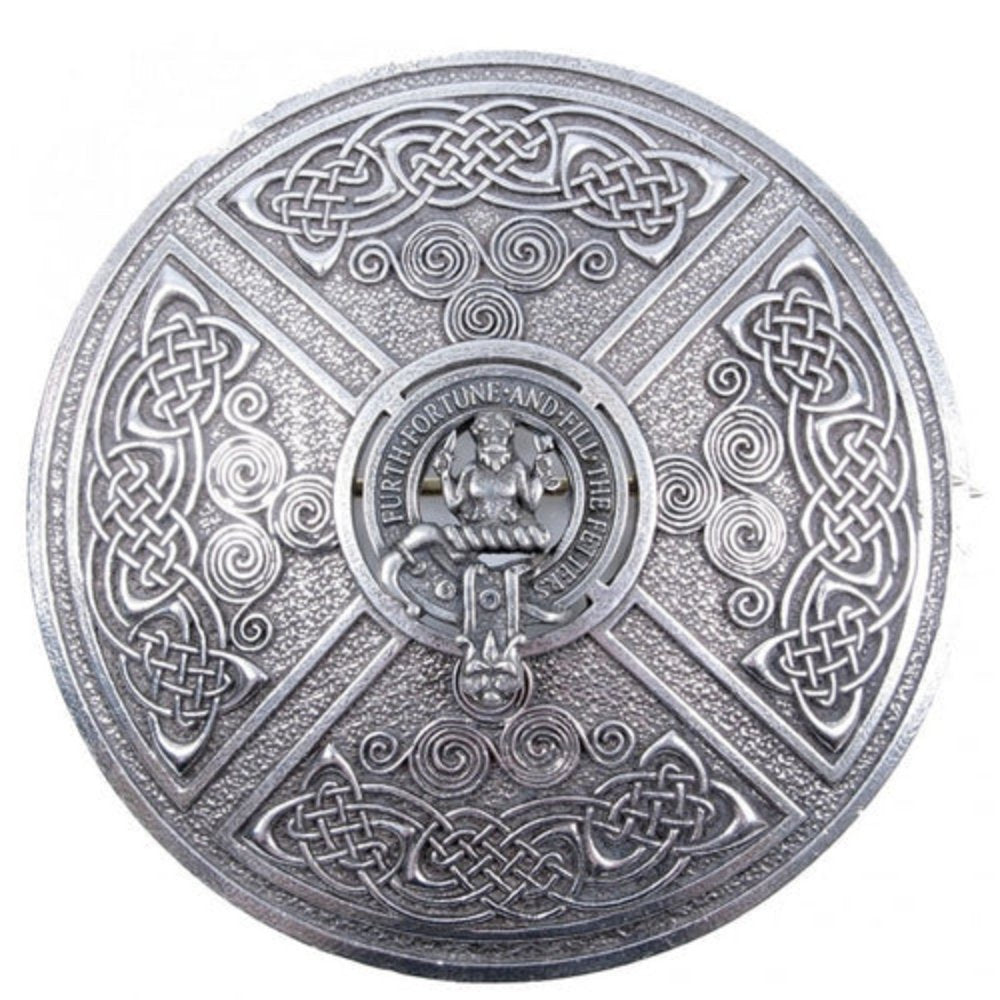
Fact 15: Many Scottish Clans Include Saltire Elements in Their Heraldry
The Saltire isn’t limited to the national flag — its influence extends deep into Scottish heraldry. Many clans feature variations of the St Andrew’s Cross in their crests, shields, and banners as a way to honor their connection to Scotland’s patron saint and to express loyalty to the nation.
These heraldic designs often incorporate diagonal crosses, blue and white color schemes, or symbolic references to Alba, reflecting both lineage and cultural identity.
Fact 16: The Saltire Appears in Modern Scottish Fashion and Products
Today, the Saltire is woven into all kinds of modern Scottish fashion, from kilts and sportswear to accessories, jewelry, and everyday merchandise. Its bold blue-and-white design has become a stylish way for people to express their connection to Scotland, whether they live at home or abroad.
In contemporary culture, wearing the Saltire is more than decoration — it’s a proud statement of identity, heritage, and national spirit, showing how a centuries-old symbol continues to inspire new generations.


Fact 17: It Became a Strong Symbol of Scotland’s Independence Movement
The Saltire has become a powerful emblem in Scotland’s modern independence movement. While the Union Jack represents the political union between England, Scotland, and Ireland, the Saltire stands for Scotland alone — its history, culture, and identity. Because of this, it’s the flag people choose when they want to express the belief that “Scotland is a nation in its own right.”
At marches and rallies, the Saltire is raised everywhere as a symbol of Scotland’s push for greater self-government, national pride, and political self-determination. And although Scotland is still part of the United Kingdom, the independence movement uses the Saltire as a clear symbol of hope for a future in which Scotland can govern itself.

Variants & Eternal Debates
As with many historic symbols, the Saltire has inspired variations, interpretations, and even disagreement.
Fact 18: There Are Over 20 Heraldic Variants of the Saltire Across Scotland
Across Scotland, the Saltire appears in more than 20 different heraldic variations. These versions show up in medieval burgh arms, clan crests, regional coats of arms, and church symbols, each adapting the diagonal cross to reflect local history or family lineage.
Some variants use different shades of blue, others add crowns, animals, or saints, and a few even appear as gold or silver crosses, depending on the region’s symbolism. Despite these differences, every version is rooted in the same St Andrew’s Cross, showing just how deeply the Saltire is embedded in Scotland’s heraldic and cultural identity.
Fact 19: The Lion Rampant vs. The Saltire Debate
Scotland has two famous flags, and people often debate which one best represents the nation.
The Saltire is the official national flag of Scotland, used by the public, displayed on government buildings, and recognized worldwide as Scotland’s modern national symbol.
The Lion Rampant, in contrast — the red lion on a yellow field — is the Royal Banner of Scotland, historically reserved for the monarch and used only by the Crown or with special permission.
Because the Lion Rampant looks bold and regal, many Scots feel emotionally attached to it and see it as a symbol of ancient strength and heritage. Meanwhile, the Saltire represents the people — a unifying sign of national identity, everyday pride, and Scotland’s place in the world today.
This contrast creates an ongoing conversation: Should the everyday national symbol be the simple, historic Saltire, or the dramatic, royal Lion Rampant?
While the debate continues, the distinction remains clear: the Lions Rampant belongs to the Crown, but the Saltire belongs to everyone.

Final Thoughts: Why the Saltire Still Matters Today?
This flag may be over a thousand years old, but its meaning of Saltire is as alive as ever. From ancient legends to modern celebrations, this simple blue flag with a white cross continues to symbolize Scotland’s pride, identity, and enduring spirit.
What makes it so special? Perhaps it’s the way the Saltire connects past and present — linking Saint Andrew, medieval kings, cultural traditions, and today’s national pride in one powerful emblem. Whether flown at festivals, sports events, or on Saint Andrew’s Day, it remains a reminder of who the Scots are and what they stand for.
Frequently Asked Questions
How old is the Scottish Saltire?
The Saltire is believed to date back to the 9th century, making it over 1,100 years old and one of the oldest national flags still in use. Its earliest associations appear in medieval legends and early royal symbolism tied to Saint Andrew.
What colors are used in the Saltire and why?
The official Saltire uses Pantone 300 blue for the background and white for the diagonal cross. The blue represents the Scottish sky, while the white cross symbolizes the martyrdom of Saint Andrew.
How does the Saltire differ from other heraldic crosses?
Unlike upright Christian crosses, the Saltire features an X-shaped diagonal cross explicitly associated with Saint Andrew. This unique form distinguishes it within heraldry, where diagonal crosses symbolize humility, sacrifice, and protection.
How is the Saltire represented in the Union Jack?
In the Union Jack, the Saltire appears as the white diagonal cross layered beneath the red Saltire of Saint Patrick. This design element represents Scotland’s place within the United Kingdom.

Teresa Finn
As someone with a deep passion for clan heritage, especially the intriguing world of tartans and their rich traditions, I'm here to be your companion on this exciting journey. Together, we'll delve into the depths of clan history, uncovering the stories behind these vibrant tartans and making every connection to your heritage more meaningful.


