



Clan MacWilliam: History of Rebellion, Roots, and Identity
by Aimee Li on Jul 15, 2025
Table of Content
I. Who Are Clan MacWilliam?
Clan MacWilliam, known in Gaelic as Meic Uilleim, traces its lineage to William fitz Duncan, grandson of King Malcolm III of Scotland. Emerging in the 12th century, the Scottish clan MacWilliam was a prominent Highland family with strong claims to the Scottish throne, leading several rebellions in the north, particularly in Moray and Ross. Their persistent efforts to assert their royal rights marked them as significant figures in Scotland's medieval power struggles. Despite their eventual defeat in the early 13th century, the MacWilliam name endures, reflecting a legacy of resilience and a notable chapter in Scottish history.

Variations in Spelling of "MacWilliam"
Spelling in medieval times lacked standardization and often followed phonetic interpretations. This inconsistency, combined with the complexities of translating Gaelic names into English, led to numerous spelling variations—especially among Dalriadan surnames. It was not uncommon for family members across generations to spell their surname differently.
Common historical variations of the name "MacWilliam" include:
MacQuilliam
MacKilliam
MacWilliams
MacKullie
MacCullie
MacWillie
Other, less common variants also exist in various records. This diversity in spelling reflects the fluid and adaptive nature of surname usage in early Scottish history.
II. Where Did the MacWilliam Surname Come From?
The MacWilliam surname is widely recognized as Scottish today, though its origins can be traced to Norman-French ancestry. Derived from the Gaelic Mac Uilleim, meaning "son of William", the name reflects a legacy that blends Scottish royal descent with continental roots. Understanding the origin of the MacWilliam name helps illuminate its deep historical ties—not only to royal bloodlines but also to the turbulent politics of medieval Scotland.

Key Historical Highlights:
1187: Duncan Bán MacWilliam, a notable clan member, was killed at the Battle of Man Garvia in Moray.
1057–1093: The Clan MacWilliams claimed descent from King Malcolm III of Scotland, bolstering their political status.
1165–1214: The Clan MacWilliams stood as rival claimants to King William the Lion during his reign.
By 1215: The MacWilliams' influence faded after the deaths of many leaders in conflict.
The given name William itself has deep Germanic origins, formed from the elements wil (meaning will or desire) and helm (meaning helmet or protection). Its popularity in Britain surged following the influence of Duke William of Normandy, later known as William the Conqueror.
III. Where did Clan MacWilliam originate?
The MacWilliam family of Scotland was a senior cadet branch of the Scottish royal House of Dunkeld, known for its deep-rooted ties to Scottish clans from the north. The clan MacWilliam descended from King Duncan II of Scotland, who was deposed in 1094 by his uncle, Donald III. Clan MacWilliam's namesake was Duncan's son, William FitzDuncan, who was referred to as the Earl of Moray according to English sources, though not by Scottish ones.
It is possible that Duncan II held property rights in northern Moray, or that William FitzDuncan claimed the title on behalf of his first wife, who was related to Angus, Earl of Moray, who was killed in 1130. Angus had claimed the Scottish throne against King David I, and since he died childless, William FitzDuncan claimed his inheritance. Despite this possible claim to the throne, William FitzDuncan remained a loyal supporter of King David I until his death before 1154.
IV. The Rebellions of Clan MacWilliam
Claim to the Scottish Throne and the Rebellion (1181–1187)
Even after the death of William FitzDuncan, the children from his two marriages initially made no claims to Moray or the Scottish throne. They also did not support the revolts of Somerled, Lord of Argyll, or the early resistance by a group of Scottish magnates against King Malcolm IV—an early quiet chapter in the MacWilliam clan history.

- 1160: A group of Scottish nobles revolted against King Malcolm IV, but the clan MacWilliam descendants did not participate.
1164: Somerled died, and his kingdom was divided among his sons, contributing to instability in northwest Scotland.
1165: King William I began efforts to assert firmer royal control over Moray after no new Earl of Moray was appointed following William FitzDuncan's death. This centralization set the stage for the eventual confrontation between the MacWilliam dynasty vs King William I.
1168: Malcolm MacHeth died; King William I again refrained from naming a new Earl of Ross.
Around this period, Donald Bán MacWilliam—likely an illegitimate son of William FitzDuncan—began to assert his claim to his father's inheritance after his brothers had died. This marked the revival of the MacWilliam claim to the Scottish throne, as several northern nobles began to rally behind Donald Bán’s cause.
- Early 1170s, the political situation in northern Scotland began to shift. The northwest region became unstable due to internal divisions and a lack of regional leadership.
1181: Donald Bán launched a rebellion that spread widely across northern Scotland.
1187: The king finally crushed the rebellion during the summer; Donald Bán was killed in the fighting.
The Rebellions of Clan MacWilliam (1211-1215)

- 1196–1203: After the failure of Donald Bán MacWilliam's rebellion in 1187, surviving members of the Clan MacWilliam in Scotland did not support subsequent revolts, such as those of Harald Maddadsson, Earl of Orkney.
1210: King John of England launched a campaign in Ireland. It is believed that Guthred MacWilliam, son of Donald Bán, was expelled from Ulster, where he had been fighting as a mercenary against the English.
January 1211: Guthred landed in Ross with local support—possibly from the Macheth family—and began a rebellion against the Scottish king. Also at this time, Donald Bán MacWilliam, Guthred's brother continued resistance by launching further attacks in northern Scotland with the backing of Kenneth Macheth.
1212: After several inconclusive battles, Guthred was betrayed, captured, and executed as a rebel.
May or June 1215: Ferchar Mactaggart, a loyal noble from Ross, suppressed the final wave of rebellion. Donald Bán and other rebel leaders were killed in the conflict, marking another bloody chapter in the history of the Clan MacWilliam rebellion.
Unlike the extended rebellion of the 1180s, the 1211–1212 and 1215 uprisings were swiftly crushed due to several key developments:
After 1179: King William I had fortified royal control in northern Scotland by building new castles and founding burghs with loyal settlers.
December 1214: Following the king's death, his son Alexander was enthroned at Scone just a day later—likely motivated by fears of another MacWilliam rebellion.
Rebellions in the 1220s and the Clan MacWilliam Demise
The MacWilliam family made their final appearance in the 1220s. Allegedly, after visiting the English king, King Alexander II had to quickly return to Moray to suppress a rebellion led by a man named Gillescop. If this were the case, Gillescop likely escaped.
However, it is more plausible that Alexander went north because of the power struggle between Ragnvald and Olaf over the Isle of Man, in which Ferchar Mactaggart had become involved. Chroniclers mistakenly connected that royal campaign with the rebellion Gillescop led, which began before September 1228.
- 1228 (Before September): Gillescop, likely a member of the clan MacWilliam, began a rebellion in Moray. His precise relation to Guthred or Donald Bán MacWilliam is unclear. He was supported by a man named Roderick, probably the northwestern noble Ruairi.
1228 (Early September): Gillescop’s forces destroyed Abertarff Castle, killed its lord, and raided Inverness. King Alexander II responded swiftly and tasked William Comyn with ending the rebellion.
1229: Gillescop and two of his sons were killed, and their severed heads were delivered to the king. At the same time, Alan of Galloway married a daughter of Hugh de Lacy in Ireland. Hugh de Lacy, who had previously supported the clan MacWilliams, likely influenced Irish chieftains to cease supporting rebels against the Scottish crown.
Winter 1229–1230: The remaining clan MacWilliam members were defeated.
Early 1230: Gillescop's last known relative, a small daughter, was executed in a brutal manner—smashed headfirst against the market cross of Forfar. This act horrified contemporaries but served as a stark warning from the king.
Christmas 1230: King Alexander II celebrated in Elgin and began preparing the foundation of Pluscarden Priory, possibly as a thanksgiving offering for the suppression of the clan MacWilliam uprisings.
V. Clan MacWilliam Tartan
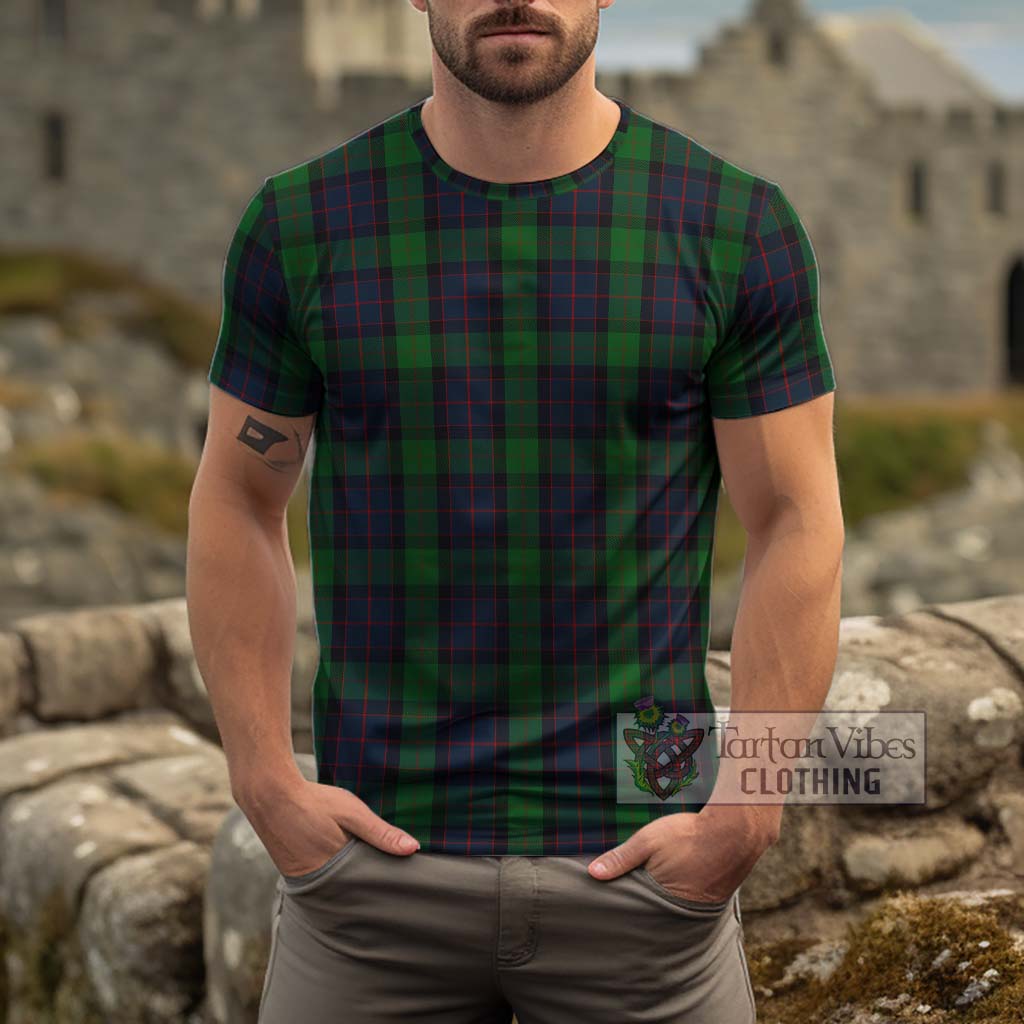
Clan MacWilliam tartan is a powerful symbol of defiance and heritage, reflecting a family's legacy once at the heart of Scotland's royal struggles. It comes in two main variations:


- Clan MacWilliam Tartan: The MacWilliam tartan showcases rich dark green and navy tones, intersected by fine red lines. This bold color scheme represents strength, loyalty, and the enduring spirit of the clan, making it perfect for formal occasions and traditional Highland attire.
Clan MacWilliam Hunting tartan: The Hunting version features a more muted palette, with lighter greens and subdued blues. It is designed for outdoor use and offers a natural and understated look that honors the clan's deep roots in the rugged Scottish Highlands.
VI. Where Can I Buy Clan MacWilliam Tartan Products?
If you're searching for high-quality Clan MacWilliam tartan apparel, Tartan Vibes Clothing is your go-to destination. As a proud celebration of Scottish roots, our store offers a wide range of products featuring the Clan MacWilliam tartan—from cotton Hawaiian shirts and long-sleeved tees to padded jackets, hoodies, and classic caps. Every design blends traditional patterns with modern comfort, allowing you to wear your heritage with pride.
Discover unique, clan-inspired fashion that's crafted with care and delivered worldwide—only at Tartan Vibes Clothing.



Frequently Asked Questions
What regions were associated with Clan MacWilliam?
The Clan MacWilliams was most active in northern Scotland, particularly in Moray and Ross.
Who was the founder of Clan MacWilliam?
Clan MacWilliam descends from William fitz Duncan, the grandson of King Malcolm III of Scotland.
What sparked the MacWilliam rebellions?
Their claim to the throne and regional instability in the Highlands fueled their defiance.
Who defeated the final MacWilliam rebellion?
King Alexander II's forces, led by William Comyn, crushed the uprising by 1230.
Are there different spellings of "MacWilliam"?
Yes. Variants include MacWilliams, MacWillie, MacQuilliam, and MacKilliam.

Aimee Li
An author dedicated to exploring the rich history, vibrant culture,... of the Scottish clans. As an avid historian and fashion enthusiast, I have always been fascinated by Scotland's heritage and the timeless elegance of its traditional attire. Join me on this journey through the highlands and lowlands, as we delve into the heart of Scottish legacy together.


